Trending Now

CAPM Exam Prep Strategy 2026: Practice Questions, Mock Tests, and Time Management
ITIL 4 vs ITIL (Version 5): The Global, No‑Fluff Guide to What’s New, What Stays, and How to Transition
ITIL 5 Certification Demand and Job Market Trends: Complete Career Guide (2026)
ITIL v5 Job Roles Explained: From Service Desk Analyst to IT Service Manager
PL-300 DAX Questions You Must Master in 2026 (With Patterns)
How to Write an RCA Report That Actually Prevents Repeat Incidents (Templates + Examples)
Digital Transformation Projects: Why They Fail & How to Fix Them
Oracle Primavera P6 Training Guide (2026): Skills Every Project Professional Must Master
PMI’s Late-2026 PMP® Policy Update Will Reject Most Live Training Hours — Here’s How to Protect Your 35 Contact Hours  
Why Are My Pages Not Indexed Even After Sitemap Submission? (And How to Fix It)
Minitab for Lean Six Sigma (2026): The Only Functions Most Belts Actually Need
Top 10 Project Scheduling Tools for PMP & PRINCE2 Aspirants (2026 Guide)
SIPOC Made Simple: How to Map a Process in 20 Minutes (with Examples)
PL-300 vs DP-600 vs DP-500 in 2026: Which Certification Should You Take First?
Portfolio Management Mastery: Why PfMP and PgMP Are Rising in Demand (2026)
How to Build a “Closed-Loop” CAPA System Using RCA (So Fixes Don’t Die in Docs)
Yellow Belt vs Green Belt vs Black Belt: Which Lean Six Sigma Level Should You Choose in 2026?
DMAIC Explained (2026): The Step-by-Step Method to Fix Any Process
PRINCE2 7 Tailoring Guide (2026): How to Adapt the Method for Any Project Size
Google Ads vs SEO in 2026: Which Should You Invest In First?
Process Mining + Lean Six Sigma: The 2026 Playbook for Faster, Data-Driven DMAIC
CAPM vs PMP in 2026: Which Certification Should You Choose (and When)?
PRINCE2 7 Certification Path: Foundation → Practitioner → Next Steps (2026 Roadmap)
Oracle Primavera P6 Training Roadmap (2026): From Beginner to Project Controls Expert
AI Overviews & AI Mode SEO: How to Win Visibility When Google Answers First
RCA vs 5 Whys vs Fishbone vs 8D vs A3: When to Use Which (Decision Framework)
PL-300 Case Study Walkthrough: From Raw Data to Executive Dashboard (End-to-End)
PRINCE2 7 Foundation: Complete Exam Guide, Format, Pass Mark, and Study Plan (2026)
Lean Six Sigma Yellow Belt: The 2026 Beginner Guide (Tools, Examples, Real Workplace Use)
Technical SEO Audit 2026: The Only Checklist That Still Matters
Content Refresh Strategy 2026: How to Update Old Pages for New Traffic
CAPM Exam Content Outline Explained: Domains, Weightage, and What to Study First
GA4 Setup Guide 2026: Step-by-Step for Accurate Tracking
From Keywords to Answers: How Search Works in 2026 
CAPM Certification 2026: The Complete Exam + Training Guide (PMI-Updated)
Traditional SEO vs Answer-First SEO: What Actually Ranks in 2026
ITSM Evolution: From Monolithic Systems to Cloud‑Centric Architectures (2026)
How to Run High-Performance Retargeting Campaigns Using AI
Project Leadership in 2026: Skills Every Successful Project Manager Needs
Technical SEO for 2026: Crawl Optimization, Log Analysis & AI Indexing Signals
Top 12 Project Management Mistakes and How to Avoid Them
PRINCE2® 7 (2026 Guide): What’s New, What Changed, and Why It Matters
Lean Six Sigma in 2026: What’s Changed (AI, Automation, Process Intelligence) & What Still Works
Root Cause Analysis in 2026: The Modern RCA Playbook for Faster, Repeatable Fixes
ITIL Is for Everyone and for Every Organization: A Deep‑Dive Playbook (2026)
Social Media Algorithms Explained (2026 Edition): What Actually Drives Reach Today
Power Query Best Practices 2026: Faster Refresh, Cleaner Models, Fewer Errors
PL-300 Exam Guide 2026: Skills Measured, Study Plan, and What’s Changed
LLMS.txt vs Robots.txt in 2026: What to Implement (and What to Avoid)
SEO in 2026: The Complete Playbook for AI Search, AEO & GEO
Google Ads Audits in 2026: A Step-by-Step Checklist to Fix Wasted Spend and Unlock Growth
AI-Driven Risk Management: Predict Risks Before They Happen
On-Page SEO 2026: New Techniques for Topical Relevance & AI Search
The Future of Project Management: Trends Reshaping 2025–2030 
Hybrid Project Management: Why Organizations Are Transitioning in 2026 and Beyond
AI-Powered Project Planning: Faster, Smarter, and More Accurate Strategies 
Industry Predictions for 2026: From GenAI to Value Streams and Total Experience
PMP vs CAPM vs PRINCE2: Which Certification Offers the Best ROI in 2026?
AI in Project Management: How Intelligent Tools Are Transforming PM Workflows 
Performance Max Mastery: How to Scale ROI with Smart Automation 
What is SAFe RTE? (Release Train Engineer)
SAFe RTE: The Complete Guide to Becoming a High-Impact Release Train Engineer (2025–2026)
Time Management: How to Turn Hours into Impact
Lean Six Sigma Green Belt: Skills, Value, Demand & Global Trends 2026
PL-300: Microsoft Power BI Data Analyst Certification for Career Growth Globally 2026
Strong & Sustained Demand for PMP Certification in 2026
Why Organizational Agility Matters: The Strategic Imperative for Big Enterprises
Building an Agility Culture Beyond IT Teams
How to Re-Engage Remote Teams: PMP Question on Motivation and Collaboration
Understanding Tuckman’s Team Development Stages - PMP Exam Question Explained
Why do Business Owners assign business value to team PI Objectives?  
Benefits of EXIN Agile Scrum Foundation Certification
Benefits of PMP Certification for Corporate and Individual Professionals in 2025
Streamlining Vaccine Development during a Global Health Crisis – An Imaginary PRINCE2 Case Study
PMBOK Guide Tips for Managing Change and Uncertainty in Projects
How to Apply PRINCE2 Methodologies in Real-World Projects
What is PRINCE2® 7? A Simple Explanation for Beginners
Project Management Certification in the United States of America
The Evolution of Project Management: From Process-Based to Principles-Based Approaches
Mastering ITIL and PRINCE2 for Enhanced Project Outcomes in Indian GCCs
Exploring the Eight Project Performance Domains in the PMBOK® Guide
PMI Best Practices for Project Management Across Different Environments
Your Ultimate Project Management Guide: Explained in Detail
Top Benefits of PRINCE2 for Small and Medium Enterprises
Best Project Management Certifications of 2025
The Importance of Tailoring PRINCE2 to Fit Your Organization's Needs
Resolve Slash URLs & Learn 301 vs. 308 Redirects Effectively
What is a standard change in ITIL 4?
Which practice provides a single point of contact for users?
What is the first step of the guiding principle 'focus on value'?
Which is a benefit of using an IT service management tool to support incident management?
A service provider describes a package that includes a laptop with software, licenses, and support. What is this package an example of?
What should be included in every service level agreement?
What are the two types of cost that a service consumer should evaluate?
The Business Case for SAFe®: Solving Modern Challenges Effectively
Which ITIL concept describes governance?
How does ‘service request management’ contribute to the ‘obtain/build’ value chain activity?
Which practice is the responsibility of everyone in the organization?
How Kaizen Can Transform Your Life: Unlock Your Hidden Potential
Unlocking the Power of SAFe®: Achieving Business Agility in the Digital Age
Tableau AI and ML making data experience better

Tableau AI and ML Model: Making Data Experience Powerful

Picture of Stefan Joseph
Stefan Joseph
Stefan Joseph is a seasoned Development and Testing and Data & Analytics, expert with 15 years' experience. He is proficient in Development, Testing and Analytical excellence, dedicated to driving data-driven insights and innovation.

With the rapid change in technologies globally, Generative AI and Machine Learning models are playing with billions of data daily. Thanks to multiple sources, one such is the Internet of Things (IoT), which enriches the entire data set collecting wholesome data from almost everywhere. Businesses are, therefore, thriving to make powerful data-driven decisions and retain their ranks in this competitive era. Tableau AI, including the dynamic Tableau Pulse, encourages everyone to deal with data comfortably and reimagines data experience for analytics consumers. This will make data accessible to everyone in your organization, regardless of their familiarity with data.
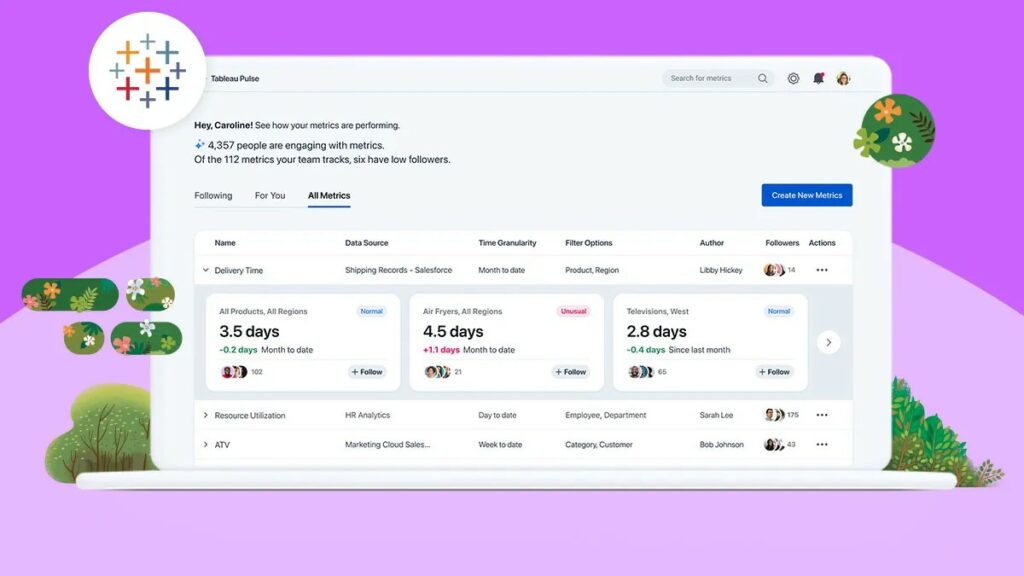
tableau-einstein-gpt-user-insights

What is Tableau AI?

One of Tableau AI’s main agendas is to simplify data analysis by integrating it with the power of Generative AI. Tableau Generative AI is built based on the ethics and principles of Einstein and promises to make the flow of work smoother by ensuring its reliability and safety for everyone who uses it. Another quite intriguing feature of Tableau AI is that it allows consumer analytics to observe and analyze smart, personalized, and contextual insights in their workflow. The repetition of work is reduced, and the data analyst can get smart product guidance. Unlike many other Generative AI models, Tableau AI does not gamble with data security and privacy. 

Tableau Pulse, Tableau AI-powered, is changing the story of the data experience of every business user. It offers intelligent, customized, and situation-specific insights to everyone. AI in Tableau has numerous smart features, and Tableau Pulse brings automatic analysis in simple terms. It has a predictive modeling concept that can anticipate your questions and suggest new ones, changing how people use data and making everyone in the organization data-savvy.
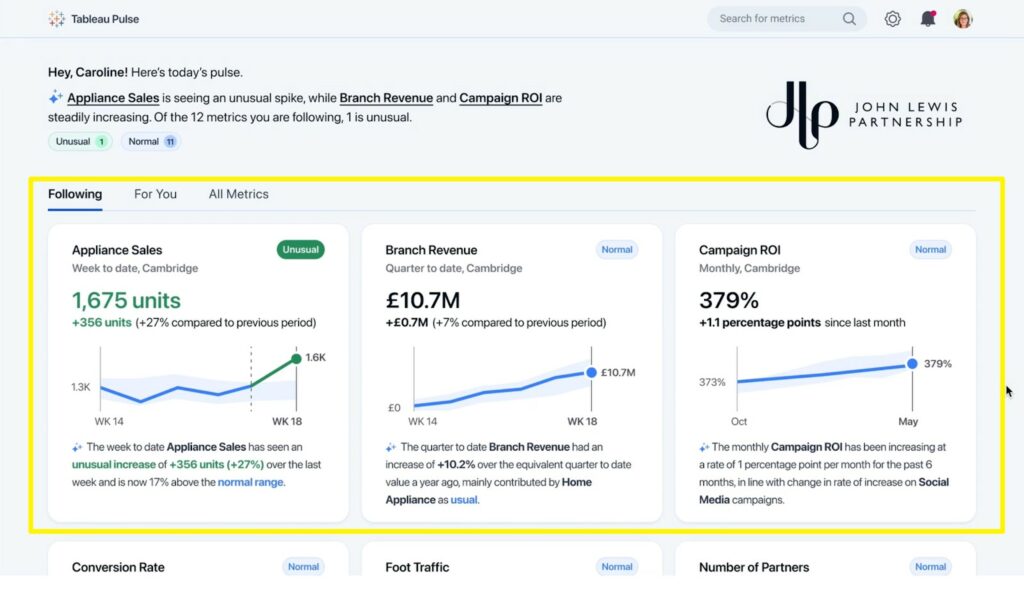
Tableau Pulse showing data as required

Source: Tableau Pulse Showing Data as Required

Tableau Pulse changes how individuals interact with their data in more meaningful ways. It empowers everyone in an organization, not just 29%, to be data-driven. This is particularly beneficial for users with time constraints, requiring quick access to data for speedy decisions. It caters to those who aim to delve into the “why” behind the data, going beyond the “how” and “what.”


Maximize ML in Tableau: Aible Dashboard Extension

Business leaders are data professionals leveraging Artificial intelligence (AI) to get impactful insights from data. These days, there are several business users and data analysts who are excelling in this domain without special training because they are using what’s called augmented analytics. This means AI is making it easier for people like business folks, analysts, and developers to use the predictive power of AI, even if they’re not experts in it. By automating the most intrinsic parts of the Machine Learning (ML) process, augmented AI extends model building to a broader range of users, including business people, analysts, and developers.

With the help of augmented analytics, Tableau is enhancing the Business Intelligence and Artificial Intelligence experience of employees. Aible, an extension of Tableau is helping users to build predictive AI models directly within Tableau in no time for a smooth experience. You have access to the library of ML algorithms that Aible has which can help you make a better decision by analyzing the entire dataset at a rapid pace. With Aible’s ML algorithm, you can analyze your data, uncover hidden patterns, and deliver predictive business insights.
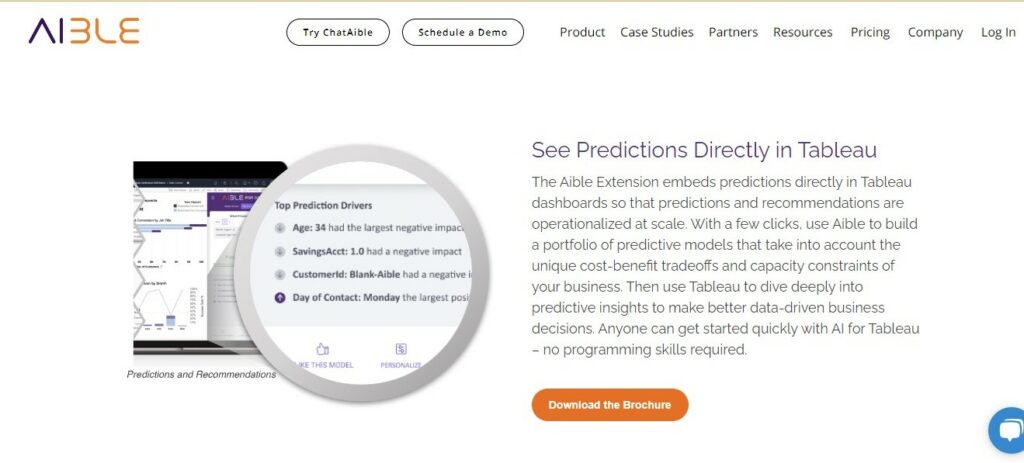
prediction analysis using Aible Tableau

Source: Prediction Analysis Using Aible Tableau
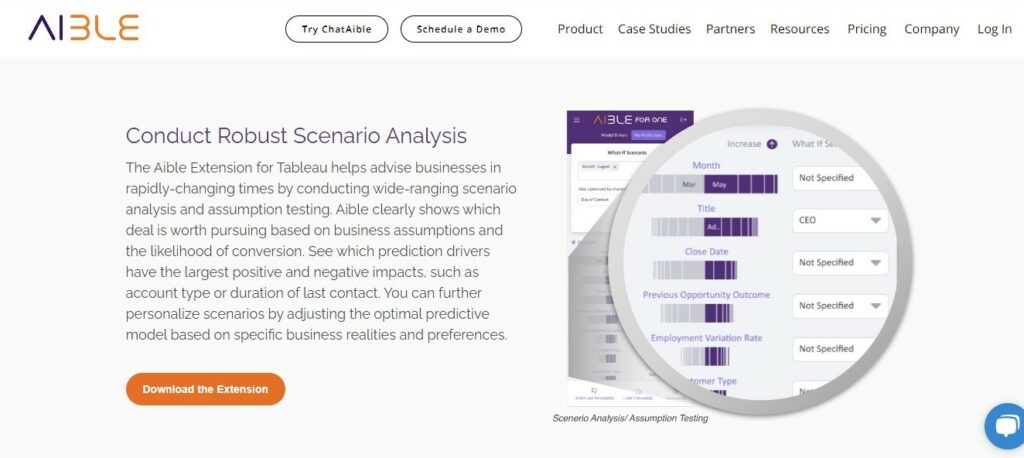
Tableau AIble wide-ranging scenario analysis and assumption testing

Source: Tableau AIble wide-ranging Scenario Analysis and Assumption Testing


Features of Tableau Pulse

1. Customization

Businesses conduct multiple campaigns, and lots of events take place around the year. Deriving suitable and appropriate metrics from those data may be tedious and more hectic. Often, in this entire process, all the data may not fit the metrics as per the business requirement. Employees share insights into any ongoing project or campaign, while many professionals have confessed that not all the data are useful and finding out data that is working may often become time-consuming and quite frustrating. 

Tableau GPT and Tableau Pulse are enhancing the data report generation process by introducing personalized metrics homepages completely customized for specific needs. It is a ‘newsfeed ’-like experience of key KPIs as those days have become obsolete where filtering multiple options to receive one particular set of data.
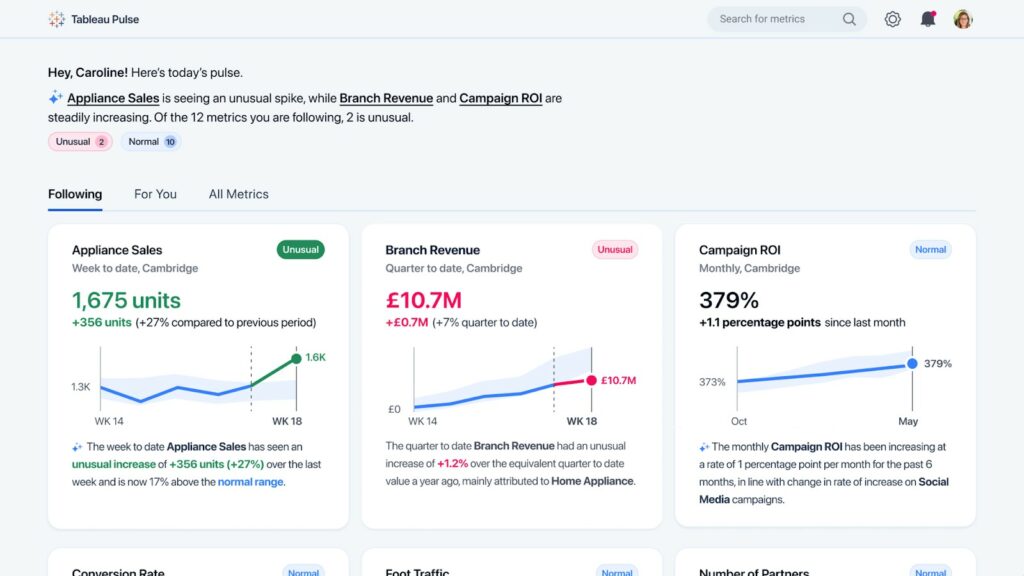
Tableau Pulse personalization example

Source: Tableau Pulse Personalization Example


2. Relevant Data

There are tons of tools and applications available over the internet, and many people refer to these platforms for analyzing and gathering data. However, due to continuous switching between different platforms, employees often lose track of what data they are looking for. On top of that, fragmented data tools make it hard for users to share insights, knowledge, and best practices. This is quite slow-going and reduces the productivity of the entire team.

Tableau Pulse makes things better by giving you the data you need right in the tools you already use. Your insights stay in the tools you use the most and you won’t miss anything important just because you weren’t in the right tool at the time. It’s now easy to share and work together on data across your whole business. It’s as simple as using the tools everyone in your organization already knows.
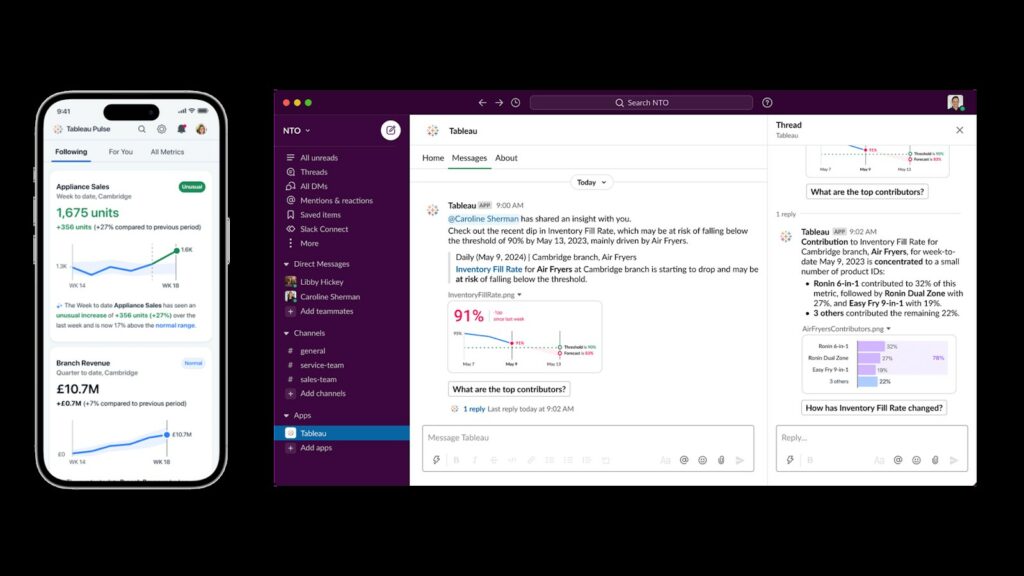
Tableau Pulse showing relevant data

Source: Tableau Pulse Showing Relevant Data


3. Smarter Use of Data

Analyzing data often helps in recognizing trends and patterns, thereby, identifying what might be the upcoming scenario. Employees use this kind of predictive technique and you may often find that this slows down the workflow and in turn hinders productivity. 

Tableau Pulse makes using data smarter by automating analysis and explaining insights in simple language keeping aside every technical jargon. First, it does the hard work, going from “what” to “why.” Pulse can determine insights, predict your questions, and suggest things you might not have thought of even though you have the entire data set with you. Then, Tableau AI talks about these insights in a natural way. This helps you decide better and faster, without spending a lot of time manually looking at data.
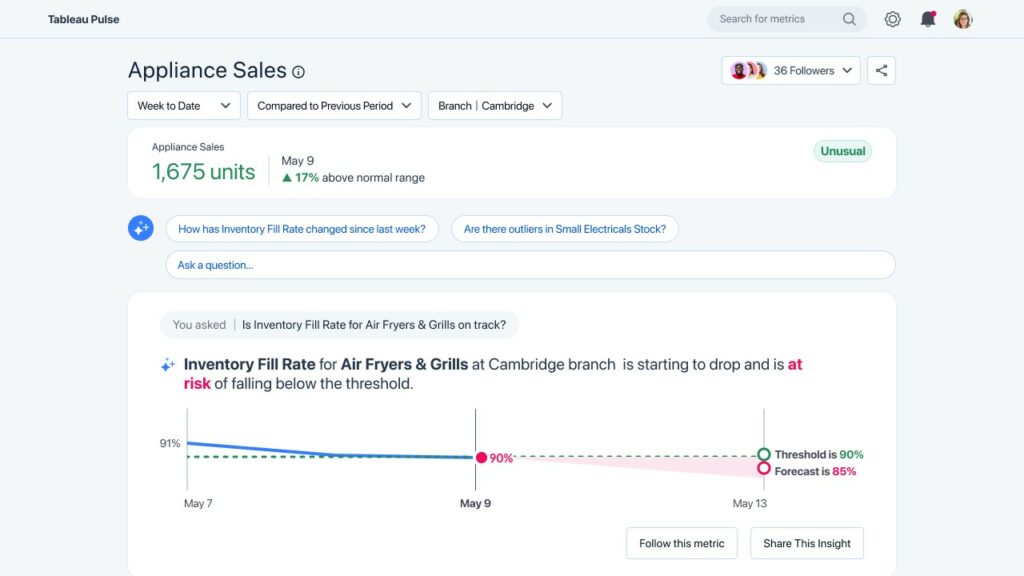
Tableau pulse making data smart

Source: Tablea Pulse and tableau AI


4. Running What-if Analyses by Building AI Models

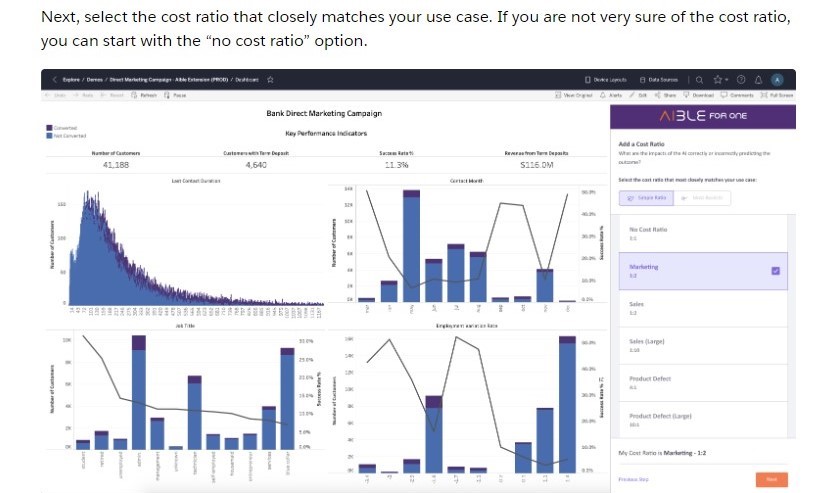
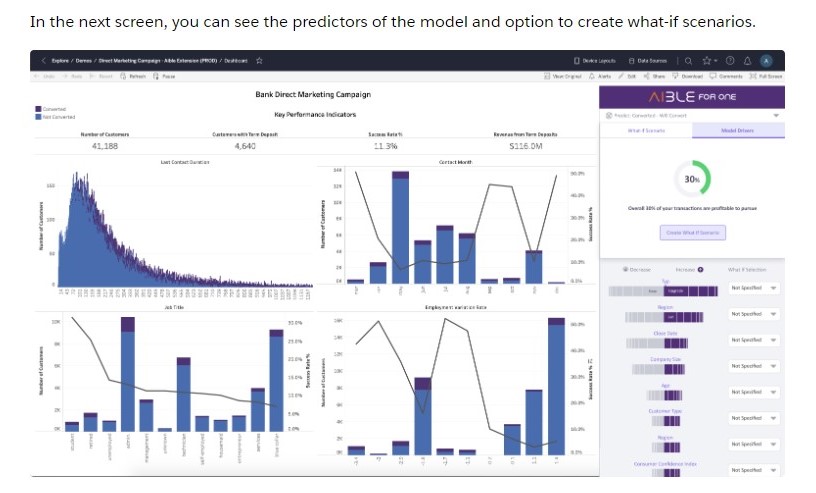
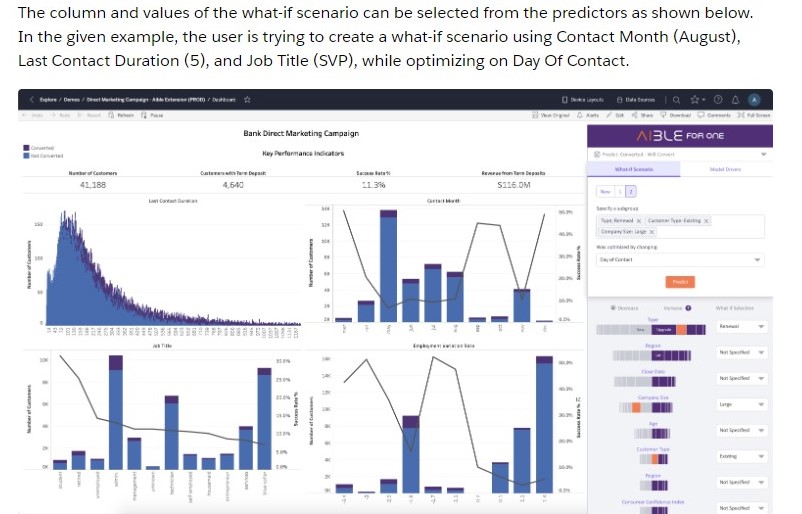
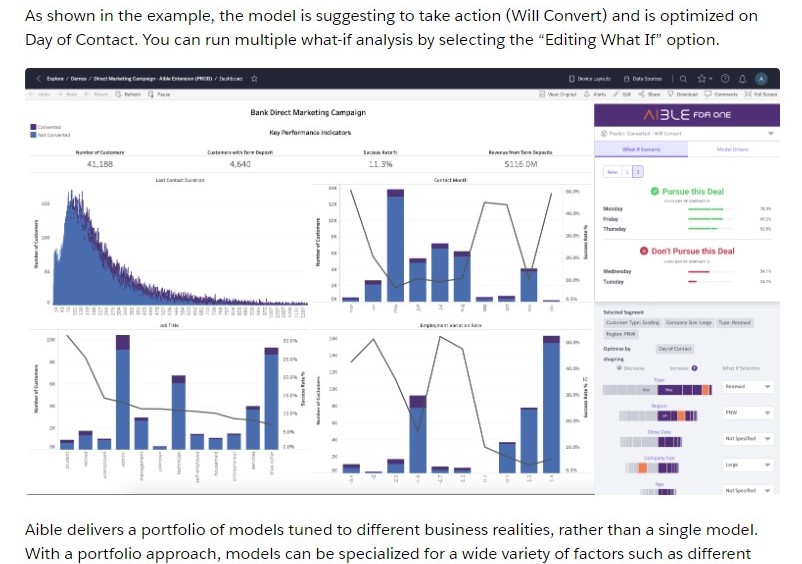
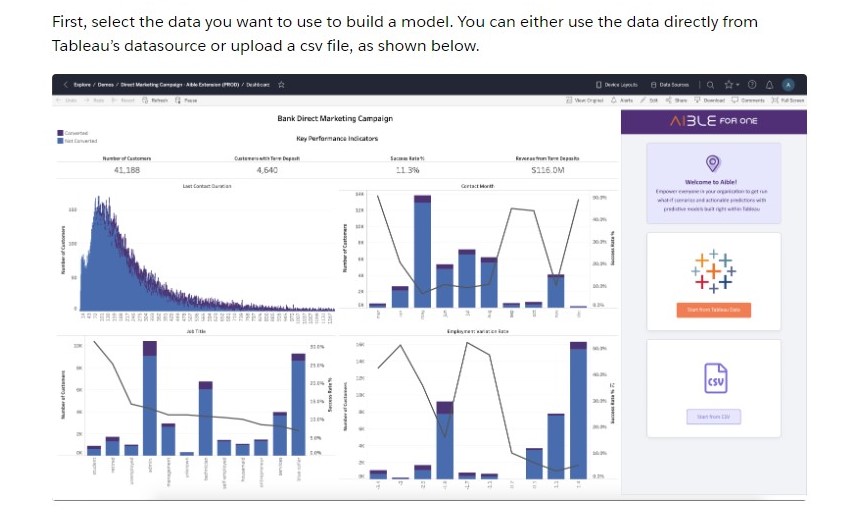
To make models and test scenarios in your dashboard, follow these steps. The example dashboard is for a bank’s marketing campaign. On the right, there’s an Aible extension for running models and scenarios. 
infuse-your-tableau-dashboard-real-world-ai-and-machine-learning-aible
infuse-your-tableau-dashboard-real-world-ai-and-machine-learning-aible-2
Infuse Your Tableau Dashboard Real World AI and Machine Learning Aible

Source: Infuse Your Tableau Dashboard Real World AI and Machine Learning Aible

Aible offers a bunch of models, and each of these is finely crafted for different types of businesses. Aible uses ML models to customize locations, departments, products, or marketing plans. As new data comes in, some models might not work as well, but others could get better quickly. Aible figures out the best AI for many different business situations in advance, creating a range of top-notch models to pick from for every scenario.


Conclusion

Tableau AI is doing wonders as a Business Intelligence tool and Tableau Pulse is enabling the sorting out of data and analysis of them for a better data-driven decision. Aible extension for Tableau provides a marvelous library for ML algorithms that solves multiple problems by customizing various metrics. Tableau Pulse, powered by Tableau AI is smoothing the flow of work by helping employees by making data smart, easily accessible, and fully customized. Individuals and enterprises can get a proper hang of Tableau dashboards by taking up Tableau Certification Training from a reputed training organization such as Spoclearn to reimagine data that helps uncover newer opportunities and improve overall performance.

Leave a Reply

Your email address will not be published. Required fields are marked *

Subscribe us