


Learn how organizations in 2026 combine PRINCE2 7 with Scrum, Kanban, and SAFe to improve Agile governance, accelerate hybrid project delivery, reduce enterprise risks, and scale digital transformation successfully across modern teams.
In 2026, organizations no longer run projects using a single delivery framework. Most enterprises now operate in hybrid environments where predictive governance, Agile delivery, and enterprise-scale coordination must work together. This shift has made PRINCE2 more relevant than ever, especially the latest PRINCE2 7 update designed for modern digital transformation programs.
From global banks and telecom giants to SaaS startups and government agencies, companies increasingly combine PRINCE2 governance with Agile execution models like Scrum, Kanban, and Scaled Agile Framework to improve speed, visibility, compliance, and business value delivery.
According to multiple industry reports published during 2025–2026:
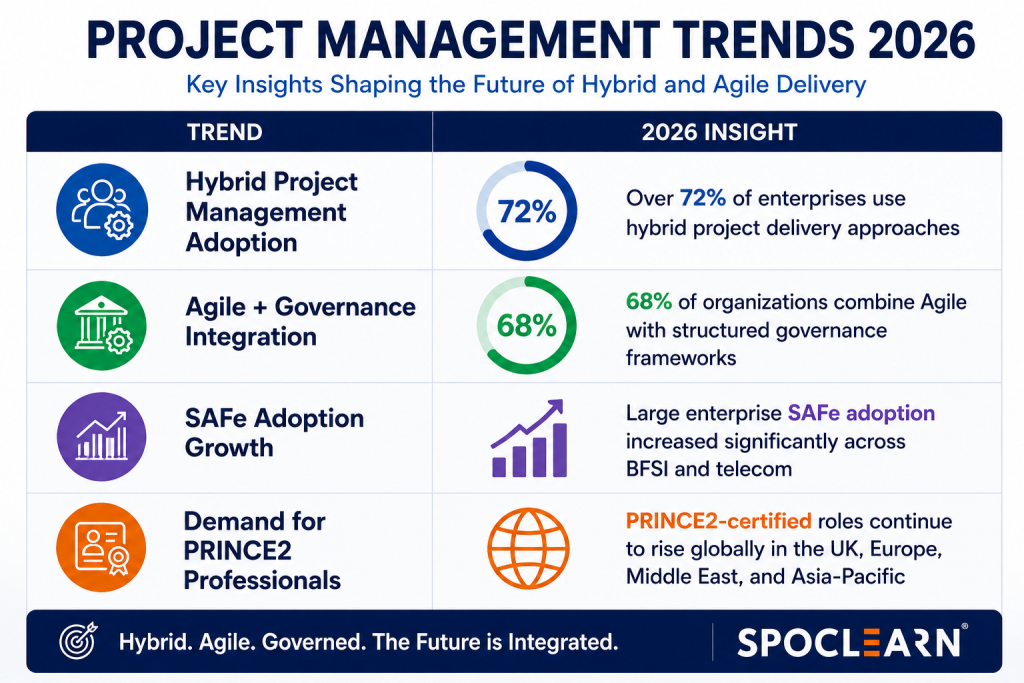
Sources referenced for the infographic insights include Elsevier Research on Hybrid Project Management: Elsevier Hybrid PM Research, Scaled Agile’s State of SAFe Report: Scaled Agile SAFe Report, official PeopleCert PRINCE2 Certifications, and AXELOS PRINCE2 Certifications. These sources support the growing adoption of hybrid project delivery, Agile governance integration, SAFe enterprise transformation, and global demand for PRINCE2-certified professionals in 2026.
The reason is simple: Agile frameworks help teams deliver quickly, while PRINCE2 helps organizations maintain control, accountability, risk management, and strategic alignment.
Why PRINCE2 7 Matters in 2026
The latest version of PRINCE2 focuses heavily on:
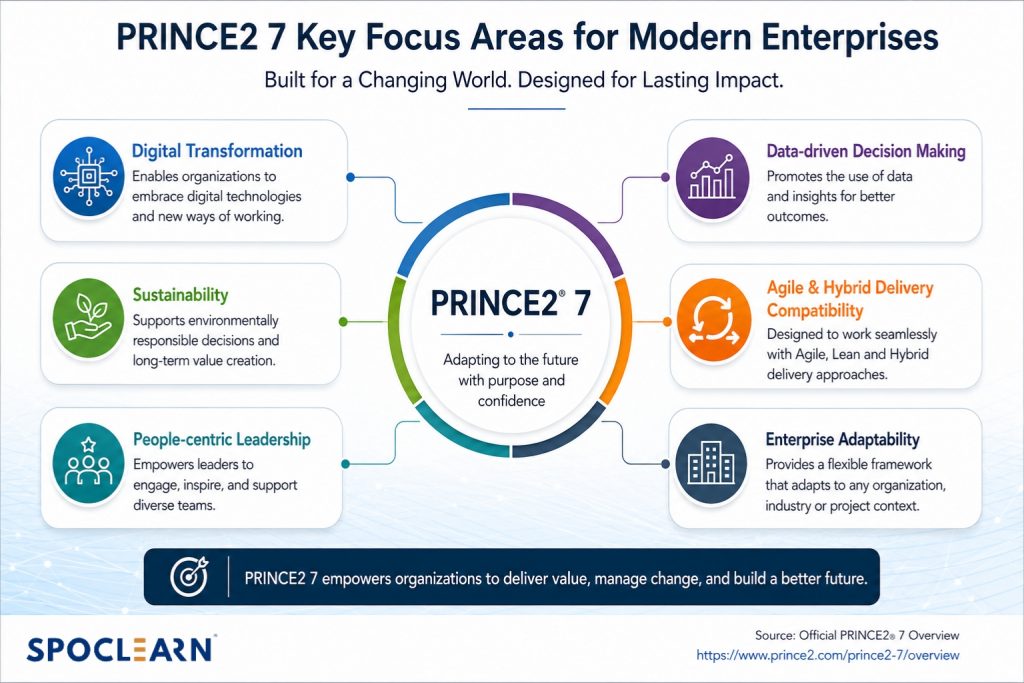
Source: Official PRINCE2 7 Overview
Unlike older misconceptions, PRINCE2 is no longer considered a “waterfall-only” methodology. PRINCE2 7 is intentionally designed to support Agile delivery ecosystems.
Today’s enterprises need:
- Governance without bureaucracy
- Agile without chaos
- Flexibility without losing control
This is exactly where PRINCE2 7 excels.
Understanding Hybrid Project Teams
A hybrid project environment combines structured project governance with iterative Agile execution.
For example:
| Governance Layer | Delivery Layer |
|---|---|
| PRINCE2 | Scrum |
| PRINCE2 | Kanban |
| PRINCE2 | SAFe |
| PRINCE2 | DevOps |
| PRINCE2 | Lean Agile |
This model allows leadership teams to maintain visibility over budgets, risks, milestones, compliance, and business outcomes while Agile teams continue delivering incremental value.
PRINCE2 + Scrum: The Most Popular Combination
Scrum remains one of the most widely used Agile frameworks globally. However, Scrum alone does not fully address:
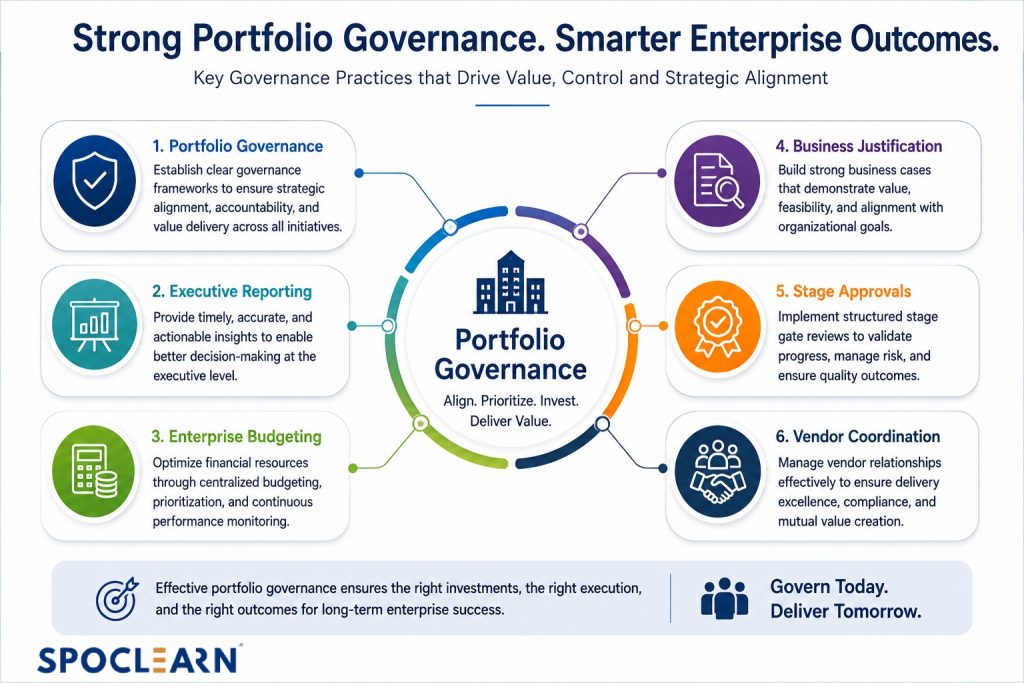
PRINCE2 fills these gaps.
How PRINCE2 and Scrum Work Together
| PRINCE2 Role | Scrum Equivalent |
|---|---|
| Executive | Sponsor |
| Project Manager | Scrum coordination/governance lead |
| Team Manager | Scrum Master |
| Senior User | Product Owner |
| Delivery Team | Scrum Team |
Practical Example
A fintech company developing a digital banking platform may use:
- PRINCE2 for governance and stakeholder reporting
- Scrum for sprint execution
- DevOps for CI/CD automation
- SAFe for scaling across multiple teams
This creates operational balance between control and speed.
PRINCE2 + Kanban: Improving Continuous Delivery
Kanban focuses on flow efficiency and work visualization. It works exceptionally well in environments requiring:
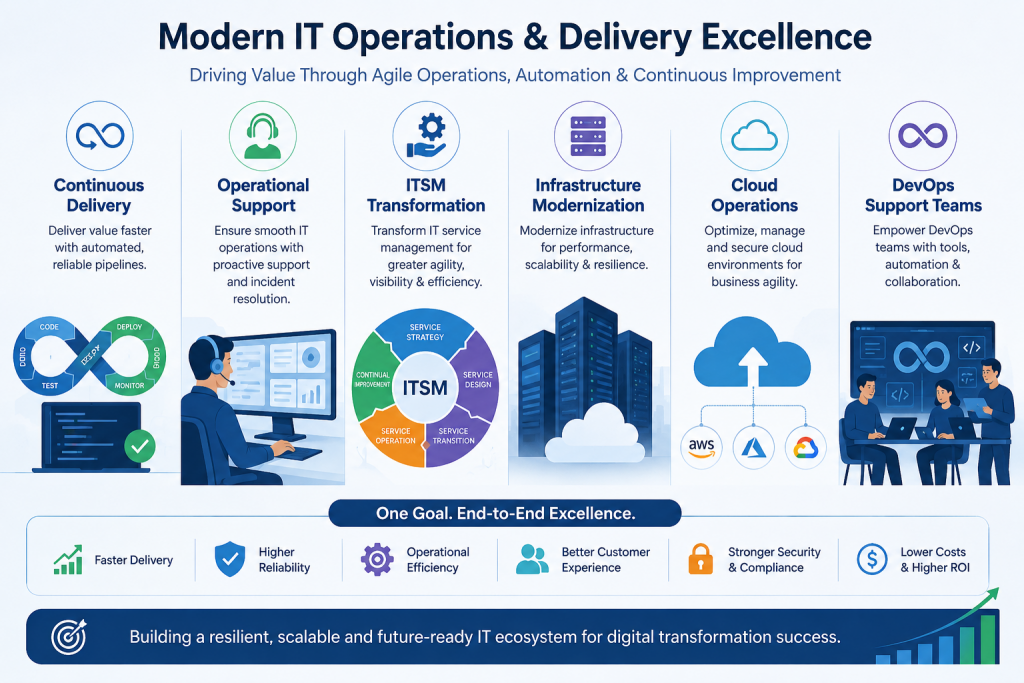
PRINCE2 helps define:
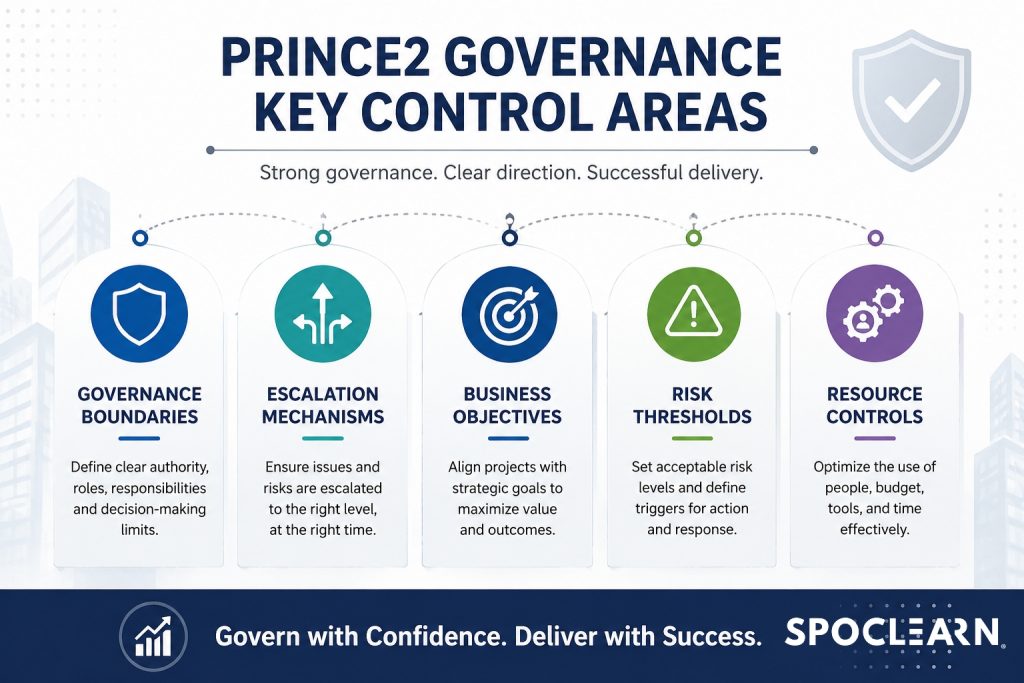
Kanban helps optimize:
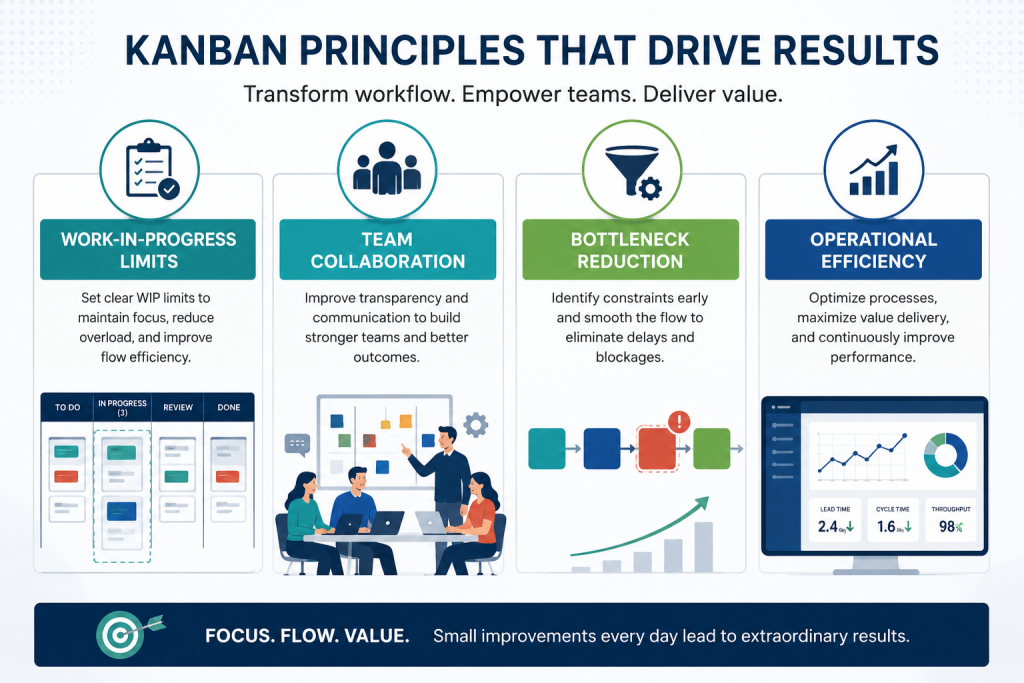
Key Advantage
Kanban reduces delivery friction while PRINCE2 ensures alignment with strategic business objectives.
This combination is increasingly common in:
- Telecom operations
- Managed service providers
- IT operations
- Healthcare IT
- Government digital services
PRINCE2 + SAFe: Enterprise Agile Transformation
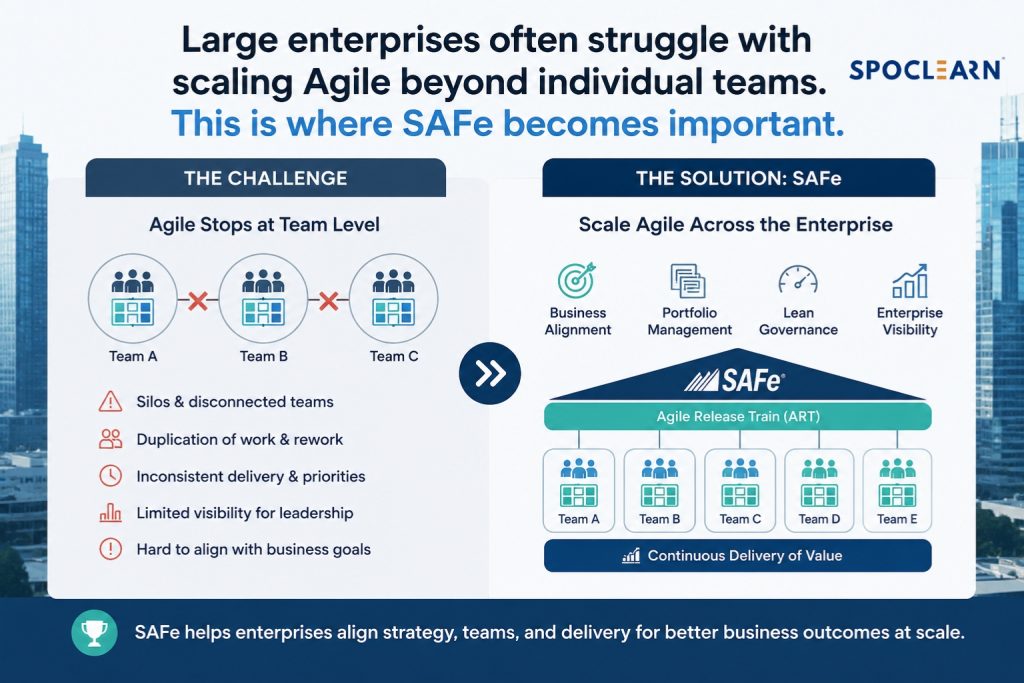
Large enterprises often struggle with scaling Agile beyond individual teams. This is where SAFe becomes important.
SAFe provides:
- Agile Release Trains
- Portfolio management
- Lean governance
- Enterprise synchronization
- Cross-team coordination
PRINCE2 complements SAFe by strengthening:
- Executive governance
- Risk management
- Business case validation
- Stakeholder accountability
- Program-level oversight
Enterprise Example
A multinational telecom company implementing 5G infrastructure might use:
| Function | Framework |
|---|---|
| Executive Governance | PRINCE2 |
| Portfolio Coordination | SAFe |
| Delivery Teams | Scrum |
| Operations Management | Kanban |
| Deployment Automation | DevOps |
This multi-framework ecosystem reflects how modern enterprises truly operate in 2026.
Key Benefits of Combining PRINCE2 with Agile Frameworks
| Benefit | Business Impact |
|---|---|
| Faster Delivery | Reduced project delays |
| Better Governance | Improved executive visibility |
| Higher Flexibility | Easier adaptation to change |
| Improved Risk Control | Lower operational disruption |
| Better Stakeholder Alignment | Increased customer satisfaction |
| Scalable Delivery | Easier enterprise transformation |
| Stronger Compliance | Better audit readiness |
The Biggest Challenges Organizations Face
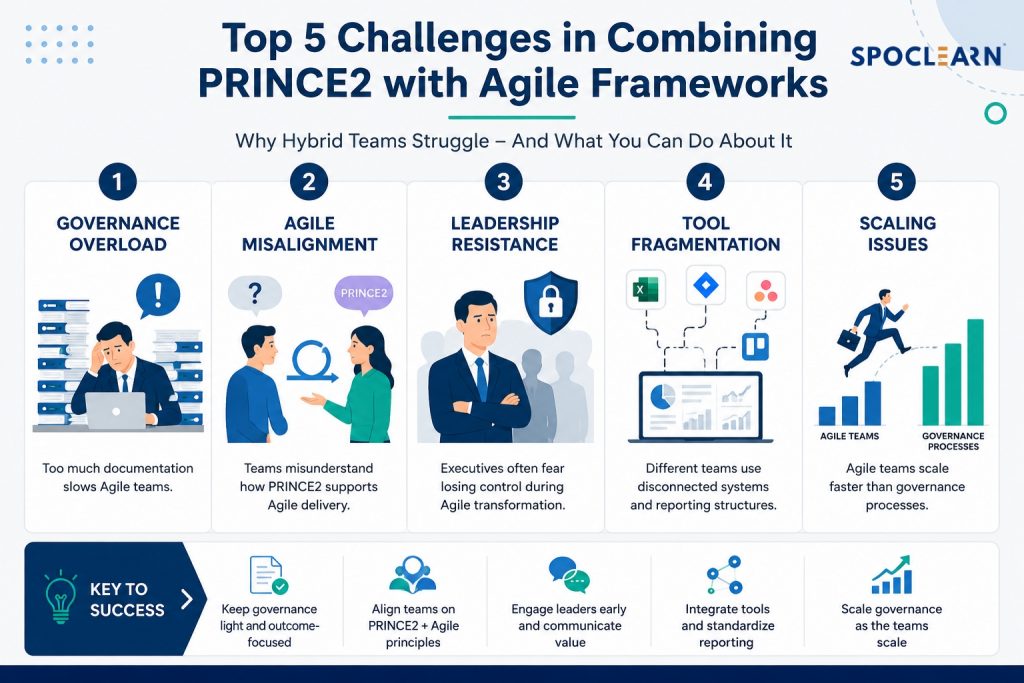
Although hybrid delivery offers major benefits, many organizations struggle during implementation.
Common Challenges
How to Successfully Combine PRINCE2 with Agile in 2026
1. Focus on Outcomes, Not Framework Dogma
Successful organizations avoid rigid methodology wars.
Instead of asking:
“Should we use Agile or PRINCE2?”
Modern leaders ask:
“How can we combine them to deliver better business outcomes?”
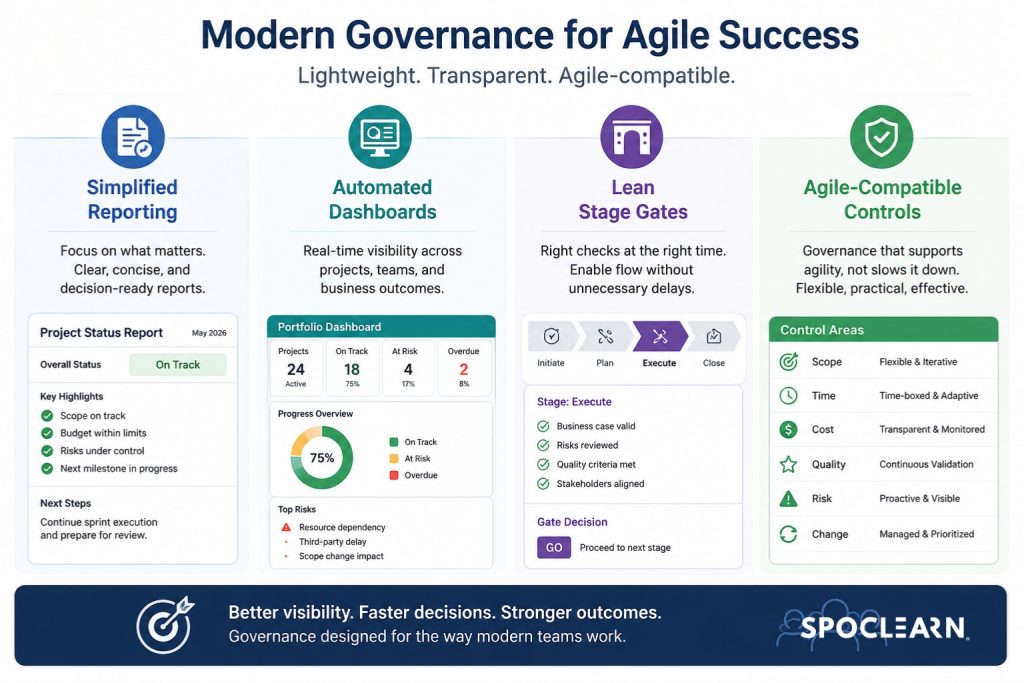
2. Use Lightweight Governance
PRINCE2 governance should support delivery, not block it.
Modern hybrid teams use:
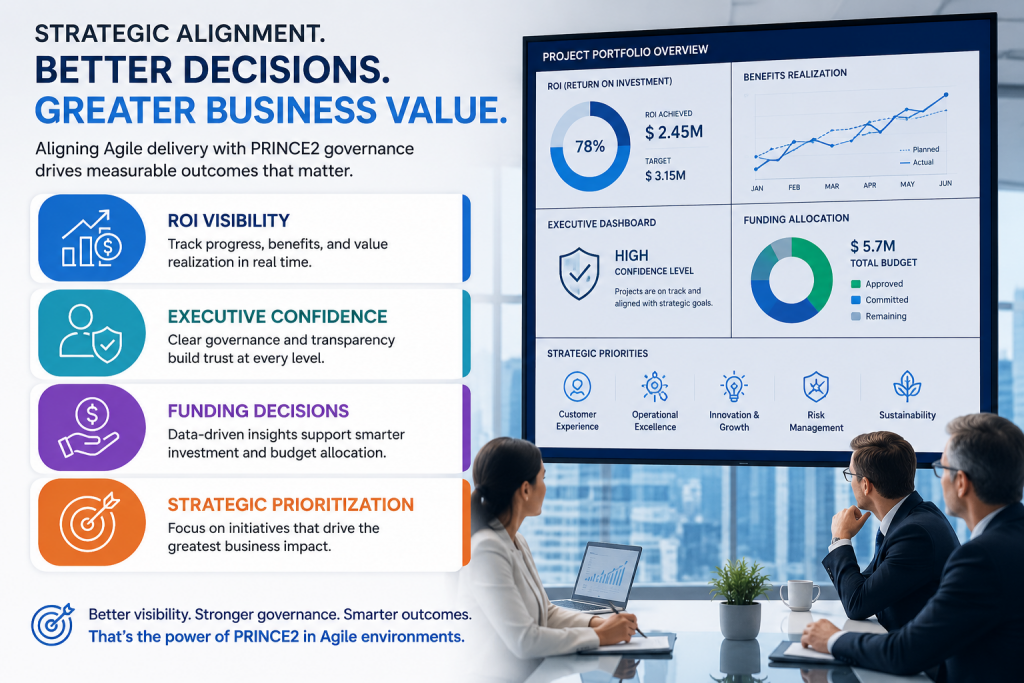
3. Align Sprint Goals with Business Cases
Every Agile sprint should contribute toward measurable business objectives defined within PRINCE2 governance structures.
This alignment improves:
4. Integrate Agile Metrics into PRINCE2 Reporting
Modern enterprises combine:
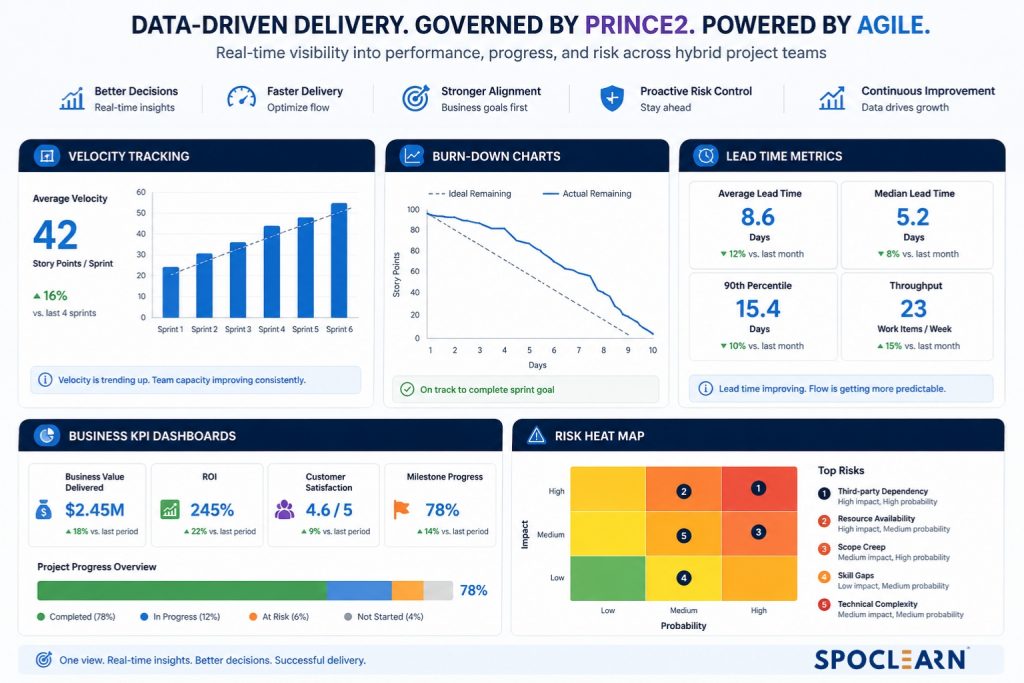
This creates real-time visibility for leadership.
What Industry Leaders Are Saying
“Agility without governance creates instability. Governance without agility creates stagnation.”
— Common enterprise transformation principle used in digital strategy programs
“The future belongs to hybrid delivery organizations.”
— Enterprise Agile leadership insight widely referenced in transformation communities
“Successful enterprises balance innovation speed with operational control.”
— Modern PMO transformation philosophy
Industries Rapidly Adopting Hybrid PRINCE2 Models
| Industry | Why Hybrid Delivery Matters |
|---|---|
| Banking & Financial Services | Compliance + rapid innovation |
| Healthcare | Patient safety + digital transformation |
| Telecom | Large-scale infrastructure delivery |
| Government | Governance + citizen-focused services |
| Manufacturing | Smart factory modernization |
| Retail & E-commerce | Faster customer experience delivery |
| Aviation | Operational reliability and risk control |
Why PRINCE2 Certification Is Becoming More Valuable
As hybrid project delivery expands globally, organizations increasingly seek professionals who understand both governance and Agile execution.
PRINCE2-certified professionals are now expected to:
- Work alongside Scrum teams
- Manage Agile portfolios
- Support SAFe transformations
- Coordinate hybrid delivery environments
- Align projects with business strategy
Professionals with combined expertise in:
- PRINCE2
- Scrum
- SAFe
- DevOps
- Agile leadership
are becoming highly valuable across global markets.
Top Skills Employers Want in Hybrid Project Leaders (2026)
| Skill | Demand Level |
|---|---|
| Agile Governance | Very High |
| Enterprise Agile Delivery | Very High |
| Risk Management | High |
| SAFe Coordination | High |
| Stakeholder Communication | Very High |
| Digital Transformation Leadership | Very High |
| Business Agility | High |
Future of PRINCE2 in Agile Enterprises
The future is not “Waterfall vs Agile.”
The future is:
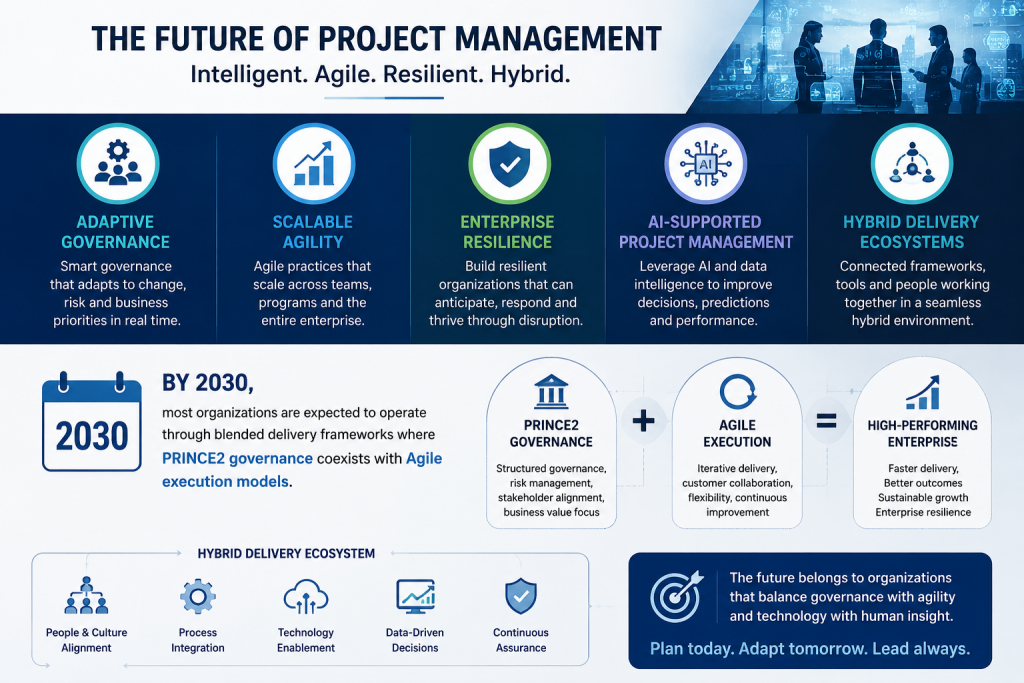
By 2030, most organizations are expected to operate through blended delivery frameworks where PRINCE2 governance coexists with Agile execution models.
This shift will continue driving demand for professionals capable of balancing:
- Speed
- Innovation
- Governance
- Compliance
- Strategic alignment
FAQs
1. What is PRINCE2 7 and how does it support Agile project management?
PRINCE2 7 supports Agile project management by combining structured governance with flexible delivery approaches like Scrum, Kanban, and Scaled Agile Framework. It helps organizations improve project visibility, manage risks effectively, and deliver faster outcomes while maintaining business alignment and stakeholder accountability across hybrid project environments.
2. Is PRINCE2 certification worth it for Agile and hybrid teams in 2026?
Yes, PRINCE2 certification remains highly valuable in 2026 because enterprises increasingly adopt hybrid delivery models. Professionals with PRINCE2 knowledge can manage governance, Agile collaboration, stakeholder communication, and enterprise transformation initiatives, making them highly attractive to employers across IT, banking, telecom, healthcare, and government sectors globally.
3. Can PRINCE2 work together with Scrum, Kanban, and SAFe frameworks?
Absolutely. Modern organizations frequently combine PRINCE2 with Scrum for sprint execution, Kanban for workflow optimization, and Scaled Agile Framework for enterprise-scale Agile transformation. PRINCE2 provides governance and business justification while Agile frameworks accelerate delivery, collaboration, and continuous improvement within hybrid project ecosystems.
4. Which industries are hiring PRINCE2-certified professionals with Agile skills?
Industries including banking, financial services, healthcare, manufacturing, telecom, aviation, government, and retail actively hire PRINCE2-certified professionals with Agile expertise. Organizations undergoing digital transformation prefer project leaders who can balance governance, Agile delivery, compliance, operational efficiency, and enterprise-scale coordination across complex business environments.
5. What are the benefits of combining PRINCE2 with Agile methodologies?
Combining PRINCE2 with Agile methodologies improves delivery speed, governance, risk management, stakeholder communication, and scalability. It enables organizations to maintain executive control while allowing Agile teams to innovate rapidly, making hybrid project management one of the most effective enterprise delivery approaches in 2026.
Conclusion
As organizations accelerate digital transformation in 2026, the demand for hybrid project management frameworks continues to rise across industries including IT, banking, telecom, healthcare, manufacturing, and government. Modern enterprises no longer rely on a single methodology. Instead, they combine PRINCE2 with Agile frameworks such as Scrum, Kanban, and Scaled Agile Framework to achieve faster delivery, stronger governance, improved risk management, and better business outcomes.
PRINCE2 7 has evolved into one of the most adaptable project management methodologies for Agile and hybrid teams. Its focus on people, sustainability, digital transformation, flexibility, and business justification makes it highly relevant for enterprises navigating complex programs and large-scale transformations. When integrated correctly with Scrum, Kanban, or SAFe, PRINCE2 enables organizations to balance agility with executive control while ensuring continuous value delivery.
For professionals, gaining expertise in PRINCE2 Agile, Hybrid Project Management, Agile Governance, and Enterprise Agile Transformation has become a major competitive advantage in the global job market. Employers increasingly seek certified professionals who can manage Agile delivery while maintaining governance, compliance, stakeholder alignment, and strategic visibility.
Whether you are a Project Manager, Scrum Master, PMO Leader, Agile Coach, Product Owner, or Transformation Consultant, investing in PRINCE2 Certification Training can significantly improve your ability to lead modern Agile and hybrid projects successfully.