

Trending Now

What High-Performing Organizations Do Differently to Improve Operational Excellence?
How to Automate Reports Using Advanced Excel Formulas: A Beginner's Guide
What Is Lean Six Sigma Green Belt and How Does It Solve Real Business Problems? A Beginner's Guide (2026)
The Biggest IT Skills Gap in 2026 and How ITIL V5 Can Bridge It
Why Do Projects Fail and How Does PMP Help Prevent Failure?
How Google AI Search Is Changing SEO Strategies in the United States
Top Industries Hiring PRINCE2 Certified Professionals with AI Skills in 2026
CRISC Certification Salary Guide by Country in 2026
PRINCE2 7 in Agile/Hybrid Teams: How to Combine PRINCE2 with Scrum, Kanban, SAFe (2026)
PRINCE2 7 Processes Explained (2026): A Step-by-Step Walkthrough from Start to Close
Common Root Cause Analysis Mistakes That Keep Problems Coming Back — And How to Fix Them
Lean Six Sigma Templates Pack: SIPOC, CTQ, Fishbone, Control Plan, A3 (Free Guide)
Power Query in Power BI: Top Real-World Problems, Errors & Solutions for Data Analysts
Power Query Best Practices 2026: Faster Refresh, Cleaner Models, Fewer Errors
Step-by-Step CISA Certification Roadmap for 2026 (Beginner to Expert)
Top ITIL Roles in the USA for 2026 With ITIL v5 Skills
PMP vs Agile vs PRINCE2 in the USA: Which Certification Delivers the Best Career Growth in 2026?
Agile in CAPM: What PMI Expects You to Know (Scrum, Kanban, Hybrid Basics)
Power Query vs Traditional Excel: The Future of Data Cleaning, Reporting & Automation in 2026
ITIL 4 to ITIL 5 Transition Guide: Bridge Certification, Costs, Deadlines & Strategic Upgrade Plan
CAPM Exam Mistakes to Avoid: The Top Reasons Candidates Fail and How to Fix Them
Why Global Construction and Infrastructure Companies Depend on Oracle Primavera P6
Top SRE Challenges in 2026: Toil, Tool Overload & How Organizations Can Fix Reliability Gaps
From Chaos to Control: How PMP Frameworks Help Organizations Deliver Projects On Time and Within Budget
From Beginner to Agile Pro: Step-by-Step Roadmap with Agile Scrum Foundation Certification
What Is CRISC Certification in 2026? Updated ISACA Exam, Domains, Skills & Career Value Explained
Struggling with Process Inefficiencies? How LSSGB Solves Workflow Bottlenecks in 2026
SIAM in 2026: How to Fix Multi-Vendor Chaos and Achieve End-to-End Service Accountability (EXIN SIAM BoK V3 Guide)
CISM Certification 2026 Update: What’s Changing in ISACA’s New Exam Structure (Nov 2026)
Step-by-Step Guide to Master Primavera P6 for Project Managers (2026 Edition)
Oracle Primavera P6 Training Guide (2026): Skills Every Project Professional Must Master
What’s New in PMP 2026? Key PMI Updates, Exam Pattern Changes & What It Means for Your Career
Who Should Take the ITIL V5 Bridge Course? Eligibility, Benefits & ROI Explained
PL-300 Practice Questions 2026: 60 Scenario-Based Questions with Explanations
From Beginner to Expert: The Ultimate Oracle Primavera P6 Learning Path for Project Professionals
ITIL v5 Framework Guide: Core Concepts, Principles, and Real-World Applications
Agile Scrum Foundation vs Scrum Master: Which Certification Should You Choose in 2026?
CRISC® Certification Guide 2026: Syllabus, Exam Pattern, Salary & Career Growth Explained
PMI-PBA® Certification in 2026: Complete Guide, Career Scope, Salary & Industry Demand
CISA Exam Changes & Syllabus Breakdown (2026 Update + Study Strategy)
CISM Certification Roadmap 2026: Step-by-Step Guide to Becoming a Security Manager
Lean vs Six Sigma vs Lean Six Sigma: What’s the Difference and When to Use Each?
AI and PRINCE2 7th Edition: What PMs Must Know
Performance Max Campaign Performance Dropped? Here’s the Real Reason (And Fix)
ITIL v5 Trends: What IT Leaders Must Know About the Next Phase of ITSM
Why Oracle Primavera P6 Certification Is Becoming Essential for Project Managers in 2026
PRINCE2 7 Roles & Responsibilities: Who Does What (Project Board to Team Manager)
Stakeholder Engagement Strategies That Actually Deliver Results
The Future of Project Management: Trends Reshaping 2025–2030 
CAPM Exam Prep Strategy 2026: Practice Questions, Mock Tests, and Time Management
ITIL 4 vs ITIL (Version 5): The Global, No‑Fluff Guide to What’s New, What Stays, and How to Transition
ITIL 5 Certification Demand and Job Market Trends: Complete Career Guide (2026)
ITIL v5 Job Roles Explained: From Service Desk Analyst to IT Service Manager
PL-300 DAX Questions You Must Master in 2026 (With Patterns)
How to Write an RCA Report That Actually Prevents Repeat Incidents (Templates + Examples)
Digital Transformation Projects: Why They Fail & How to Fix Them
PMI’s Late-2026 PMP® Policy Update Will Reject Most Live Training Hours — Here’s How to Protect Your 35 Contact Hours  
Why Are My Pages Not Indexed Even After Sitemap Submission? (And How to Fix It)
Minitab for Lean Six Sigma (2026): The Only Functions Most Belts Actually Need
Top 10 Project Scheduling Tools for PMP & PRINCE2 Aspirants (2026 Guide)
SIPOC Made Simple: How to Map a Process in 20 Minutes (with Examples)
PL-300 vs DP-600 vs DP-500 in 2026: Which Certification Should You Take First?
Portfolio Management Mastery: Why PfMP and PgMP Are Rising in Demand (2026)
How to Build a “Closed-Loop” CAPA System Using RCA (So Fixes Don’t Die in Docs)
Yellow Belt vs Green Belt vs Black Belt: Which Lean Six Sigma Level Should You Choose in 2026?
DMAIC Explained (2026): The Step-by-Step Method to Fix Any Process
PRINCE2 7 Tailoring Guide (2026): How to Adapt the Method for Any Project Size
Google Ads vs SEO in 2026: Which Should You Invest In First?
Process Mining + Lean Six Sigma: The 2026 Playbook for Faster, Data-Driven DMAIC
CAPM vs PMP in 2026: Which Certification Should You Choose (and When)?
PRINCE2 7 Certification Path: Foundation → Practitioner → Next Steps (2026 Roadmap)
Oracle Primavera P6 Training Roadmap (2026): From Beginner to Project Controls Expert
AI Overviews & AI Mode SEO: How to Win Visibility When Google Answers First
RCA vs 5 Whys vs Fishbone vs 8D vs A3: When to Use Which (Decision Framework)
PL-300 Case Study Walkthrough: From Raw Data to Executive Dashboard (End-to-End)
PRINCE2 7 Foundation: Complete Exam Guide, Format, Pass Mark, and Study Plan (2026)
Lean Six Sigma Yellow Belt: The 2026 Beginner Guide (Tools, Examples, Real Workplace Use)
Technical SEO Audit 2026: The Only Checklist That Still Matters
Content Refresh Strategy 2026: How to Update Old Pages for New Traffic
CAPM Exam Content Outline Explained: Domains, Weightage, and What to Study First
GA4 Setup Guide 2026: Step-by-Step for Accurate Tracking
From Keywords to Answers: How Search Works in 2026 
CAPM Certification 2026: The Complete Exam + Training Guide (PMI-Updated)
Traditional SEO vs Answer-First SEO: What Actually Ranks in 2026
ITSM Evolution: From Monolithic Systems to Cloud‑Centric Architectures (2026)
How to Run High-Performance Retargeting Campaigns Using AI
Project Leadership in 2026: Skills Every Successful Project Manager Needs
Technical SEO for 2026: Crawl Optimization, Log Analysis & AI Indexing Signals
Top 12 Project Management Mistakes and How to Avoid Them
PRINCE2® 7 (2026 Guide): What’s New, What Changed, and Why It Matters
Lean Six Sigma in 2026: What’s Changed (AI, Automation, Process Intelligence) & What Still Works
Root Cause Analysis in 2026: The Modern RCA Playbook for Faster, Repeatable Fixes
ITIL Is for Everyone and for Every Organization: A Deep‑Dive Playbook (2026)
Social Media Algorithms Explained (2026 Edition): What Actually Drives Reach Today
PL-300 Exam Guide 2026: Skills Measured, Study Plan, and What’s Changed
LLMS.txt vs Robots.txt in 2026: What to Implement (and What to Avoid)
SEO in 2026: The Complete Playbook for AI Search, AEO & GEO
Google Ads Audits in 2026: A Step-by-Step Checklist to Fix Wasted Spend and Unlock Growth
AI-Driven Risk Management: Predict Risks Before They Happen
On-Page SEO 2026: New Techniques for Topical Relevance & AI Search
What High-Performing Organizations Do Differently to Improve Operational Excellence

What High-Performing Organizations Do Differently to Improve Operational Excellence?

Picture of Bharath Kumar
Bharath Kumar
Bharath Kumar is a seasoned professional with 10 years' expertise in Quality Management, Project Management, and DevOps. He has a proven track record of driving excellence and efficiency through integrated strategies.

Quality matters for a business that wants to be successful. Operational excellence helps businesses work smarter. Not only does it increase productivity and improve quality but it also reduces unnecessary costs. However, not every organisation archives results that matter. The difference is not luck. High-performing organisations know the proven methods that help improve their way of working step by step. They follow better processes and make decisions based on facts. 

The most important thing they do is that they never stop looking for ways to improve. This is the reason they always stay ahead of their competitors. Operational excellence is not a long-term project. It’s a continuous journey. Today’s blog aims to discuss what successful organisations do differently to have better outcomes. 

What Is Operational Excellence?
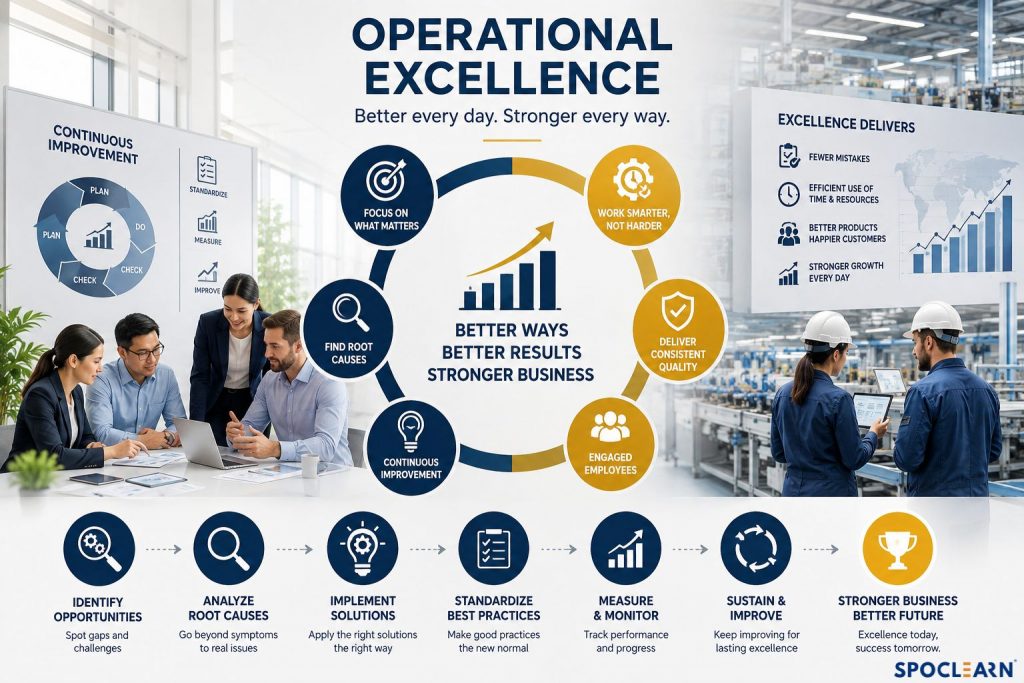
Operational excellence means finding better ways to work every day. The idea is not just to work faster, the key is to work smarter and deliver consistent quality. Organisations with operational excellence are prone to make fewer mistakes. They use their time and resources more efficiently. Moreover, they focus on going at the root of problems instead of finding temporary fixes. This practice helps them create lasting improvements. As a result, customers keep getting better products and services. Employees also become more productive and engaged in their work. Operational excellence helps businesses grow stronger each day. 

Why Operational Excellence Matters More Than Ever 

There are new challenges in every step that a business has to face. Customers expect faster service, better quality and a smooth experience. On top of that, competition is growing. Rising costs also make it harder to maintain profits. This is the reason why businesses must know how to use their time, money, and resources wisely. Operational excellence is what helps organisations improve efficiency and reduce waste. It also helps businesses to keep delivering consistent quality without increasing costs. Technology is changing the way companies operate these days. Businesses that follow continuous improvement steps find themselves in a better position to adapt to these changes. They know how to respond faster to changing customer needs and market demands. Moreover, it ensures that businesses stay competitive in the market. 

What High-Performing Organizations Do Differently
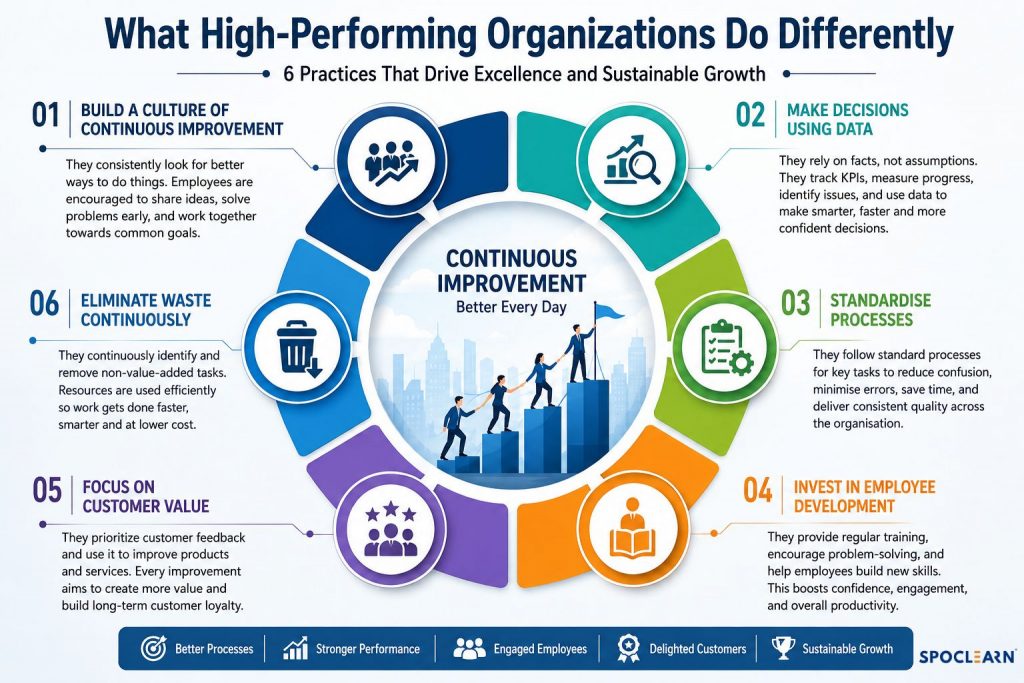
They Build a Culture of Continuous Improvement

High-performing organisations take the time to improve their processes of work each and every day. They keep looking for better ways of getting things done. Employees feel encouraged to share innovative ideas that really work. Teams work toward solving problems as soon as they appear. All of these creates a positive environment where everyone keeps working towards the same goal. Continuous improvement helps organisations grow stronger day by day. 

They Make Decisions Using Data

Successful organisations make decisions based on facts. They don’t value assumptions and keep track of key performance indicators (KPIs). This enables them to measure business progress. They also rely on data to identify quality issues. Data helps them know where they need improvements. High-performing companies always check data to measure performance. As a result, they can make smarter decisions and achieve better results. 

They Standardise Processes

Organisations that consistently deliver better results follow standard processes for important tasks. Thus, it helps employees to work in the same way to reduce confusion and avoid unnecessary mistakes. Standard processes are designed to save time and improve consistency. As a result, products and services meet the same quality standards across the organisation. 

They Invest in Employee Development

High-performing organisations are aware of the fact that skilled employees drive business growth. This is why they provide regular training to help teams build new skills. They encourage their employees to solve problems and improve their work. As a result, this builds confidence and increases productivity. 

They Focus on Customer Value

Every improvement in an organisation must create value for customers. High-performing organisations don’t follow practices that are not helpful for improving customer experience. They give more preference to customer feedback and use it to make more informed decisions. It helps them deliver better products and services, ensuring that customers stay loyal toward the business and recommend it to others. 

They Eliminate Waste Continuously

Waste reduces efficiency and increases costs for businesses. Successful organisations keep identifying tasks that don’t add value. They use their resources in a structured manner so that teams can complete work faster and more effectively. In fact, many organisations use Lean principles to reduce waste. Continuous waste reduction is key to ensure better performance and higher customer satisfaction. 

Common Challenges Organizations Face
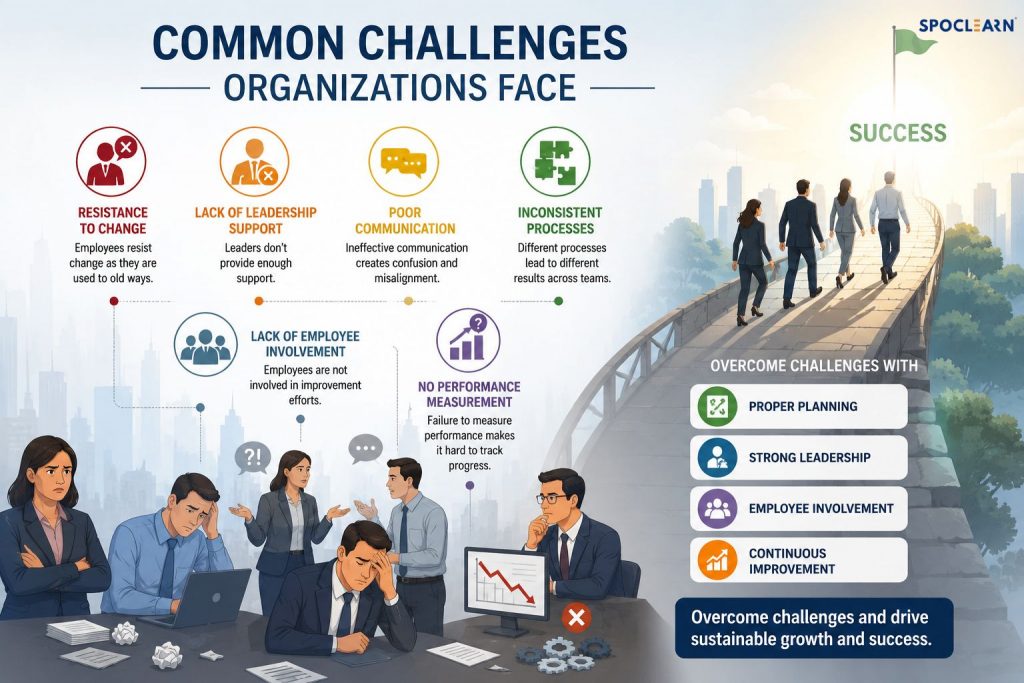
Organisations sometimes struggle to improve because of the challenges they face. Some employees resist change because they are used to the old ways of working. Sometimes, leaders don’t provide enough support. Poor communication is another challenge businesses face. Inconsistent processes can result in different results across teams. Some organisations don’t involve employees in their improvement efforts. Others fail to measure performance, as a result of which it becomes hard to track progress. These challenges keep businesses from becoming successful and hinder growth. However, businesses can overcome these challenges with proper planning, strong leadership and commitment to continuous improvement. 

How Lean Six Sigma Supports Operational Excellence

Lean Six Sigma is key to achieving operational excellence. Lean helps remove waste from business practices. Six Sigma helps in reducing the number of defects while improving quality. Together, Lean Six Sigma supports organisations to work more efficiently. It uses the DMAIC method and it stands for Define, Measure, Analyse, Improve, and Control. Thanks to this structured approach, organisations can help teams solve recurring business problems. It also helps organisations improve quality and support long-term operational excellence. 

Final Thoughts

Operational excellence is a continuous process and it doesn’t happen overnight. It can be built with the help of small improvements each and every day. High-performing organisations know how to improve their processes. They always deliver value to customers. These simple yet strong steps help create lasting business success. Organisations that take continuous improvement seriously are built to adapt faster and stay ahead of the competition. Learning Lean Six Sigma also helps professionals build skills that matter for a successful organisation. It helps organisations improve performance over time and achieve sustainable growth in the future. 

FAQs

What is operational excellence in simple words?

Operational excellence is nothing but a process that helps organisations find better ways of working. Thanks to operational excellence, organisations can improve their quality of work and use resources more efficiently. It aims to deliver better value to customers and consistently improve business processes. 

How does Lean Six Sigma improve operational excellence?

Lean Six Sigma is designed for organisations who want to improve their business processes. It uses a structured DMAIC approach that helps solve problems and achieve long-term operational excellence. 

What are the key habits of high-performing organisations?

High-performing organisations’ key habits revolve around continuous improvement. They make decisions based on data that helps them eliminate waste, and always prioritise customer value. These key habits help successful organisations improve efficiency and achieve sustainable growth.

Leave a Reply

Your email address will not be published. Required fields are marked *

Subscribe us