


Introduction
The Certified Associate in Project Management (CAPM)® certification is one of the best entry-level project management credentials for students, graduates, team members, coordinators, business analysts, and professionals planning to enter project management. Offered by PMI, the Certified Associate in Project Management validates a candidate’s understanding of project fundamentals, predictive project management, agile principles, business analysis, and professional project responsibilities.
However, many candidates fail the CAPM exam not because the exam is impossible, but because their preparation is misaligned. They study randomly, memorize definitions without understanding application, ignore agile concepts, skip practice tests, or underestimate PMI’s question style.
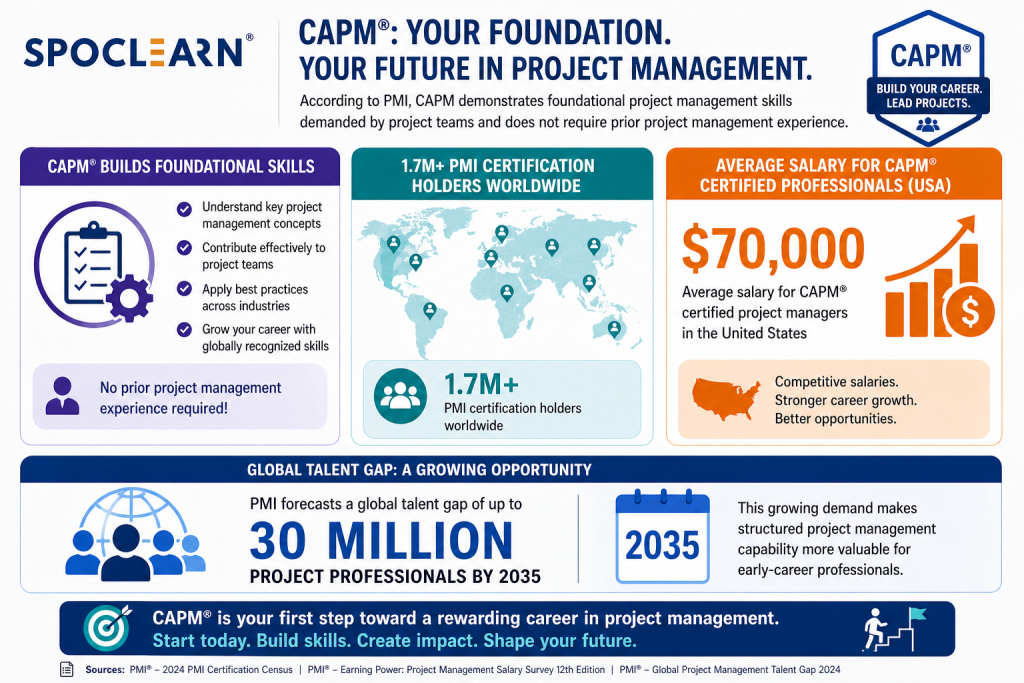
According to PMI, CAPM demonstrates foundational project management skills demanded by project teams and does not require prior project management experience. PMI also highlights that there are 1.7M+ PMI certification holders worldwide and lists the average salary for CAPM-certified project managers in the United States as $70,000. PMI also forecasts a global talent gap of up to 30 million project professionals by 2035, making structured project management capability more valuable for early-career professionals.
Source: CAPM® Your foundation for growth
This blog explains the top CAPM exam mistakes, why candidates fail, and how to fix each issue with a smarter preparation strategy.
Why Candidates Fail the CAPM Exam
Most CAPM candidates make one major mistake: they prepare as if the exam only checks memory. In reality, the CAPM exam tests whether you understand how project management concepts apply in practical situations.
PMI’s CAPM exam content outline is the most important reference document because it explains the exam domains and what candidates are expected to know. Candidates who ignore the official outline often spend too much time on low-value topics and too little time on areas that appear frequently in the exam.
| Common Reason for Failure | What Usually Happens | Better Approach |
|---|---|---|
| Studying without the CAPM ECO | Candidate follows random YouTube videos or old notes | Start with PMI’s official CAPM Exam Content Outline |
| Memorizing definitions only | Candidate struggles with scenario-based questions | Learn concepts with examples |
| Ignoring Agile and Business Analysis | Candidate prepares only traditional PM topics | Cover predictive, agile, hybrid, and BA concepts |
| Taking too few mock exams | Candidate lacks exam confidence and timing | Attempt multiple timed practice tests |
| Poor revision planning | Candidate forgets formulas, terms, and process logic | Use weekly revision cycles |
Mistake 1: Not Reading the Official CAPM Exam Content Outline
The CAPM Exam Content Outline is not optional. It is the blueprint for the exam. Many candidates fail because they depend only on third-party study material without checking whether it aligns with the current exam structure.
The CAPM exam is no longer only about memorizing PMBOK terms. It includes project management fundamentals, predictive methodologies, agile frameworks, business analysis, and practical project situations.
Fix
Download the official CAPM Exam Content Outline from PMI and map your study plan to the domains. Create a checklist and mark every topic as “Not Started,” “Learning,” “Practiced,” or “Exam Ready.”
Use this simple study mapping table:
| CAPM Study Area | Preparation Goal | Practice Method |
|---|---|---|
| Project Management Fundamentals | Understand key terms, roles, constraints, and lifecycle basics | Flashcards + examples |
| Predictive Methodologies | Learn scope, schedule, cost, quality, risk, procurement, and stakeholder concepts | Process-based questions |
| Agile Frameworks | Understand Scrum, Kanban, agile mindset, ceremonies, and roles | Scenario questions |
| Business Analysis | Learn requirements, stakeholders, traceability, and solution evaluation | Case-based practice |
| Exam Readiness | Build speed, accuracy, and confidence | Timed mock exams |
Mistake 2: Treating CAPM as a Memory-Based Exam
Many candidates try to memorize terms such as scope baseline, risk register, WBS, stakeholder register, backlog, sprint review, and acceptance criteria. Memorization helps, but it is not enough.
The CAPM exam may ask what a project team member should do next, which document should be updated, or how a project manager should respond in a given situation. These questions require understanding, not just recall.
Example
A weak preparation approach asks:
“What is a risk register?”
A better preparation approach asks:
“A project team identifies a new technical uncertainty during execution. What document should be updated and why?”
Fix
For every concept, learn:
- What it means
- Why it matters
- When it is used
- Who uses it
- What happens if it is ignored
This method turns passive reading into active exam preparation.
Mistake 3: Ignoring Agile and Hybrid Project Management
One of the biggest CAPM exam mistakes is focusing only on traditional project management. Today’s project environments use predictive, agile, and hybrid approaches. PMI’s modern project management direction reflects adaptability, value delivery, and multiple ways of working.
PMI’s Pulse of the Profession 2024 highlights that project success depends on choosing the right approach rather than strictly following one methodology. This is highly relevant for CAPM candidates because the exam expects awareness of different project approaches.
Fix
Do not study agile as a small side topic. Learn it properly.
| Agile Topic | What to Understand |
|---|---|
| Agile mindset | Customer value, adaptability, collaboration |
| Scrum roles | Product Owner, Scrum Master, Developers |
| Scrum events | Sprint planning, daily scrum, review, retrospective |
| Kanban | Flow, WIP limits, visualization |
| Product backlog | Prioritized list of work |
| Iterative delivery | Delivering value in increments |
| Hybrid approach | Combining predictive planning with agile delivery |
A useful strategy is to compare predictive and agile side by side. For example, predictive projects define scope early, while agile projects allow scope to evolve through backlog refinement.
Mistake 4: Studying Without a Realistic Exam Plan
Many candidates say, “I will study whenever I get time.” This usually leads to inconsistent preparation. CAPM success requires a structured plan, even if you study only one hour per day.
Fix
Use a 6-week CAPM preparation plan.
| Week | Study Focus | Output |
|---|---|---|
| Week 1 | CAPM exam structure and PM fundamentals | Understand basic terms and lifecycle |
| Week 2 | Predictive project management | Learn scope, schedule, cost, quality |
| Week 3 | Risk, procurement, communication, stakeholders | Practice process-based questions |
| Week 4 | Agile and hybrid concepts | Compare agile vs predictive |
| Week 5 | Business analysis concepts | Practice requirements-based scenarios |
| Week 6 | Mock exams and revision | Improve timing and weak areas |
This plan works well for working professionals, students, and graduates because it spreads learning across manageable stages.
Mistake 5: Skipping Mock Exams Until the Last Week
Some candidates read the material for weeks but avoid practice questions. This creates a false sense of confidence. The CAPM exam tests how quickly and accurately you can apply concepts.
Mock exams reveal your weak areas. They also train your brain to handle PMI-style wording.
Fix
Start practice questions early. Do not wait until the final week.
Recommended practice structure:
| Preparation Stage | Practice Target |
|---|---|
| After each topic | 20–30 topic-wise questions |
| Mid-preparation | 1 half-length mock test |
| Final two weeks | 3–5 full-length timed mock exams |
| Last week | Review incorrect answers only |
When reviewing mock exams, do not only check the correct answer. Ask why the other options are wrong. This improves your judgment and reduces confusion in the real exam.
Mistake 6: Not Understanding PMI’s Question Style
CAPM questions are often direct, but many still require careful reading. Candidates fail when they rush, miss keywords, or choose technically correct but contextually weak answers.
For example, words such as “first,” “next,” “best,” “most likely,” and “should” change the meaning of the question.
Fix
Use the 3-step question method:
- Identify the project situation.
- Find the keyword: first, next, best, except, most likely.
- Eliminate two wrong options before choosing the answer.
This technique improves accuracy, especially when two options appear similar.
Mistake 7: Ignoring Business Analysis Concepts
Business analysis is a common weak area for CAPM candidates, especially those from non-BA backgrounds. They may understand project scheduling but struggle with requirements, stakeholders, traceability, validation, and solution evaluation.
Fix
Learn business analysis through practical examples.
| BA Concept | Simple Meaning | Example |
|---|---|---|
| Requirement | What the customer or business needs | “The system must generate monthly reports” |
| Traceability | Linking requirements to deliverables | Requirement linked to test case |
| Stakeholder analysis | Understanding who is impacted | Customer, sponsor, end user |
| Acceptance criteria | Conditions for approval | Report must export in PDF |
| Solution evaluation | Checking whether the solution delivers value | User feedback after rollout |
CAPM candidates should understand that business analysis connects business needs with project deliverables.
Mistake 8: Not Revising Formulas and Key Terms
The CAPM exam may include basic calculations or formula-based understanding. Candidates often lose easy marks because they forget simple formulas or confuse terms.
Fix
Create a one-page formula and terms sheet.
Important areas to revise include:
| Topic | What to Revise |
|---|---|
| Earned Value Basics | PV, EV, AC, CPI, SPI |
| Estimation | Three-point estimating, analogous estimating |
| Scheduling | Critical path, float, dependencies |
| Risk | Probability, impact, risk response |
| Quality | Prevention, inspection, cost of quality |
Do not just memorize formulas. Understand what the result means. For example, CPI below 1 means cost performance is unfavorable.
Mistake 9: Using Outdated Study Material
The CAPM exam has evolved. Older study guides may not reflect the latest exam domains or agile/business analysis coverage. Candidates who rely on outdated material often study topics that are no longer central while missing newer exam expectations.
Fix
Use the latest PMI resources and current CAPM-aligned training material. PMI recommends reviewing the CAPM Exam Content Outline to know what is covered and how the exam is structured.
Use official references first, then add practice guides, instructor-led training, and mock exams.
Mistake 10: Studying Alone Without Feedback
Self-study works for disciplined candidates, but many learners struggle because they do not know whether their understanding is correct. This becomes risky when preparing for agile, hybrid, and business analysis topics.
Fix
Join a CAPM training program, study group, or instructor-led course if you need structure. PMI notes that Authorized Training Partner instructor-led exam prep courses provide expert-led support, structured learning, and networking or study group benefits.
Feedback helps you correct mistakes early and avoid repeating the same wrong assumptions.
Expert Insight: Why CAPM Preparation Matters Beyond the Exam
Project management is no longer limited to people with the title “Project Manager.” Business analysts, coordinators, operations executives, engineers, marketing teams, IT professionals, and consultants all work on projects.
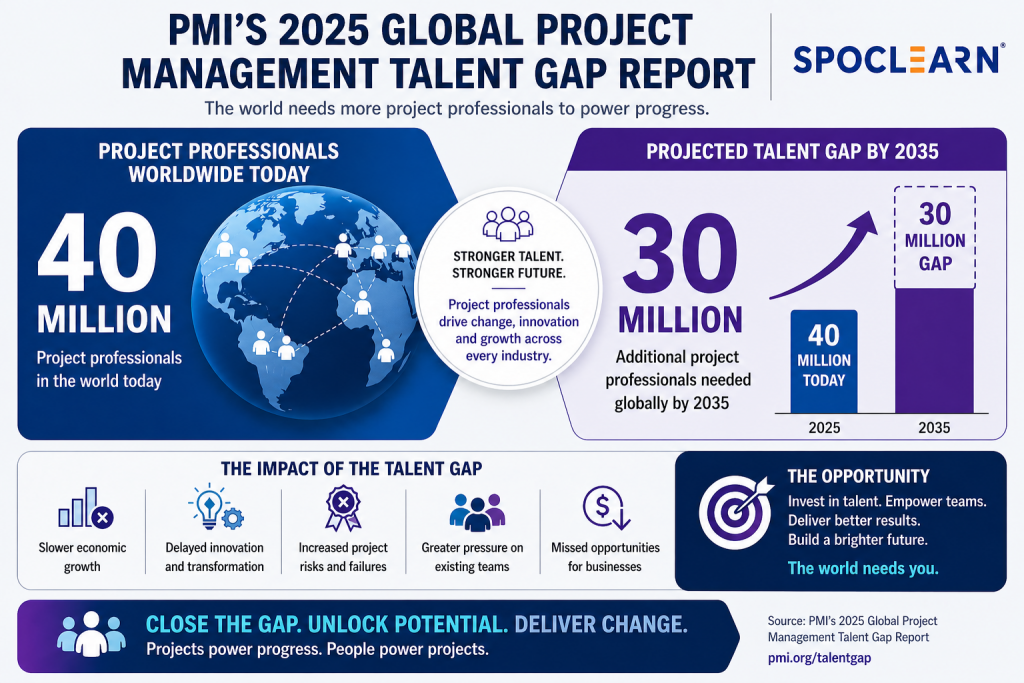
PMI’s 2025 Global Project Management Talent Gap report estimates nearly 40 million project professionals worldwide today and projects a possible talent gap of up to 30 million more by 2035. This means CAPM certification can help early-career professionals show structured project management knowledge in a competitive job market.
Source: PMI’s 2025 Global Project Management Talent Gap Report
A relevant quote for the blog:
“The world is becoming projectified.” — Sunil Prashara, former President and CEO, PMI.
This quote fits well in the introduction or conclusion because CAPM is valuable for professionals entering a project-driven business world.
CAPM Exam Mistakes and Fixes Summary Table
| Mistake | Why It Hurts Your Score | Quick Fix |
|---|---|---|
| Ignoring PMI ECO | You study the wrong topics | Use PMI’s official CAPM outline |
| Memorizing only | You fail application-based questions | Learn concepts with examples |
| Avoiding agile | You miss modern project questions | Study Scrum, Kanban, hybrid |
| No study plan | Preparation becomes inconsistent | Follow a 6-week schedule |
| Late mock exams | Weak exam timing | Start practice early |
| Poor question reading | You choose misleading options | Highlight keywords |
| Ignoring BA | You lose marks in requirements topics | Learn BA basics with cases |
| Outdated resources | Content may not match current exam | Use updated PMI-aligned material |
| No revision sheet | Easy concepts get forgotten | Maintain formula and term notes |
| No feedback | Mistakes remain hidden | Join training or study groups |
Practical CAPM Study Tips for First-Time Candidates
Start with the official CAPM exam outline. Then choose one study resource and stick to it instead of switching between too many videos, notes, and books. Study in short daily sessions and use examples from real workplace situations. For instance, if you work in sales, think of a CRM implementation project. If you work in IT, think of a software rollout. This makes project terms easier to remember.
After every study session, answer practice questions. Review wrong answers carefully. Maintain a mistake log with three columns: topic, reason for error, and correction. This habit can improve your final score because it turns every mistake into a learning point.
In the final week, avoid learning too many new topics. Focus on revision, mock test analysis, formulas, agile terms, and business analysis concepts.
FAQs
1. Is the CAPM exam difficult for beginners?
The CAPM exam is beginner-friendly, but it is not easy without structured preparation. Candidates should understand PMI terminology, agile concepts, predictive project management, and business analysis basics. A planned study schedule and mock exams make the exam much easier to manage.
2. How long should I study for the CAPM exam?
Most candidates need 6 to 8 weeks of consistent preparation. Students may prepare faster, while working professionals may need more time. A good plan includes concept learning, practice questions, mock exams, revision notes, and focused review of weak areas.
3. What is the best way to pass the CAPM exam on the first attempt?
Use PMI’s official CAPM Exam Content Outline, follow a weekly study plan, practice topic-wise questions, take timed mock exams, and review mistakes carefully. Focus on understanding concepts instead of memorizing definitions because many questions test practical application.
4. Does CAPM certification help in getting project management jobs?
Yes, CAPM certification can help entry-level professionals demonstrate project management knowledge. It is useful for project coordinators, analysts, graduates, team members, operations professionals, and anyone seeking roles where planning, coordination, stakeholder communication, and project execution skills matter.
5. What should I revise before the CAPM exam?
Revise PMI terminology, project lifecycle concepts, agile roles and events, predictive planning, risk, quality, stakeholders, communication, business analysis basics, and simple formulas. Also review your mock exam mistakes because they show where your understanding needs final improvement.s analysts, engineers, team leads, and career changers build a globally recognized foundation in project management.
Conclusion
The CAPM exam is not just a test of memory. It checks whether you understand project management foundations, predictive approaches, agile principles, business analysis, and real-world project situations. Candidates usually fail because they study without the PMI exam outline, ignore agile and BA topics, skip mock exams, or rely on outdated resources.
To pass the CAPM certification exam, build a focused study plan, practice regularly, revise smartly, and understand why each concept matters in real projects. For global learners searching for CAPM exam preparation, CAPM certification training, CAPM study guide, CAPM exam tips, and how to pass CAPM exam, the best strategy is simple: prepare with PMI-aligned resources, practice with intent, and learn project management as a workplace skill, not just an exam subject.