

Trending Now

Top SRE Challenges in 2026: Toil, Tool Overload & How Organizations Can Fix Reliability Gaps
From Chaos to Control: How PMP Frameworks Help Organizations Deliver Projects On Time and Within Budget
From Beginner to Agile Pro: Step-by-Step Roadmap with Agile Scrum Foundation Certification
What Is CRISC Certification in 2026? Updated ISACA Exam, Domains, Skills & Career Value Explained
Struggling with Process Inefficiencies? How LSSGB Solves Workflow Bottlenecks in 2026
SIAM in 2026: How to Fix Multi-Vendor Chaos and Achieve End-to-End Service Accountability (EXIN SIAM BoK V3 Guide)
CISM Certification 2026 Update: What’s Changing in ISACA’s New Exam Structure (Nov 2026)
Step-by-Step Guide to Master Primavera P6 for Project Managers (2026 Edition)
Oracle Primavera P6 Training Guide (2026): Skills Every Project Professional Must Master
What’s New in PMP 2026? Key PMI Updates, Exam Pattern Changes & What It Means for Your Career
PRINCE2 7 Processes Explained (2026): A Step-by-Step Walkthrough from Start to Close
Who Should Take the ITIL V5 Bridge Course? Eligibility, Benefits & ROI Explained
PL-300 Practice Questions 2026: 60 Scenario-Based Questions with Explanations
From Beginner to Expert: The Ultimate Oracle Primavera P6 Learning Path for Project Professionals
ITIL v5 Framework Guide: Core Concepts, Principles, and Real-World Applications
Agile Scrum Foundation vs Scrum Master: Which Certification Should You Choose in 2026?
CRISC® Certification Guide 2026: Syllabus, Exam Pattern, Salary & Career Growth Explained
PMI-PBA® Certification in 2026: Complete Guide, Career Scope, Salary & Industry Demand
CISA Exam Changes & Syllabus Breakdown (2026 Update + Study Strategy)
CISM Certification Roadmap 2026: Step-by-Step Guide to Becoming a Security Manager
Lean vs Six Sigma vs Lean Six Sigma: What’s the Difference and When to Use Each?
AI and PRINCE2 7th Edition: What PMs Must Know
Performance Max Campaign Performance Dropped? Here’s the Real Reason (And Fix)
ITIL v5 Trends: What IT Leaders Must Know About the Next Phase of ITSM
Why Oracle Primavera P6 Certification Is Becoming Essential for Project Managers in 2026
PRINCE2 7 Roles & Responsibilities: Who Does What (Project Board to Team Manager)
Stakeholder Engagement Strategies That Actually Deliver Results
The Future of Project Management: Trends Reshaping 2025–2030 
Lean Six Sigma Templates Pack: SIPOC, CTQ, Fishbone, Control Plan, A3 (Free Guide)
CAPM Exam Prep Strategy 2026: Practice Questions, Mock Tests, and Time Management
ITIL 4 vs ITIL (Version 5): The Global, No‑Fluff Guide to What’s New, What Stays, and How to Transition
ITIL 5 Certification Demand and Job Market Trends: Complete Career Guide (2026)
ITIL v5 Job Roles Explained: From Service Desk Analyst to IT Service Manager
PL-300 DAX Questions You Must Master in 2026 (With Patterns)
How to Write an RCA Report That Actually Prevents Repeat Incidents (Templates + Examples)
Digital Transformation Projects: Why They Fail & How to Fix Them
PMI’s Late-2026 PMP® Policy Update Will Reject Most Live Training Hours — Here’s How to Protect Your 35 Contact Hours  
Why Are My Pages Not Indexed Even After Sitemap Submission? (And How to Fix It)
Minitab for Lean Six Sigma (2026): The Only Functions Most Belts Actually Need
Top 10 Project Scheduling Tools for PMP & PRINCE2 Aspirants (2026 Guide)
SIPOC Made Simple: How to Map a Process in 20 Minutes (with Examples)
PL-300 vs DP-600 vs DP-500 in 2026: Which Certification Should You Take First?
Portfolio Management Mastery: Why PfMP and PgMP Are Rising in Demand (2026)
How to Build a “Closed-Loop” CAPA System Using RCA (So Fixes Don’t Die in Docs)
Yellow Belt vs Green Belt vs Black Belt: Which Lean Six Sigma Level Should You Choose in 2026?
DMAIC Explained (2026): The Step-by-Step Method to Fix Any Process
PRINCE2 7 Tailoring Guide (2026): How to Adapt the Method for Any Project Size
Google Ads vs SEO in 2026: Which Should You Invest In First?
Process Mining + Lean Six Sigma: The 2026 Playbook for Faster, Data-Driven DMAIC
CAPM vs PMP in 2026: Which Certification Should You Choose (and When)?
PRINCE2 7 Certification Path: Foundation → Practitioner → Next Steps (2026 Roadmap)
Oracle Primavera P6 Training Roadmap (2026): From Beginner to Project Controls Expert
AI Overviews & AI Mode SEO: How to Win Visibility When Google Answers First
RCA vs 5 Whys vs Fishbone vs 8D vs A3: When to Use Which (Decision Framework)
PL-300 Case Study Walkthrough: From Raw Data to Executive Dashboard (End-to-End)
PRINCE2 7 Foundation: Complete Exam Guide, Format, Pass Mark, and Study Plan (2026)
Lean Six Sigma Yellow Belt: The 2026 Beginner Guide (Tools, Examples, Real Workplace Use)
Technical SEO Audit 2026: The Only Checklist That Still Matters
Content Refresh Strategy 2026: How to Update Old Pages for New Traffic
CAPM Exam Content Outline Explained: Domains, Weightage, and What to Study First
GA4 Setup Guide 2026: Step-by-Step for Accurate Tracking
From Keywords to Answers: How Search Works in 2026 
CAPM Certification 2026: The Complete Exam + Training Guide (PMI-Updated)
Traditional SEO vs Answer-First SEO: What Actually Ranks in 2026
ITSM Evolution: From Monolithic Systems to Cloud‑Centric Architectures (2026)
How to Run High-Performance Retargeting Campaigns Using AI
Project Leadership in 2026: Skills Every Successful Project Manager Needs
Technical SEO for 2026: Crawl Optimization, Log Analysis & AI Indexing Signals
Top 12 Project Management Mistakes and How to Avoid Them
PRINCE2® 7 (2026 Guide): What’s New, What Changed, and Why It Matters
Lean Six Sigma in 2026: What’s Changed (AI, Automation, Process Intelligence) & What Still Works
Root Cause Analysis in 2026: The Modern RCA Playbook for Faster, Repeatable Fixes
ITIL Is for Everyone and for Every Organization: A Deep‑Dive Playbook (2026)
Social Media Algorithms Explained (2026 Edition): What Actually Drives Reach Today
Power Query Best Practices 2026: Faster Refresh, Cleaner Models, Fewer Errors
PL-300 Exam Guide 2026: Skills Measured, Study Plan, and What’s Changed
LLMS.txt vs Robots.txt in 2026: What to Implement (and What to Avoid)
SEO in 2026: The Complete Playbook for AI Search, AEO & GEO
Google Ads Audits in 2026: A Step-by-Step Checklist to Fix Wasted Spend and Unlock Growth
AI-Driven Risk Management: Predict Risks Before They Happen
On-Page SEO 2026: New Techniques for Topical Relevance & AI Search
Hybrid Project Management: Why Organizations Are Transitioning in 2026 and Beyond
AI-Powered Project Planning: Faster, Smarter, and More Accurate Strategies 
Industry Predictions for 2026: From GenAI to Value Streams and Total Experience
PMP vs CAPM vs PRINCE2: Which Certification Offers the Best ROI in 2026?
AI in Project Management: How Intelligent Tools Are Transforming PM Workflows 
Performance Max Mastery: How to Scale ROI with Smart Automation 
What is SAFe RTE? (Release Train Engineer)
SAFe RTE: The Complete Guide to Becoming a High-Impact Release Train Engineer (2025–2026)
Time Management: How to Turn Hours into Impact
Lean Six Sigma Green Belt: Skills, Value, Demand & Global Trends 2026
PL-300: Microsoft Power BI Data Analyst Certification for Career Growth Globally 2026
Strong & Sustained Demand for PMP Certification in 2026
Why Organizational Agility Matters: The Strategic Imperative for Big Enterprises
Building an Agility Culture Beyond IT Teams
How to Re-Engage Remote Teams: PMP Question on Motivation and Collaboration
Understanding Tuckman’s Team Development Stages - PMP Exam Question Explained
Why do Business Owners assign business value to team PI Objectives?  
Benefits of EXIN Agile Scrum Foundation Certification
Benefits of PMP Certification for Corporate and Individual Professionals in 2025
Strong & Sustained Demand for PMP Certification in 2026

Strong & Sustained Demand for PMP Certification in 2026

Picture of Bharath Kumar
Bharath Kumar
Bharath Kumar is a seasoned professional with 10 years' expertise in Quality Management, Project Management, and DevOps. He has a proven track record of driving excellence and efficiency through integrated strategies.

In today’s dynamic business and digital landscape, projects are no longer simple one-off efforts. They are complex, global, cross-functional and require agile responses. As a result, the demand for certified project-leaders is rising — and the PMP (Project Management Professional) certification by Project Management Institute (PMI ®) has emerged as a trusted benchmark.

PMI describes the PMP as a certification that “proves you have the project leadership and expertise in any way of working: predictive, hybrid or agile.” Project Management Institute+2PMI India+2 Industry analyses forecast that the demand for PMP-certified professionals will remain strong — especially in India and Asia where digital transformation, infrastructure growth, healthcare and IT continue to drive project volumes. Institute of Project Management+3iCert Global+3@knowledgehut+3
For professionals in Bengaluru, India, this means the time is ripe to invest in a PMP credential — and for corporate L&D providers like Spoclearn, it’s a compelling market-positioning opportunity.
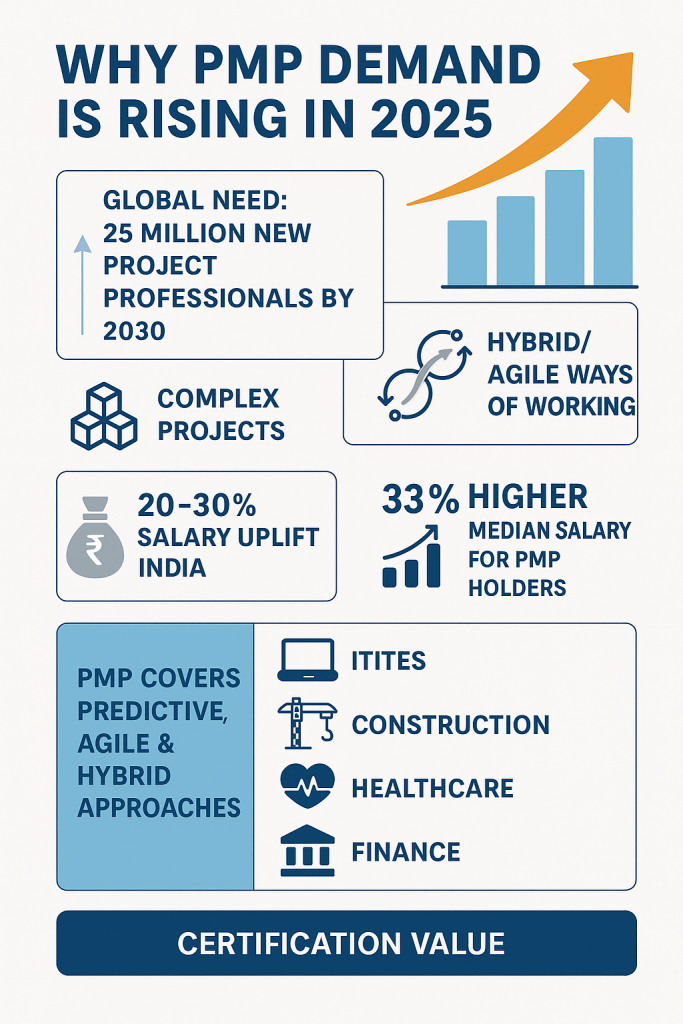
Why PMP Demand is Rising in 2026

Why the Demand is Strong & Sustained

1. Projects are getting more complex

Organisations today operate across geographies, with remote teams, multiple stakeholders, regulatory demands, and technology shifts. According to Simplilearn, “the global demand for skilled project managers is robust across industries” as project complexity and scale grow. Simplilearn.com
Similarly, the IPM Quarterly report states:

“As 2025 unfolds, the demand for project management jobs is steadily climbing.” Institute of Project Management
This creates clear need for professionals who not only manage tasks but can lead outcomes in uncertain environments.

2. Global recognition + market credibility

PMP is accepted in over 200 countries and models for all types of ways of working: traditional (predictive), agile or hybrid. monday.com+1
In India, for example, PMI’s site notes that there are more than 1 000 000 PMP holders globally and the credential delivers a “competitive edge” by validating people-skills, process-skills, and business-environment awareness. PMI India
From the employer side: companies favour hiring PMP-certified professionals because it “instils confidence”, gives “international recognition”, can be a requirement in regulated sectors, and helps mitigate riskprojectmanagementacademy.net

3. Higher salary, better career mobility

In India, a recent KnowledgeHut article highlights that PMP-certified professionals are in “high demand across leading Indian and multinational companies” and earn 20–30 % higher salary compared to non-certified peers. @knowledgehut
Globally, PMI reports that PMP certification holders report 33% higher median salaries on average across 21 countries surveyed. Project Management Institute

This means the investment in PMP is yielding tangible ROI for many professionals.

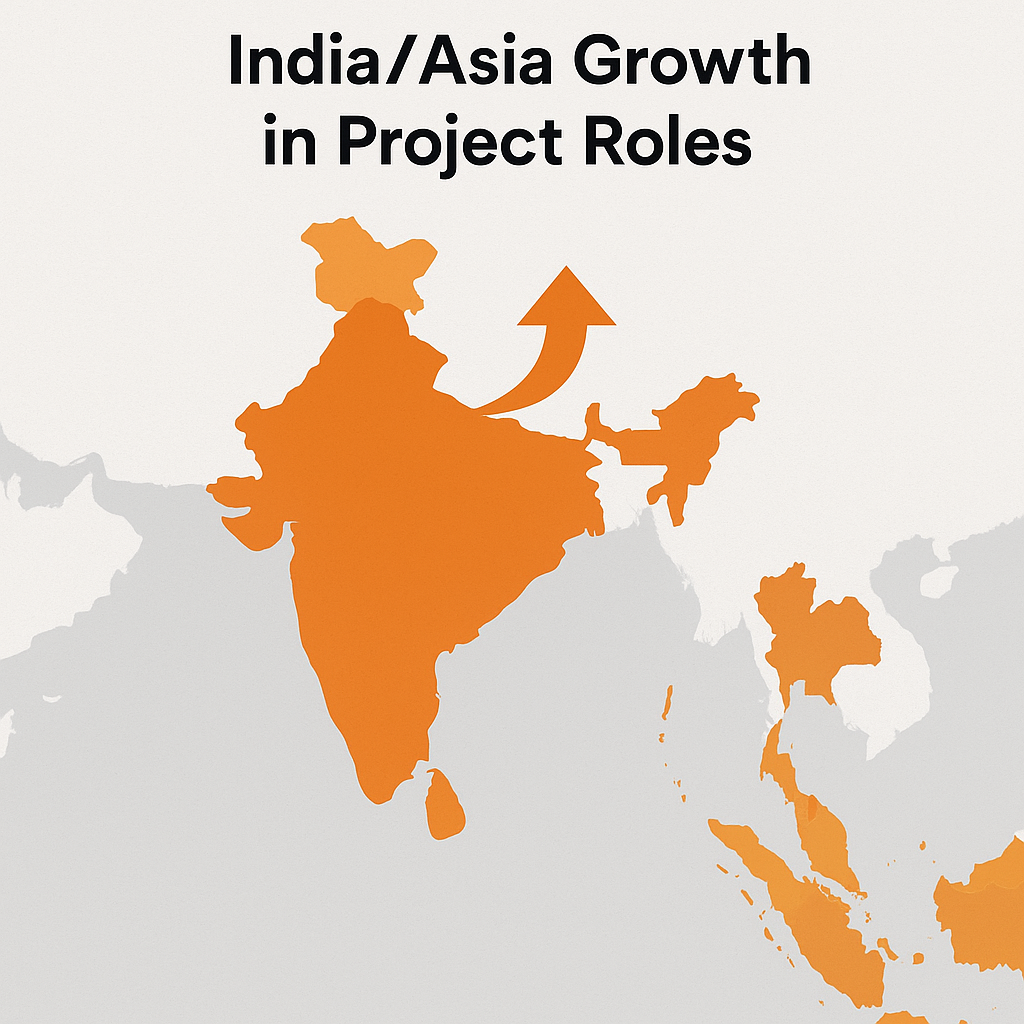
4. India & Asia-Pacific are growth markets

India’s large IT-services industry, infrastructure growth, healthcare expansion and global delivery models create many project-led opportunities. The KnowledgeHut blog states:

“In India … certified project managers are in demand across IT, construction, healthcare, and finance.” @knowledgehut
As organisations increasingly adopt global sourcing, cross-border projects and digital transformations, the need for credentialed, versatile project leaders rises.
5. It fits today’s hybrid/Agile world

The PMP certification now explicitly covers “predictive, agile and hybrid approaches.” Project Management Institute
So, professionals who learn through a PMP training programme know that their credential is aligned with how modern organisations actually run projects — not just old-school Waterfall.

What This Means for You (Professional)

As a professional in Bengaluru or India, here’s how you can leverage this trend:

  • Boost your credibility: If you list “PMP certified” on your profile, it signals you possess leadership, process, and business-outcome capabilities, not just task-execution.
  • Open more roles: Because demand is rising across industries (IT, infrastructure, manufacturing, healthcare), you widen your job-market reach.
  • Increase earnings: With salary uplift and better job positioning, you enhance your return on investment.
  • Global mobility: With PMP recognised worldwide, you become eligible for roles that cross geographies, especially as organisations outsource or operate globally.
  • Stay future-proof: Since the credential emphasises agile/hybrid approaches and modern project leadership, you’re better positioned for evolving project-landscapes.

What It Means for Your Organisation / Training Provider

For Spoclearn – as a corporate L&D & training partner – here’s a strategic take-away:

  • Position your PMP offering as “Supply meets Demand”: With the market wanting more qualified project leaders, you’re offering the solution.
  • Target sectors of growth: In India, focus on IT/ITES, infrastructure, healthcare, BFSI and manufacturing – all showing rising project intensity.
  • Localise your messaging for Bengaluru/India: Use salary uplift data local to India, highlight demand in Indian markets, reference global mobility from India.
  • Promote the hybrid/Agile-aligned version of PMP: Emphasise that the version of PMP you train covers predictive + agile + hybrid ways of working (which is exactly what PMI states).
  • Create an ROI story for corporates: For enterprise clients, talk about risk mitigation, certification credibility, more reliable project outcomes, better internal brand of project-management discipline.

Conclusion

As we head further into 2026, the message is clear: the demand for PMP-certified project professionals is strong and sustained. For professionals in India — especially Bengaluru’s tech and services ecosystem — earning the PMP credential is a strategic move that aligns with market demand, salary uplift, global mobility and relevance in hybrid/Agile ways of working.

For organisations and training providers like Spoclearn, this trend offers a compelling positioning: delivering the right credential when the market is actively looking for it.

If you are ready to advance your project-leadership career — or build your corporate team’s credentials — now is the time.

Leave a Reply

Your email address will not be published. Required fields are marked *

Subscribe us