
Trending Now

PRINCE2 7 Roles & Responsibilities: Who Does What (Project Board to Team Manager)
Stakeholder Engagement Strategies That Actually Deliver Results
The Future of Project Management: Trends Reshaping 2025–2030 
Lean Six Sigma Templates Pack: SIPOC, CTQ, Fishbone, Control Plan, A3 (Free Guide)
CAPM Exam Prep Strategy 2026: Practice Questions, Mock Tests, and Time Management
ITIL 4 vs ITIL (Version 5): The Global, No‑Fluff Guide to What’s New, What Stays, and How to Transition
ITIL 5 Certification Demand and Job Market Trends: Complete Career Guide (2026)
ITIL v5 Job Roles Explained: From Service Desk Analyst to IT Service Manager
PL-300 DAX Questions You Must Master in 2026 (With Patterns)
How to Write an RCA Report That Actually Prevents Repeat Incidents (Templates + Examples)
Digital Transformation Projects: Why They Fail & How to Fix Them
Oracle Primavera P6 Training Guide (2026): Skills Every Project Professional Must Master
PMI’s Late-2026 PMP® Policy Update Will Reject Most Live Training Hours — Here’s How to Protect Your 35 Contact Hours  
Why Are My Pages Not Indexed Even After Sitemap Submission? (And How to Fix It)
Minitab for Lean Six Sigma (2026): The Only Functions Most Belts Actually Need
Top 10 Project Scheduling Tools for PMP & PRINCE2 Aspirants (2026 Guide)
SIPOC Made Simple: How to Map a Process in 20 Minutes (with Examples)
PL-300 vs DP-600 vs DP-500 in 2026: Which Certification Should You Take First?
Portfolio Management Mastery: Why PfMP and PgMP Are Rising in Demand (2026)
How to Build a “Closed-Loop” CAPA System Using RCA (So Fixes Don’t Die in Docs)
Yellow Belt vs Green Belt vs Black Belt: Which Lean Six Sigma Level Should You Choose in 2026?
DMAIC Explained (2026): The Step-by-Step Method to Fix Any Process
PRINCE2 7 Tailoring Guide (2026): How to Adapt the Method for Any Project Size
Google Ads vs SEO in 2026: Which Should You Invest In First?
Process Mining + Lean Six Sigma: The 2026 Playbook for Faster, Data-Driven DMAIC
CAPM vs PMP in 2026: Which Certification Should You Choose (and When)?
PRINCE2 7 Certification Path: Foundation → Practitioner → Next Steps (2026 Roadmap)
Oracle Primavera P6 Training Roadmap (2026): From Beginner to Project Controls Expert
AI Overviews & AI Mode SEO: How to Win Visibility When Google Answers First
RCA vs 5 Whys vs Fishbone vs 8D vs A3: When to Use Which (Decision Framework)
PL-300 Case Study Walkthrough: From Raw Data to Executive Dashboard (End-to-End)
PRINCE2 7 Foundation: Complete Exam Guide, Format, Pass Mark, and Study Plan (2026)
Lean Six Sigma Yellow Belt: The 2026 Beginner Guide (Tools, Examples, Real Workplace Use)
Technical SEO Audit 2026: The Only Checklist That Still Matters
Content Refresh Strategy 2026: How to Update Old Pages for New Traffic
CAPM Exam Content Outline Explained: Domains, Weightage, and What to Study First
GA4 Setup Guide 2026: Step-by-Step for Accurate Tracking
From Keywords to Answers: How Search Works in 2026 
CAPM Certification 2026: The Complete Exam + Training Guide (PMI-Updated)
Traditional SEO vs Answer-First SEO: What Actually Ranks in 2026
ITSM Evolution: From Monolithic Systems to Cloud‑Centric Architectures (2026)
How to Run High-Performance Retargeting Campaigns Using AI
Project Leadership in 2026: Skills Every Successful Project Manager Needs
Technical SEO for 2026: Crawl Optimization, Log Analysis & AI Indexing Signals
Top 12 Project Management Mistakes and How to Avoid Them
PRINCE2® 7 (2026 Guide): What’s New, What Changed, and Why It Matters
Lean Six Sigma in 2026: What’s Changed (AI, Automation, Process Intelligence) & What Still Works
Root Cause Analysis in 2026: The Modern RCA Playbook for Faster, Repeatable Fixes
ITIL Is for Everyone and for Every Organization: A Deep‑Dive Playbook (2026)
Social Media Algorithms Explained (2026 Edition): What Actually Drives Reach Today
Power Query Best Practices 2026: Faster Refresh, Cleaner Models, Fewer Errors
PL-300 Exam Guide 2026: Skills Measured, Study Plan, and What’s Changed
LLMS.txt vs Robots.txt in 2026: What to Implement (and What to Avoid)
SEO in 2026: The Complete Playbook for AI Search, AEO & GEO
Google Ads Audits in 2026: A Step-by-Step Checklist to Fix Wasted Spend and Unlock Growth
AI-Driven Risk Management: Predict Risks Before They Happen
On-Page SEO 2026: New Techniques for Topical Relevance & AI Search
Hybrid Project Management: Why Organizations Are Transitioning in 2026 and Beyond
AI-Powered Project Planning: Faster, Smarter, and More Accurate Strategies 
Industry Predictions for 2026: From GenAI to Value Streams and Total Experience
PMP vs CAPM vs PRINCE2: Which Certification Offers the Best ROI in 2026?
AI in Project Management: How Intelligent Tools Are Transforming PM Workflows 
Performance Max Mastery: How to Scale ROI with Smart Automation 
What is SAFe RTE? (Release Train Engineer)
SAFe RTE: The Complete Guide to Becoming a High-Impact Release Train Engineer (2025–2026)
Time Management: How to Turn Hours into Impact
Lean Six Sigma Green Belt: Skills, Value, Demand & Global Trends 2026
PL-300: Microsoft Power BI Data Analyst Certification for Career Growth Globally 2026
Strong & Sustained Demand for PMP Certification in 2026
Why Organizational Agility Matters: The Strategic Imperative for Big Enterprises
Building an Agility Culture Beyond IT Teams
How to Re-Engage Remote Teams: PMP Question on Motivation and Collaboration
Understanding Tuckman’s Team Development Stages - PMP Exam Question Explained
Why do Business Owners assign business value to team PI Objectives?  
Benefits of EXIN Agile Scrum Foundation Certification
Benefits of PMP Certification for Corporate and Individual Professionals in 2025
Streamlining Vaccine Development during a Global Health Crisis – An Imaginary PRINCE2 Case Study
PMBOK Guide Tips for Managing Change and Uncertainty in Projects
How to Apply PRINCE2 Methodologies in Real-World Projects
What is PRINCE2® 7? A Simple Explanation for Beginners
Project Management Certification in the United States of America
The Evolution of Project Management: From Process-Based to Principles-Based Approaches
Mastering ITIL and PRINCE2 for Enhanced Project Outcomes in Indian GCCs
Exploring the Eight Project Performance Domains in the PMBOK® Guide
PMI Best Practices for Project Management Across Different Environments
Your Ultimate Project Management Guide: Explained in Detail
Top Benefits of PRINCE2 for Small and Medium Enterprises
Best Project Management Certifications of 2025
The Importance of Tailoring PRINCE2 to Fit Your Organization's Needs
Resolve Slash URLs & Learn 301 vs. 308 Redirects Effectively
What is a standard change in ITIL 4?
Which practice provides a single point of contact for users?
What is the first step of the guiding principle 'focus on value'?
Which is a benefit of using an IT service management tool to support incident management?
A service provider describes a package that includes a laptop with software, licenses, and support. What is this package an example of?
What should be included in every service level agreement?
What are the two types of cost that a service consumer should evaluate?
The Business Case for SAFe®: Solving Modern Challenges Effectively
Which ITIL concept describes governance?
How does ‘service request management’ contribute to the ‘obtain/build’ value chain activity?
history-of-devops-origins-growth-explained

The History of DevOps: Tracing Its Origins and Growth

Picture of Bharath Kumar
Bharath Kumar
Bharath Kumar is a seasoned professional with 10 years' expertise in Quality Management, Project Management, and DevOps. He has a proven track record of driving excellence and efficiency through integrated strategies.

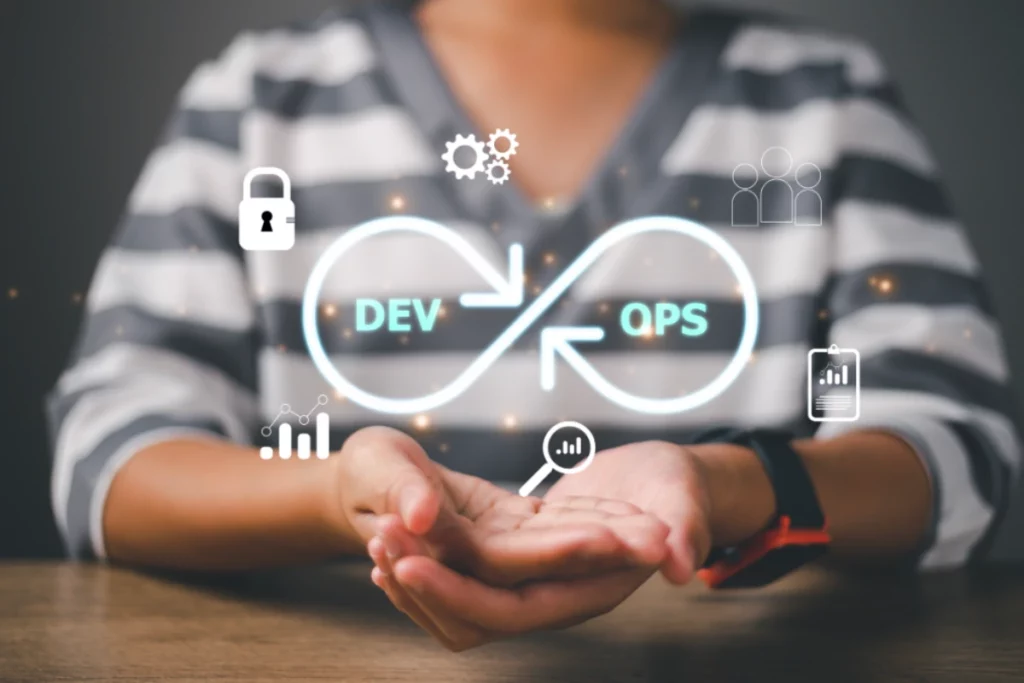
Introduction DevOps has become a central philosophy in modern IT and software development, blending development (Dev) and operations (Ops) to enable faster, more reliable, and more efficient workflows. To fully appreciate DevOps’ value, it is important to trace its origins, evolution, and impact. This article provides an insightful dive into the history of DevOps, exploring how it emerged, evolved, and continues to shape the future of IT and software development.

history-of-devops-timeline

The Roots of DevOps

The story of DevOps begins in the early 2000s. The traditional model of software development, often called the “waterfall model,” was structured in silos. Developers would create software and then pass it to operations for deployment. This process was slow and prone to errors. Developers and operations teams worked separately, leading to a gap in communication and understanding, which resulted in delays, bugs, and frustrations.

A series of technological and cultural shifts in the 2000s began to pave the way for what would later become DevOps.

1. Agile Methodology (2001)

The Agile Manifesto, published in 2001, became a catalyst for change in how software was built. Agile emphasized iterative development, collaboration between teams, and customer feedback, which aligned well with the DevOps mindset. The goal was to build, test, and deliver software faster and with fewer errors by breaking down traditional silos between teams.

2. The Emergence of Lean Thinking

Borrowed from manufacturing, lean thinking focused on eliminating waste and improving flow. Concepts such as continuous improvement and reducing bottlenecks were foundational to what would eventually become key DevOps principles. The philosophy of lean, combined with Agile, provided a template for how to streamline the development process.

The Birth of DevOps (2007-2009)

DevOps as a term was coined in 2009, but the movement began a couple of years earlier. Several industry leaders recognized the need for better collaboration between development and operations teams. Patrick Debois, often referred to as the “father of DevOps,” was among those at the forefront of this realization.

1. The Velocity Conference (2009)

In 2009, the concept of DevOps gained traction at the Velocity Conference, where John Allspaw and Paul Hammond gave a now-legendary talk titled “10 Deploys Per Day: Dev and Ops Cooperation at Flickr.” Their presentation illustrated how cooperation between development and operations teams allowed Flickr to deploy code to production multiple times a day, a stark contrast to the monthly or even quarterly releases that were the norm for many organizations at the time.

2. The First DevOps Days (2009)

Following the Velocity Conference, Patrick Debois organized the first “DevOpsDays” in Belgium. This event brought together developers and operations professionals to share their experiences and insights into breaking down the barriers between their teams. The term “DevOps” was formally introduced, and the movement quickly spread globally.

The DevOps Movement Gains Momentum (2010-2014)

As DevOps took root, more organizations began to adopt its practices. The rise of cloud computing and automation tools further fueled the growth of the DevOps movement. The need for faster, more reliable deployments led to the creation of new tools and practices designed specifically for DevOps workflows.

1. The Rise of Continuous Integration (CI) and Continuous Delivery (CD)

One of the most significant advancements during this time was the adoption of CI/CD pipelines. Tools like Jenkins, Travis CI, and CircleCI enabled developers to integrate code continuously and deploy it automatically. CI/CD pipelines became a key enabler of DevOps by automating the process of testing and deploying code, reducing errors, and increasing speed.

Diagram-of-a-CI-CD-pipeline

2. Infrastructure as Code (IaC)

Another major advancement was the adoption of Infrastructure as Code (IaC). Tools like Chef, Puppet, and Ansible allowed operations teams to manage infrastructure programmatically, making it easier to scale, deploy, and maintain environments. This marked a departure from the manual configuration processes that had dominated the industry for decades.

3. Cloud Computing

Cloud platforms like AWS, Microsoft Azure, and Google Cloud provided the elasticity and scalability needed for DevOps to thrive. The cloud-enabled teams to spin up environments in minutes, automate infrastructure, and scale their operations more easily, further bridging the gap between development and operations.

The Modern DevOps Era (2015-Present)

By 2015, DevOps had transformed from a niche concept into a mainstream philosophy. It became integral to organizations looking to accelerate their software delivery and respond quickly to market demands.

1. The DevOps Toolchain
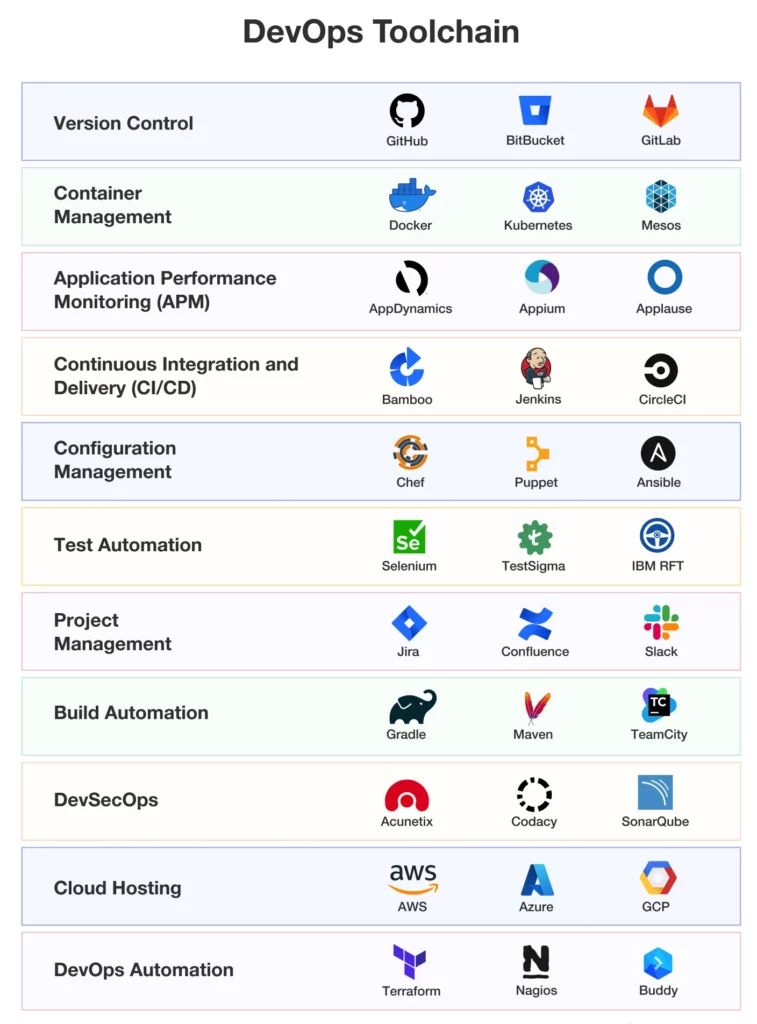
DevOps-Toolchain

As DevOps practices matured, a wide array of tools emerged to support various stages of the DevOps lifecycle, including:

  • Version control systems like Git and GitHub.
  • CI/CD tools such as Jenkins, CircleCI, and TravisCI.
  • Containerization technologies like Docker and Kubernetes enabled consistent environments from development through production.
  • Monitoring and observability tools like Prometheus, Grafana, and ELK stack.

These tools became indispensable for implementing DevOps practices effectively, allowing teams to automate everything from testing to deployment and monitoring.

2. DevOps and Security: DevSecOps

As the DevOps movement matured, security emerged as a critical concern. Enter DevSecOps, a variation of DevOps that emphasizes integrating security practices into the DevOps pipeline. DevSecOps ensures that security is not an afterthought but rather a fundamental part of the software development lifecycle.

DevOps pipeline

3. Cultural Shifts and Leadership Buy-in

As DevOps practices became more established, organizations recognized that DevOps is not just about tools—it’s about culture. Successful DevOps implementations require strong leadership, collaboration, and a culture that encourages experimentation and learning from failure. The emphasis shifted towards creating a “blameless culture,” where teams focus on resolving issues collaboratively rather than assigning blame.

The Future of DevOps

Looking ahead, DevOps is set to continue its rapid evolution. Some key trends include:

1. Artificial Intelligence and Machine Learning

AI and ML are beginning to play a larger role in DevOps. Predictive analytics and AI-driven automation tools will help teams identify issues before they occur and make proactive adjustments to optimize performance.

2. Edge Computing

With the rise of edge computing, fast, reliable deployments will become even more critical. DevOps practices will continue to evolve to support the deployment of applications at the edge, ensuring consistent performance across distributed environments.

3. The Continued Rise of DevSecOps

As cyber threats continue to evolve, DevSecOps will become more integral to DevOps practices. Automating security testing and integrating security checks into CI/CD pipelines will be essential for ensuring robust, secure applications.

Conclusion

The history of DevOps is a testament to the power of collaboration, automation, and continuous improvement. DevOps has revolutionized how software is built, tested, and deployed, from its roots in Agile and lean thinking to its widespread adoption across industries. As organizations continue to embrace digital transformation, DevOps will remain a cornerstone of successful IT operations, driving innovation and efficiency for years.

Leave a Reply

Your email address will not be published. Required fields are marked *

Subscribe us