


Projects can fail. And it does not happen overnight. Problems often start small and grow with time. A missed deadline or an overrun budget may be the final warning sign. The cause for which a project fails can include anything – be it unclear goals, poor planning, frequent changes or weak communication. The list goes on. PMP does not promise that every project will succeed. However, following PMP practices helps professionals plan better and deal with problems easily. Today, in this blog, we will understand how PMP can help a project become a successful one. But before that let’s first see where projects lose control.
What Does Project Failure Actually Mean?
Project failure does not necessarily mean that a project was cancelled or left unfinished. A completed project can also fail. The project may cost more than planned or fail to meet agreed requirements. Poor-quality results can also affect a project’s success. It can also lose stakeholder support or fail to create the expected business value. Knowing this difference helps. Finishing the project is not the same as achieving success. A project becomes successful when it delivers real value – the results it was meant to achieve.
The Most Common Reasons Behind A Project’s Failure
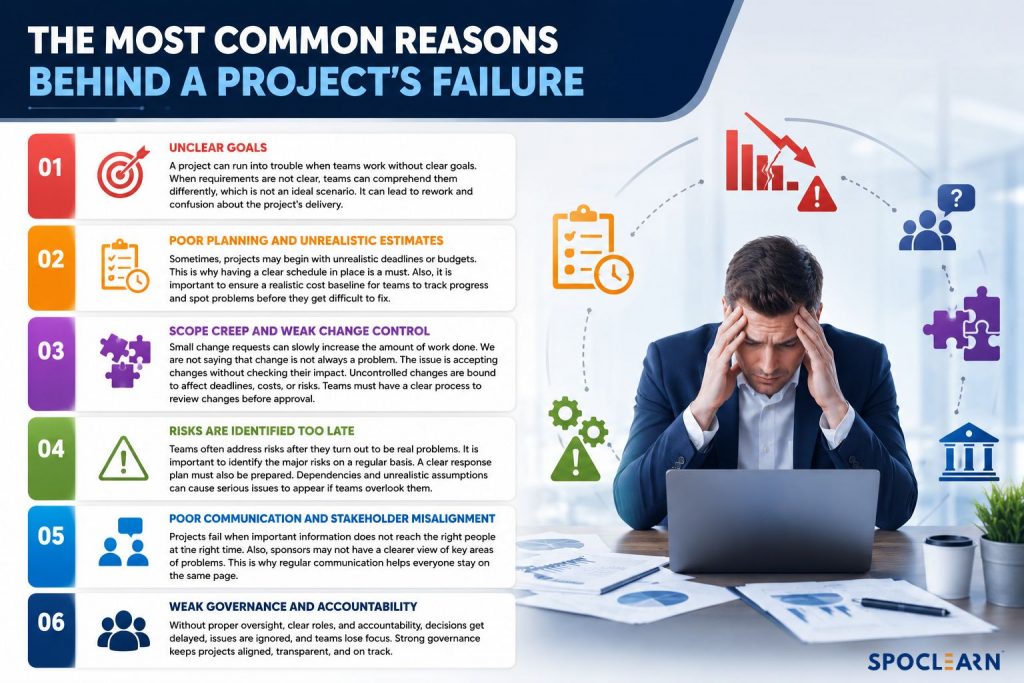
Unclear Goals
A project can run into trouble when teams work without clear goals. When requirements are not clear, teams can comprehend them differently, which is not an ideal scenario. It can lead to rework and confusion about the project’s delivery.
Poor Planning and Unrealistic Estimates
Sometimes, projects may begin with unrealistic deadlines or budgets. This is why having a clear schedule in place is a must. Also, it is important to ensure a realistic cost baseline for teams to track progress and spot problems before they get difficult to fix.
Scope Creep and Weak Change Control
Small change requests can slowly increase the amount of work done. We are not saying that change is not always a problem. The issue is accepting changes without checking their impact. Uncontrolled changes are bound to affect deadlines, costs, or risks. Teams must have a clear process to review changes before approval.
Risks Are Identified Too Late
Teams often address risks after they turn out to be real problems. It is important to identify the major risks on a regular basis. A clear response plan must also be prepared. Dependencies and unrealistic assumptions can cause serious issues to appear if teams overlook them.
Poor Communication and Stakeholder Misalignment
Projects fail when important information does not reach the right people at the right time. Also, sponsors may not have a clearer view of key areas of problems. This is why regular communication helps everyone stay on the same page.
Weak Governance and Accountability
Projects are most likely to fail due to unclear decision-making processes. Problems may take too long to address, decisions might get delayed. Important tasks may have no direct owner. This is where strong governance makes sense. This enables teams to make decisions on time and act as soon as problems arise.
How PMP Helps Prevent Project Failure
PMP is useful for professionals who want to manage the main areas that can push a project off track. Instead of focusing only on daily tasks, PMP covers the full project scope, time, cost, risks, and business value. The PMI PMBOK® Guide also covers these important areas of project management.
| Failure Risk | PMP-Aligned Response |
| Unclear objectives | Setting clear goals, scope, and success measures |
| Unrealistic schedules | Putting tasks in order, estimating time and tracking progress |
| Cost overruns | Setting a realistic cost baseline and comparing actual spending with the plan |
| Scope creep | Reviewing proposed changes and assessing their impact before approval |
| Unmanaged risks | Identifying risk on time, assigning people, planning resources and reviewing them regularly |
| Stakeholder conflict | Understanding stakeholder needs and planning the right level of engagement |
| Communication gaps | Sharing the right information with the right people at the right time |
| Weak delivery control | Tracking performance and adjusting when needed |
PMP is also about leadership. It is not limited to one way of working. PMP covers predictive, hybrid, and agile approaches. As a result, teams can choose and adapt practices that suit the project best.
Conclusion
Projects can fail due to several connected problems. Enrolling in a PMP course, therefore, is a good idea for professionals who want to take on greater responsibility at work. The training helps individuals spot warning signs early and take action before issues get serious.
FAQs
What project problems can PMP help professionals manage?
A PMP certification makes it easier for project professionals to manage common challenges faced during a project delivery. It can be anything – be it unclear scope, missed deadlines, communication gaps, or unmanaged risks. For professionals who want a structured approach to project planning, taking a PMP course is a good idea.
How does PMP help with project risk management?
PMP practices are meant for teams who want to identify risks before they become serious issues. For professionals, PMP training is a better way to assess risks, assign responsibility and review risks throughout the project. As a result, professionals can act early and reduce possible disruption.
Is PMP useful for Agile and hybrid projects?
Yes, PMP includes agile, hybrid approaches, which help professionals choose practices according to the project environment.