


Google Search is no longer just a list of blue links. Across the United States, businesses, marketers, publishers, and enterprise brands are witnessing one of the biggest transformations in digital visibility since the rise of mobile-first indexing. With the rapid rollout of Google AI Overviews, AI Mode, generative search experiences, and AI-powered answer systems, SEO in 2026 looks dramatically different from what it did only a few years ago.
For US businesses competing in highly competitive markets such as SaaS, cybersecurity, healthcare, education, fintech, ecommerce, and professional services, traditional SEO strategies are no longer enough. Ranking #1 on Google does not always guarantee clicks anymore. Instead, brands now compete to become trusted sources that Google’s AI systems choose to cite inside AI-generated answers.
This shift is forcing American enterprises and digital marketers to rethink content strategy, technical SEO, authority building, user intent optimization, and brand visibility.
The Rise of Google AI Search in the United States
Google’s AI-powered search ecosystem now includes:
- AI Overviews
- AI Mode
- Generative Search Experiences
- Conversational Search
- AI-generated summaries
- Contextual recommendation systems
Google recently announced new AI search enhancements designed to help users discover websites, insights, and content more interactively.
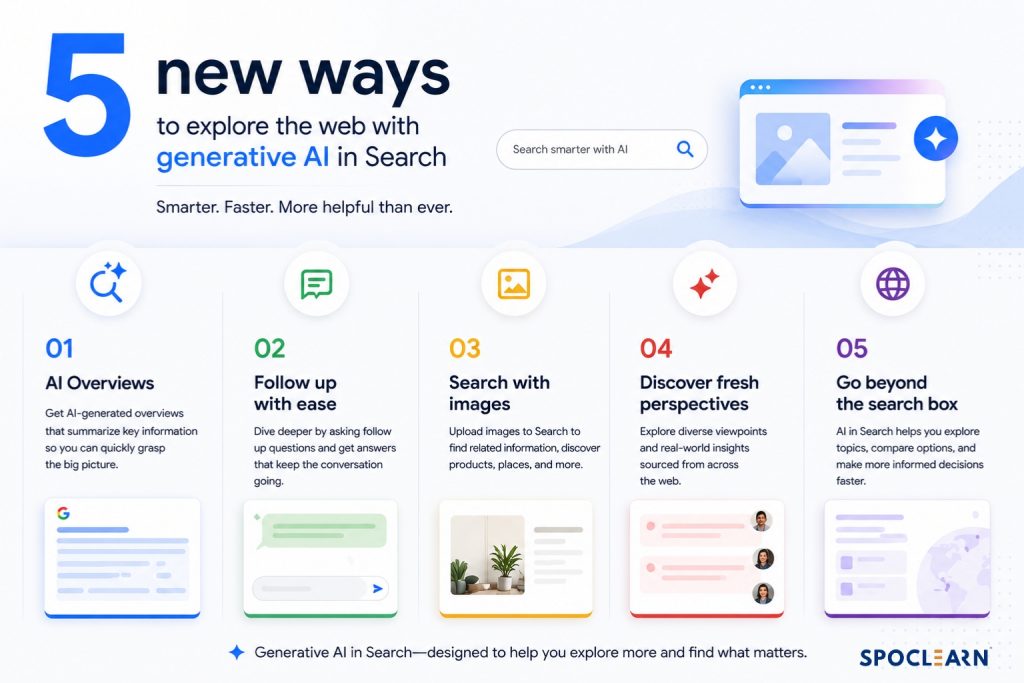
Source: 5 new ways to explore the web with generative AI in Search
According to recent industry studies, AI-generated search experiences now influence a significant portion of informational and commercial queries in the United States. AI search traffic globally has increased dramatically over the past year, reflecting growing consumer adoption of generative AI interfaces.
Why SEO in the US Is Rapidly Evolving
The biggest disruption is simple:
Users increasingly get answers directly on Google without clicking websites.
This “zero-click search” trend is reshaping the economics of SEO and digital marketing across the US market. Google AI Overviews summarize information directly in the search results, reducing the need for users to visit external sites for basic informational queries.
Key SEO Changes Happening in the US
| SEO Factor | Traditional SEO | AI Search SEO (2026) |
|---|---|---|
| Focus | Rankings | AI citations & authority |
| Keywords | Exact-match keywords | Search intent & semantics |
| Content | Long-form optimization | Structured answer-ready content |
| Success Metric | Organic traffic | Visibility inside AI results |
| User Behavior | Click-through browsing | Conversational discovery |
| Optimization | Search engine focused | AI comprehension focused |
| SERP Competition | Websites | AI-generated answers |
US marketers are now optimizing not just for search engines — but for AI retrieval systems.
AI Overviews Are Reducing Organic Clicks
One of the largest concerns among US publishers and businesses is declining click-through rates (CTR).
Industry research indicates that AI Overviews can significantly reduce clicks for informational searches because users receive summarized answers directly inside Google. Some SEO studies report noticeable traffic declines for publishers that rely heavily on informational content.
Estimated Impact of AI Search on SEO Metrics
| Metric | Before AI Overviews | After AI Overviews |
|---|---|---|
| Informational CTR | High | Declining |
| Organic Traffic Stability | Moderate | More volatile |
| Brand Visibility | Ranking-dependent | Citation-dependent |
| User Search Time | Longer browsing | Faster answers |
| Content Competition | SERP rankings | AI summarization inclusion |
For many US-based businesses, this means traditional “traffic-first SEO” strategies are becoming less reliable.
The Shift From Rankings to Recognition
SEO experts increasingly believe the future of SEO is about recognition and trust rather than rankings alone.
Google’s AI systems prioritize:
- Clear answers
- Trusted expertise
- Structured information
- Fresh data
- Authoritative sources
- Real-world experience
- Semantic relevance
This aligns strongly with Google’s E-E-A-T principles:
- Experience
- Expertise
- Authoritativeness
- Trustworthiness
In competitive US industries such as healthcare, cybersecurity, finance, project management, and enterprise software, authoritative content is outperforming keyword-heavy content.
How US Businesses Must Adapt Their SEO Strategies
1. Create AI-Friendly Content Structures
AI search systems prefer content that is easy to interpret and summarize.
Modern SEO content should include:
- Clear headings
- Bullet points
- Tables
- FAQs
- Definitions
- Step-by-step explanations
- Concise summaries
AI systems increasingly extract structured information for AI Overviews.
2. Focus on Topical Authority
US businesses can no longer rely on isolated blog posts.
Instead, Google rewards:
- Topic clusters
- Deep subject expertise
- Interlinked knowledge hubs
- Industry-focused content ecosystems
For example:
- A cybersecurity company should cover Zero Trust, AI security, SOC automation, cloud security, and compliance comprehensively.
- A project management training provider should build deep authority around PMP, Agile, PRINCE2, AI project management, PMO transformation, and enterprise governance.
3. Optimize for Conversational Queries
AI search is changing how Americans search online.
Searches increasingly sound like:
- “What’s the best AI cybersecurity platform for healthcare?”
- “How can US enterprises reduce cloud costs using AI?”
- “What certifications help project managers work with AI tools?”
This means SEO strategies must target:
- Natural language
- Long-tail search intent
- Problem-solving content
- User journey optimization
Generative Engine Optimization (GEO) Is Emerging
A new discipline called Generative Engine Optimization (GEO) is rapidly emerging.
Unlike traditional SEO, GEO focuses on improving visibility inside AI-generated answers rather than just search rankings.
However, Google has also started cracking down on manipulative GEO tactics designed to game AI systems. Google recently updated spam policies to penalize attempts to manipulate AI-generated results.
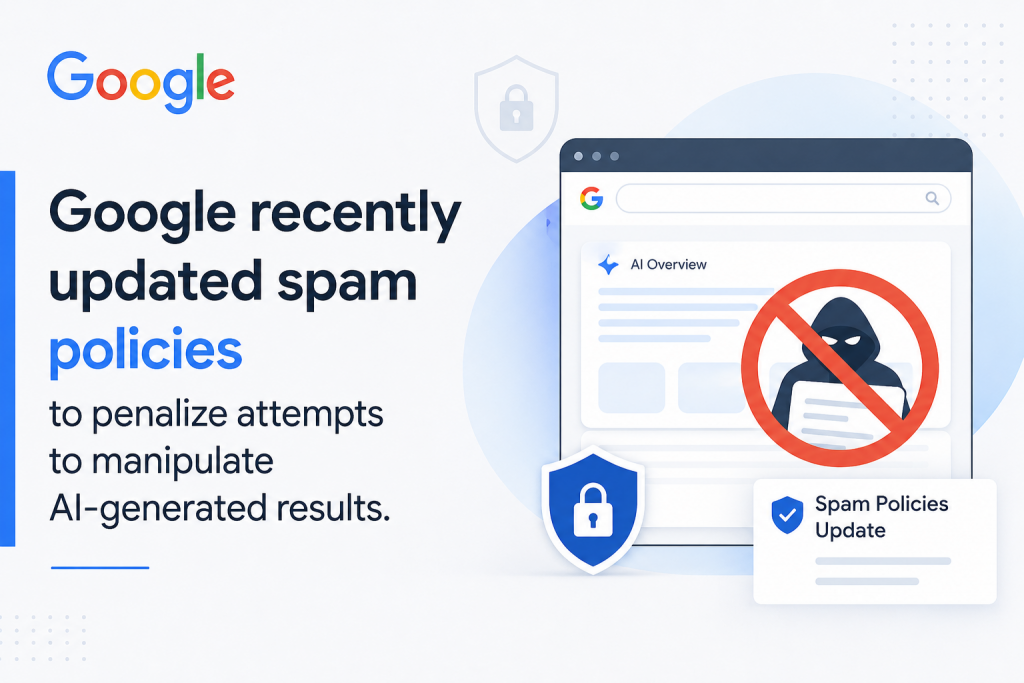
Source: Google recently updated spam policies
This means US brands must prioritize authentic expertise rather than AI spam tactics.
The Growing Importance of Brand Authority
In the AI search era, strong brands have a major advantage.
Google AI systems increasingly favor:
- Recognized brands
- Credible publishers
- Industry authorities
- Expert contributors
- Trusted enterprise websites
Smaller US businesses can still compete by:
- Publishing niche expertise
- Creating original research
- Sharing industry case studies
- Producing expert-led insights
- Building strong digital PR
Reddit, Community Content, and Human Experience Matter More
Google is also integrating more human perspectives into AI search experiences.
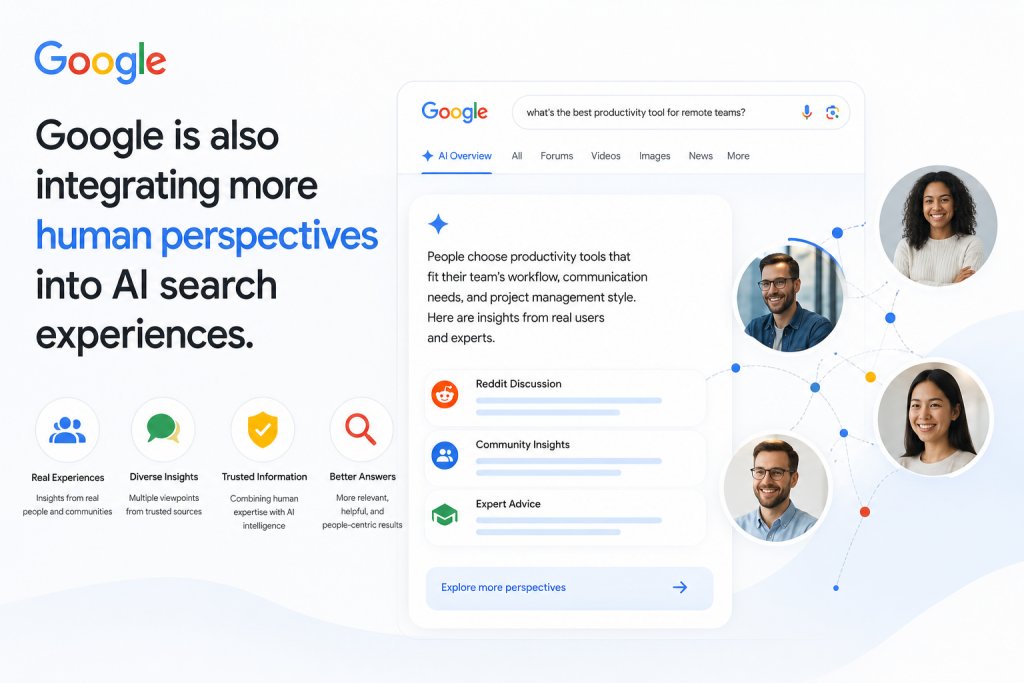
Source: Integrating human insights into AI search
Recent updates show Google surfacing Reddit discussions, community insights, and expert advice directly inside AI search experiences.
This is important because many Americans increasingly trust:
- Real user experiences
- Community discussions
- Peer recommendations
- Authentic expert opinions
As a result, SEO strategies in the United States now benefit from:
- Community engagement
- Brand mentions
- Thought leadership
- User-generated discussions
- Social proof
Technical SEO Still Matters
Despite AI-driven search, technical SEO remains foundational.
US websites still need:
- Fast loading speeds
- Mobile optimization
- Structured schema markup
- Crawlability
- Secure HTTPS environments
- Core Web Vitals optimization
Technical clarity helps AI systems understand and trust website content more effectively.
Future SEO Trends in the United States
Top AI SEO Trends for 2026
| Trend | Impact on US Businesses |
|---|---|
| AI Overviews Expansion | Reduced organic clicks |
| Conversational Search | More natural-language SEO |
| AI Citation Competition | Higher authority requirements |
| GEO Optimization | New visibility strategies |
| Zero-Click Searches | Brand visibility over traffic |
| Community Search Signals | Increased Reddit/forum importance |
| Structured Content | Better AI summarization |
| E-E-A-T Growth | Stronger expertise requirements |
What US Enterprises Should Do Next
To remain competitive in Google AI Search, US businesses should:
- Build deep topical authority
- Create AI-readable structured content
- Publish original insights and research
- Focus on trust and expertise
- Optimize for conversational search intent
- Improve brand recognition
- Strengthen technical SEO
- Measure AI visibility alongside rankings
The SEO landscape in the United States is no longer purely about keywords and rankings. It is becoming an ecosystem centered around AI trust, authority, semantic understanding, and contextual relevance.
Final Thoughts
Google AI Search is fundamentally reshaping SEO strategies across the United States. Businesses that adapt early will gain significant competitive advantages in visibility, authority, and digital trust.
The future of SEO belongs to brands that can:
- Deliver real expertise
- Provide structured and trustworthy content
- Answer user intent clearly
- Build authority across channels
- Become recognized AI-cited sources
Traditional SEO is not disappearing — it is evolving into something smarter, more contextual, and more AI-driven.
For US enterprises, marketers, publishers, and training providers, the opportunity is massive. The brands that align with AI-first search behavior today will become tomorrow’s digital leaders.
As AI-powered search continues to dominate digital discovery, the demand for professionals with advanced SEO, AI Search Optimization, Generative Engine Optimization (GEO), content strategy, and technical SEO skills is rapidly increasing across the United States. This has also created growing interest in specialized SEO Course in USA programs focused on AI-driven SEO strategies, Google AI Overviews, semantic search optimization, structured content development, and enterprise digital visibility. Professionals and enterprise teams across cities like New York, San Francisco, Chicago, Dallas, Austin, and Seattle are increasingly investing in modern SEO and AI Search training to stay competitive in the evolving digital landscape.