


In today’s fast-paced business world, continuous improvement is not just a competitive advantage—it’s a necessity. One of the most effective methodologies to foster a culture of ongoing improvement is Kaizen. Rooted in Japanese management philosophy, Kaizen, which means “change for the better,” involves the entire workforce from the CEO to the assembly line workers and focuses on making small, incremental changes that yield significant results over time.
Understanding the Kaizen Philosophy
The core principle of Kaizen is that small, continuous improvements can lead to substantial enhancements in efficiency and quality. Unlike radical change initiatives that might disrupt an organization, Kaizen emphasizes gradual refinement and sustainable progress.
Key Elements of Kaizen
- Teamwork: Collaboration across all levels of the organization is crucial.
- Personal Discipline: Every employee takes responsibility for their part in the process.
- Improved Morale: Empowering employees to contribute to improvements boosts morale and engagement.
- Quality Circles: Small groups of workers who regularly meet to discuss and solve problems related to their work.
- Suggestions for Improvement: Encouraging employees to share ideas for improvements, no matter how small.
The Impact of Kaizen on Business Operations
Kaizen’s impact on business operations can be profound. By continuously seeking ways to improve processes, companies can significantly reduce waste, enhance productivity, and improve customer satisfaction.
Data Point: Toyota Production System
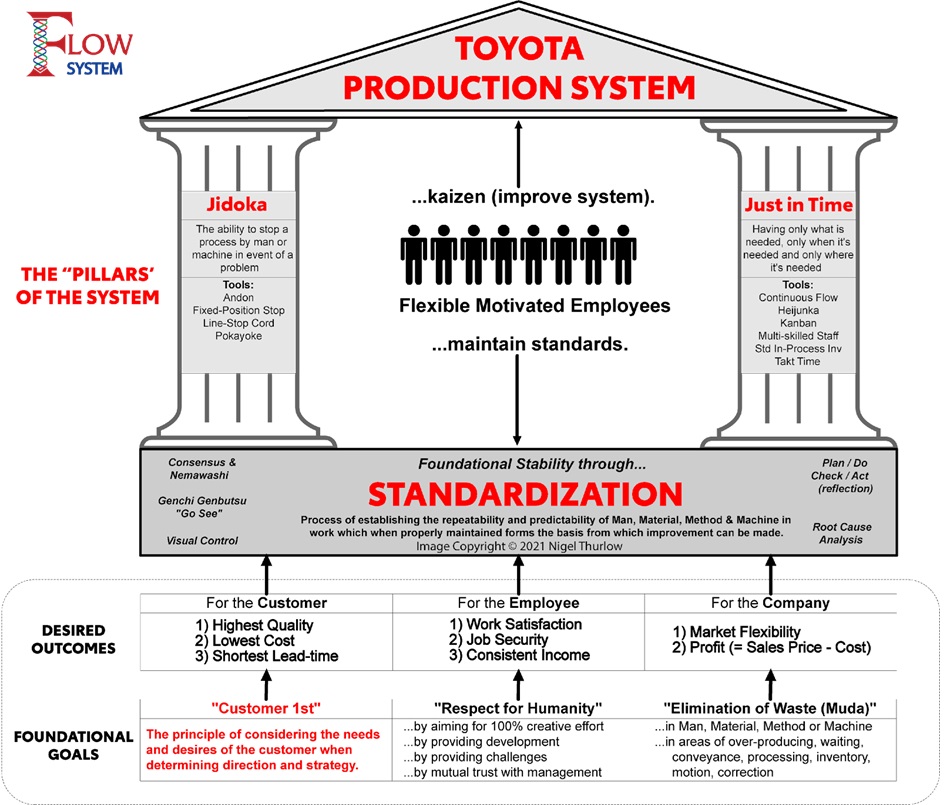
One of the most renowned examples of Kaizen in action is the Toyota Production System (TPS). Toyota’s implementation of Kaizen has enabled the company to become one of the most efficient and innovative automakers in the world. According to a study by McKinsey & Company, companies that adopt lean manufacturing principles, including Kaizen, can reduce lead times by 50-70% and increase productivity by 20-30%.
Kaizen in Practice: Real-World Examples
1. Manufacturing Sector
In manufacturing, Kaizen can lead to streamlined production processes and reduced waste. For instance, a factory might implement Kaizen by encouraging workers to identify inefficiencies in the assembly line and suggest improvements. Over time, these small changes can add up to significant cost savings and higher-quality products.
Example: Nissan’s Smyrna Plant
At Nissan’s Smyrna plant in Tennessee, the implementation of Kaizen practices helped reduce vehicle production time by 30%, leading to a significant increase in output without the need for additional resources.
2. Service Industry
In the service industry, Kaizen can enhance customer service and operational efficiency. For example, a bank might use Kaizen to improve the process of loan approvals, making it faster and more customer-friendly.
Example: Bank of America
Bank of America utilized Kaizen to streamline its mortgage approval process, reducing the approval time from 20 days to 10 days, which resulted in higher customer satisfaction and increased market share.
Implementing Kaizen in Your Organization
Implementing Kaizen involves several steps, each designed to foster a culture of continuous improvement.
Step 1: Identify Areas for Improvement
Start by identifying processes or areas within your organization that could benefit from improvement. This could be anything from reducing waste in production to improving customer service response times.
Step 2: Gather a Team
Form a team of employees from various levels of the organization who are familiar with the area needing improvement. This team will be responsible for brainstorming ideas and implementing changes.
Step 3: Analyze Current Processes
Thoroughly analyze the current processes to understand their strengths and weaknesses. Use tools like flowcharts, cause-and-effect diagrams, and Pareto charts to visualize the process and identify bottlenecks.
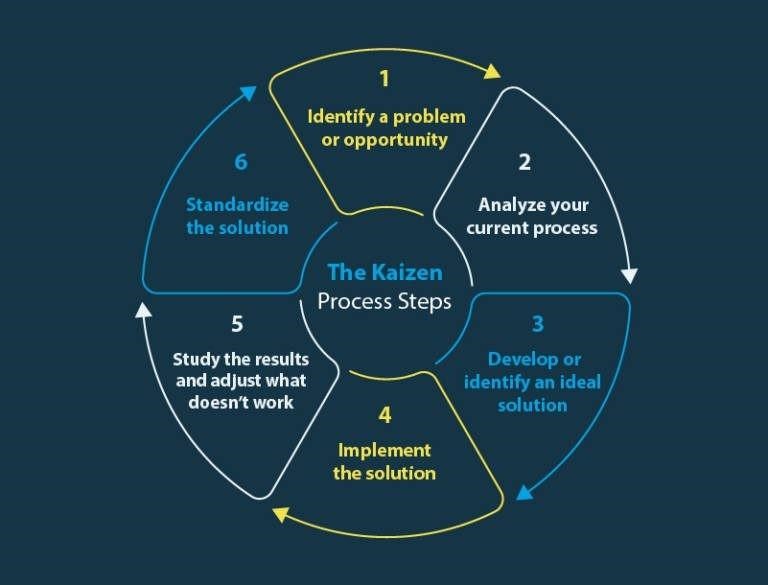
Step 4: Develop Improvement Plans
Based on the analysis, develop a detailed plan for making incremental improvements. With clear and achievable goals one can establish metrics to measure progress.
Step 5: Implement Changes
Begin implementing the changes on a small scale. Regular monitoring of results and making adjustments as needed. Encourage feedback from employees and be prepared to iterate on the improvements.
Step 6: Standardize and Repeat
Once the improvements have been successfully implemented and validated, standardize the new process. Then, repeat the cycle by identifying new areas for improvement.
The Role of Kaizen Training
To successfully implement Kaizen, comprehensive training is essential. Training ensures that all employees understand the principles and techniques of Kaizen, and it empowers them to contribute effectively to the continuous improvement process. Spoclearn provides various industry-recognized Quality Management Courses along with Kaizen for professionals to completely realize business benefits across industry sectors.
Key Components of Kaizen Training
- Introduction to Kaizen: Understanding the history, philosophy, and core principles of Kaizen.
- Problem-Solving Techniques: Training on various problem-solving tools such as root cause analysis, the 5 Whys, and fishbone diagrams.
- Process Mapping: Learning how to map out processes to identify inefficiencies and areas for improvement.
- Team Dynamics: Fostering effective teamwork and communication skills.
- Continuous Improvement Cycles: Implementing and iterating on Plan-Do-Check-Act (PDCA) cycles.
Table: Common Kaizen Tools and Techniques
| Tool | Description |
|---|---|
| 5S | A workplace organization method (Sort, Set in order, Shine, Standardize, Sustain) |
| PDCA Cycle | A four-step model for continuous improvement (Plan, Do, Check, Act) |
| Root Cause Analysis | Identifying the underlying causes of problems |
| Value Stream Mapping | Visualizing the flow of materials and information |
| Gemba Walk | Observing the workplace to identify opportunities for improvement |
Case Study: Toyota Motor Corporation
Overview:
Toyota Motors is widely recognized for its successful implementation of Kaizen principles, which have played a crucial role in the company’s rise to prominence in the automotive industry. One of Toyota’s key manufacturing facilities, the Toyota Production System (TPS), serves as a prime example of Kaizen in action.
Implementation Details:
Toyota’s commitment to Kaizen is ingrained in its organizational culture, with employees at all levels actively engaged in continuous improvement initiatives. The company emphasizes the importance of empowering employees to identify inefficiencies, suggest improvements, and implement changes on an ongoing basis.
Results Achieved:
The impact of Kaizen implementation at Toyota has been profound:
- Increased Productivity: Through Kaizen-driven process improvements, Toyota has achieved significant gains in productivity. For example, by optimizing assembly line workflows and eliminating waste, Toyota produced vehicles more efficiently, leading to higher output levels without compromising quality.
- Improved Quality: Kaizen’s focus on quality enhancement has enabled Toyota to produce vehicles with exceptional quality standards. By continually refining production processes, addressing root causes of defects, and implementing error-proofing mechanisms, Toyota has consistently delivered vehicles renowned for their reliability and durability.
- Cost Reduction: Kaizen’s emphasis on waste reduction has helped Toyota reduce costs throughout its operations. By minimizing inventory, reducing downtime, and optimizing resource utilization, Toyota has been able to achieve cost savings while maintaining competitiveness in the market.
Reference Source:
Toyota Production System (TPS) – Toyota Global
Toyota’s success story serves as a compelling example of the transformative impact of Kaizen when embraced as a core business philosophy. By implementing a culture of continuous improvement and empowering employees to contribute to the process, Toyota has demonstrated how Kaizen can drive sustained growth, innovation, and excellence in manufacturing.
Benefits of Kaizen for Businesses
The benefits of implementing Kaizen in a business are manifold:
- Increased Efficiency: By continuously refining processes, businesses can operate more efficiently and reduce waste.
- Enhanced Quality: Continuous improvement leads to higher-quality products and services.
- Employee Engagement: Empowering employees to contribute to improvements boosts morale and engagement.
- Cost Savings: Improved efficiency and reduced waste translate to significant cost savings.
- Customer Satisfaction: Better quality products and services lead to higher customer satisfaction.
Quote: Masaaki Imai on Kaizen
“Kaizen means ongoing improvement involving everyone, including both managers and workers. The kaizen philosophy assumes that our way of life—be it our working life, our social life, or our home life—deserves to be constantly improved.” – Masaaki Imai, Founder of the Kaizen Institute
Integrating Kaizen into Company Culture
For Kaizen to be truly effective, it must be integrated into the company’s culture. This requires a commitment from top management and a willingness to accept change at all levels of the organization.
Steps to Integrate Kaizen into Company Culture
- Leadership Commitment: Top leaders within the organization must demonstrate their commitment to Kaizen by actively participating in improvement activities and supporting their teams.
- Employee Involvement: Organizations should encourage all employees to contribute ideas and take ownership of improvements.
- Regular Training: Provide ongoing Kaizen training to keep employees up-to-date with Kaizen methodologies and tools.
- Recognition and Rewards: Businesses should recognize and reward employees for their contributions to continuous improvement.
- Communication: Maintain open lines of communication to share successes, challenges, and learnings from Kaizen activities.
Conclusion
Kaizen is more than just a set of tools and techniques; it’s a philosophy that, when embraced, can transform an organization. By focusing on continuous, incremental improvements, businesses can achieve significant enhancements in efficiency, quality, and customer satisfaction. Implementing Kaizen requires commitment, training, and a culture that values every employee’s contribution to the process. As the examples of Toyota, Nissan, and Bank of America demonstrate, the rewards of adopting Kaizen can be substantial and long-lasting.
Incorporating Kaizen into your business operations is not just about making changes; it’s about creating a culture where continuous improvement is the norm. With the right approach, training, and commitment, any organization can benefit from the power of Kaizen.