

In 2022, there were lots of stories about data breaches. Big companies like Twitter, Microsoft, and American Airlines had their information stolen by cybercriminals. This caused many problems for businesses and made it hard for them to keep going smoothly. According to the Identity Theft Resource Center, these breaches affected a huge number of people, around 422.1 million, even more than the previous year. Therefore, the Information Security department is looking for highly skilled CISSP candidates with in-demand career skills necessary to manage IT security.

What is CISSP?
Making sure people don’t make mistakes is significantly important for keeping a company safe from cyberattacks. A report from Verizon in 2023 showed that 83% of the breaches involved external actors—with the majority being financially motivated. And in almost 74% of breaches involved the human element, which includes social engineering attacks, errors, or misuse and 50% of all social engineering attacks are pretexting incidents—nearly double last year’s total. So, everyone in the company must take responsibility for cybersecurity to keep data safe and private. The cost of CISSP Certification is $699.
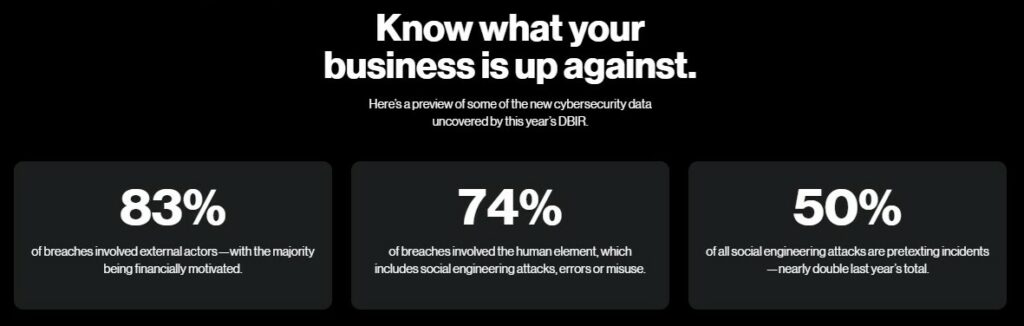
Image source: www.verizon.com
CISSP or Certified Information Systems Security Professionals (CISSP) are those assets or resources that companies in all different fields hire to keep their data safe from cyberattacks. Having professionals who are certified in CISSP (Certified Information Systems Security Professional) is important for this. With a legit and globally accredited CISSP Certification, your career in the IT Security domain will bloom.
When you’re CISSP certified, it shows employers that you’re skilled at protecting online information systems and leading a strong team in IT security. People pursue CISSP certification because there’s a need for skilled IT professionals who can robustly handle a company’s cybersecurity. By understanding IT security concepts and theories, CISSPs can manage a company’s cybersecurity effectively.
CISSP Certification- Eligibility Criteria
(ISC)², the organization that manages CISSP certification, says you need either five years of full-time work experience or four years of work experience plus an undergraduate degree in a related field like cybersecurity.
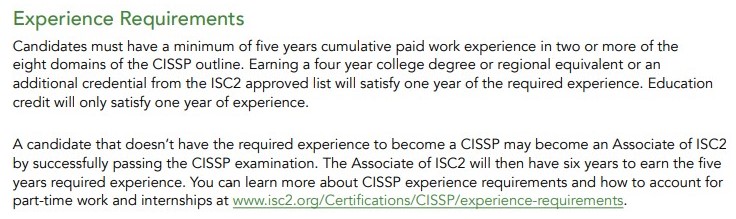
Image source: www.isc2.org
Getting CISSP certified isn’t easy. You have to pass a tough exam and pay fees every year. But it’s one of the most common cybersecurity certifications that employers look for. Whether you dream of being a chief information officer or running your own security business, knowing why you want CISSP certification can help you stay motivated while you work to get it.
Moreover, to meet the requirements of these domains, (ISC)² mandates experience in any of the following roles:
- Chief Information Security Officer
- Chief Information Officer
- Director of Security
- IT Director/Manager
- Security Systems Engineer
- Security Analyst
- Security Manager
- Security Auditor
- Security Architect
- Security Consultant
- Network Architect
Work experience can be obtained through full-time employment, part-time employment, or internships. The criteria for work experience may vary depending on your employment terms.
1. Full-Time Employment: For full-time employment, work experience qualifies as full-time if you have worked a minimum of 35 hours per week for four consecutive weeks.
2. Part-time Employment: Regarding part-time employment, if you worked between 20-34 hours weekly, your experience is considered part-time. The calculation of part-time experience is as follows:
- Every 1,040 hours of part-time work equals half a year’s worth of full-time experience.
- Every 2,080 hours of part-time work equals one year of full-time work experience.
- Internships are also accepted as relevant experience if you possess certification from the organization validating your internship. Paid and unpaid internships are both considered valid working experience.
Alternative work experience options recognized by (ISC)² include:
- Holding a four-year college degree (or equivalent).
- Possessing an advanced degree in information security from the U.S. National Center of Academic Excellence in Information Assurance Education (CAE/IAE).
- Having other approved credentials outlined by (ISC)².
CISSP Certification Exam Domain and Weightage
1. Security and Risk Management- 15%
2. Asset Security- 10%
3. Security Architecture and Engineering- 13%
4. Communication and Network Security- 13%
5. Identity and Access Management (IAM)- 13%
6. Security Assessment and Testing- 12%
7. Security Operations- 13%
8. Software Development Security- 11%
CISSP Exam Format
(ISC)² has announced: “Effective February 12, 2024, the CISSP exam will be available in the Chinese language in the Computerized Adaptive Testing (CAT) format. Effective April 15, 2024, the CISSP exam will be based on a refreshed exam outline. Please refer to the CISSP Exam Outline and our FAQs for more information.
Effective April 15, 2024, the CISSP exam will only be available via CAT in the following languages:
* English, Chinese, German, Japanese, Spanish.
There will be no CISSP linear exams effective April 15, 2024”
Let’s see what are the existing CISSP Exam Format available:
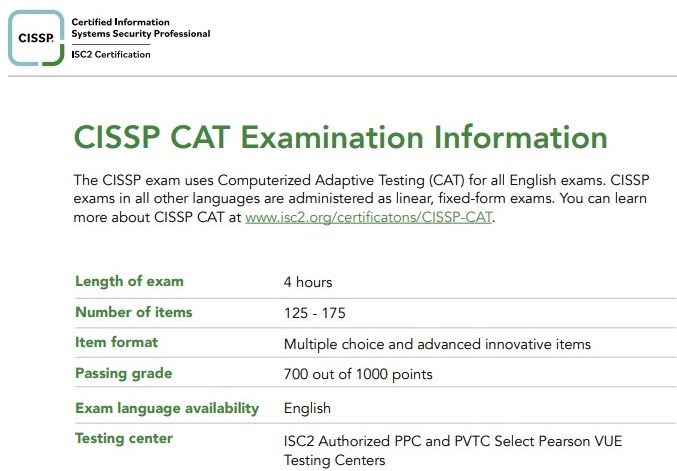
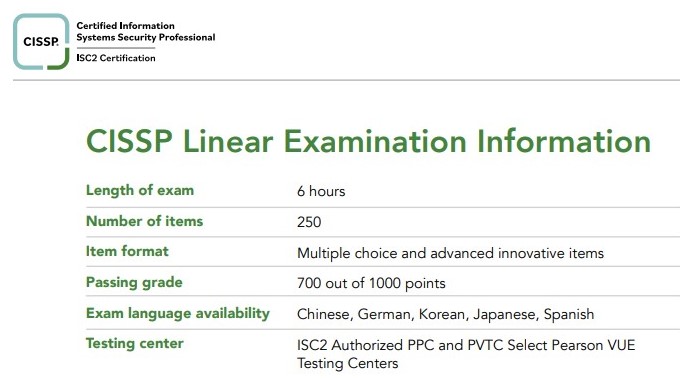
CISSP Certification- Benefits
A CISSP certification stands as one of the top benchmarks for professionals in IT and cybersecurity. Holding the CISSP certification can lead to higher salaries, provide a competitive edge in job searches, and keep you informed about the latest advancements in the industry.
1. Higher Earning Potential
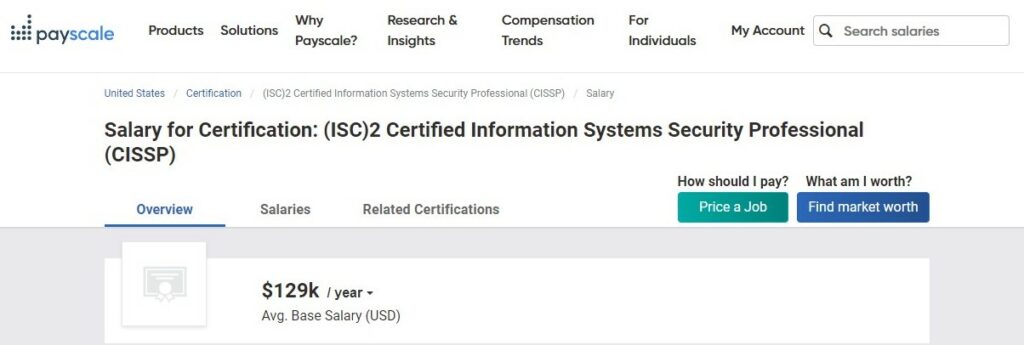
The salaries of CISSP-certified professionals vary based on their job roles and locations. On average, these professionals earn approximately $128,000 annually in North America, according to data from Payscale. CISSP-certified individuals rank among the highest-paid professionals in the IT industry. Employers value the rigorous process required to obtain CISSP certification, which is globally recognized.
2. Top-level Job candidate
Adding CISSP certification to your cybersecurity resume signals to recruiters and employers that you are among the elite candidates in the field of information security. It also demonstrates that you possess a minimum of four or five years of practical experience. According to (ISC)²’s 2023 workforce study, 17% of respondents sought credentials for roles with other companies, while 15% aimed for certification to qualify for promotions.
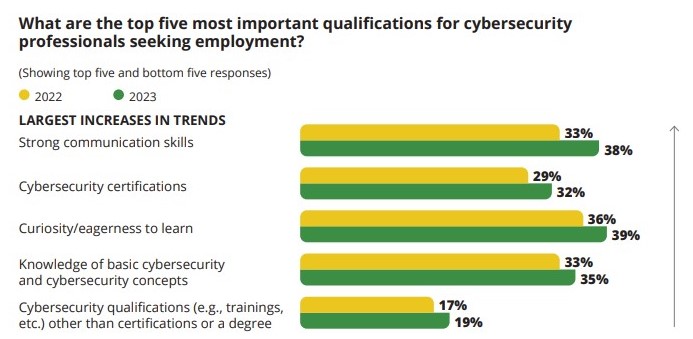
Image source: media.isc2.org
3. Cybersecurity Expertise
Part of the CISSP certification process involves gaining comprehensive knowledge of cybersecurity concepts, essential for passing the exam and maintaining certification. After obtaining certification, CISSPs are required to accumulate a specific number of continuing education credits. This continued education helps them stay updated with relevant skills and industry trends.
(ISC)²’s workforce study participants highlighted several benefits of hiring cybersecurity professionals with certifications like CISSP:
- Deeper understanding of critical cybersecurity subjects.
- Increased confidence in their teams’ ability to address security challenges.
- Assurance of current knowledge and practice of information security trends.
- Ability to recruit high-level professionals with proven expertise in cybersecurity.
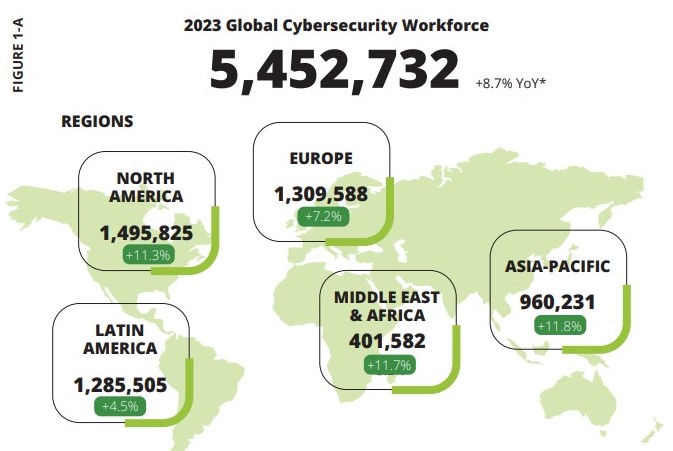
Image source: media.isc2.org
4. Network with Other CISSPs
All CISSPs must become members of (ISC)², providing access to valuable networking opportunities. More than 168,000 cybersecurity professionals are part of the (ISC)² community.
CISSP Certified Professionals- Salary and Job Opportunities
According to the Salary Survey 75, the CISSP professionals are highly compensated given their skills and experience. A CISSP-certified employee earns approximately USD 135,560 in the US, USD 82,290 outside the US, and USD 111,140 on average in both the US and non-US countries. Global Knowledge 2020 IT Skills and Salary reports that CISSPs are the third-highest earners in the ever-growing IT industry worldwide while ranking fifth in the North American region.
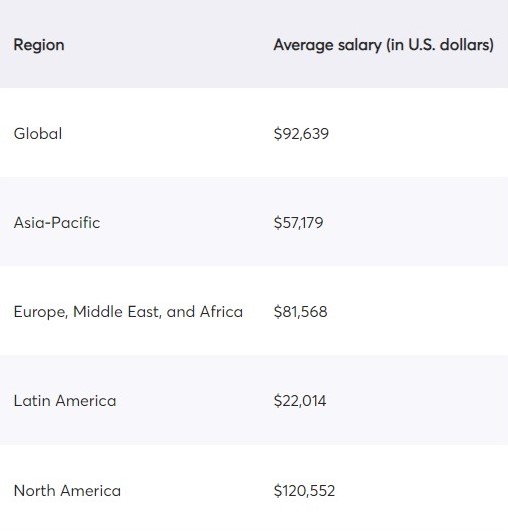
Image source: www.businessnewsdaily.com
Obtaining CISSP certification is essential, not just for the potential salary increase it offers, but also for its vital role in protecting an organization’s data and ensuring smooth business operations free from malware or cyber threats. CISSP-certified professionals contribute by designing, and developing new security systems or software, and enhancing existing ones for optimal outcomes.
Given the significance of this role, the compensation is quite attractive, even at entry levels. Let’s explore the CISSP salaries in 2024 across various job portals, considering different levels of experience and locations worldwide, to gain insight into the actual earning potential of CISSPs.
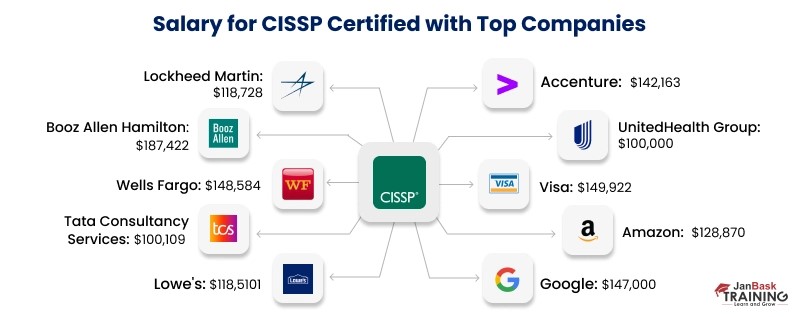
Image source: www.janbasktraining.com
According to job portals, the following are the salaries of the certified CISSPs:
- Indeed: The average CISSP salary is $111,311 annually.
- ZipRecruiter: The average CISSP salary is $121,211 annually.
- Dice: The average CISSP salary is $145,512 annually.
- Payscale: The average CISSP salary is $126k annually.
- LinkedIn: The average CISSP salary is $168,280 annually.
- Indeed: The average CISSP salary is $138,473 annually.
- Simply Hired: The average CISSP salary is $140,213 annually.
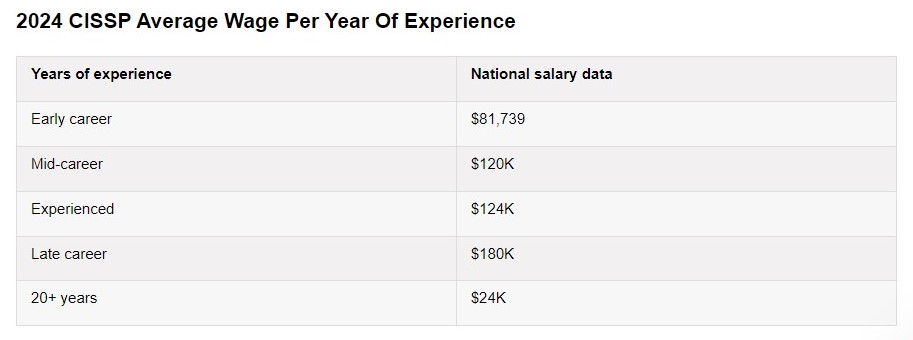
Based on experience, the table below will show how much CISSPs earn:
Top Salary Package of CISSPs based on different locations and organizations
| Country | Cities | Top Companies | Average Salary (USD) |
| San Francisco | Apple, Google, Facebook | $140,000 – $180,000 | |
| USA | New York | JPMorgan Chase, Citigroup | $130,000 – $170,000 |
| Washington DC | Microsoft, Amazon | $120,000 – $160,000 | |
| Seatle | Boeing, T-Mobile | $120,000 – $160,000 | |
| London | Barclays, HSBC | $80,000 – $110,000 | |
| UK | Manchester | Deloitte, PwC | $70,000 – $100,000 |
| Edinburgh | RBS, Standard Life | $65,000 – $95,000 | |
| Birmingham | KPMG, Accenture | $60,000 – $90,000 | |
| Bengaluru | Infosys, Wipro | $20,000 – $30,000 | |
| India | Mumbai | TCS, Accenture | $25,000 – $35,000 |
| New Delhi | HCL, IBM | $22,000 – $32,000 | |
| Chennai | Cognizant, Tech Mahindra | $18,000 – $28,000 |
The demand for information security analysts as stated by U.S. BUREAU OF LABOR STATISTICS is expected to increase by 32% from 2022 to 2032, significantly faster than the average for all occupations. On average, approximately 16,800 openings for information security analysts are projected each year for the next decade. So, if you’re concerned about the demand for CISSP jobs, take a look at the figures below, and you’ll understand why CISSP certification is highly sought after!
As of the time of writing this article:
- There are 6,384 CISSP job postings on Glassdoor.
- There are over 24,000 CISSP job opportunities available on LinkedIn.
- There are 1,837 CISSP job postings on Dice.
Conclusion
With projections showing significant growth in job opportunities for information security analysts, obtaining CISSP certification has become increasingly valuable. The figures from various job platforms, such as Glassdoor, LinkedIn, and Dice, underscore the high demand for CISSP-certified professionals in the current job market. As organizations continue to prioritize cybersecurity and data protection, CISSP certification remains one of the most sought-after skills.
For individuals considering a career in information security or aiming to advance their existing careers, pursuing CISSP certification can open doors to a wide range of job opportunities and potentially higher salaries. With the ever-growing need for skilled cybersecurity professionals, obtaining CISSP certification can be a strategic investment in one’s future career success.