


Development and operations, a.k.a, DevOps in the space of software development and delivery, this approach fosters collaboration by prioritizing communication, integration, and automation. It dismantles conventional barriers between development teams and IT operations, empowering organizations to enhance the speed, reliability, and quality of software delivery. Let’s explore how the fintech industry is leveraging DevOps thus creating a huge demand for DevOps Engineers in this industry.

What is the Fintech Landscape?
Fintech, an abbreviation for financial technology, represents a dynamic and disruptive force reshaping interactions with money and financial services. Its influence extends beyond payment processing to encompass various sectors.
Key Sectors in Fintech
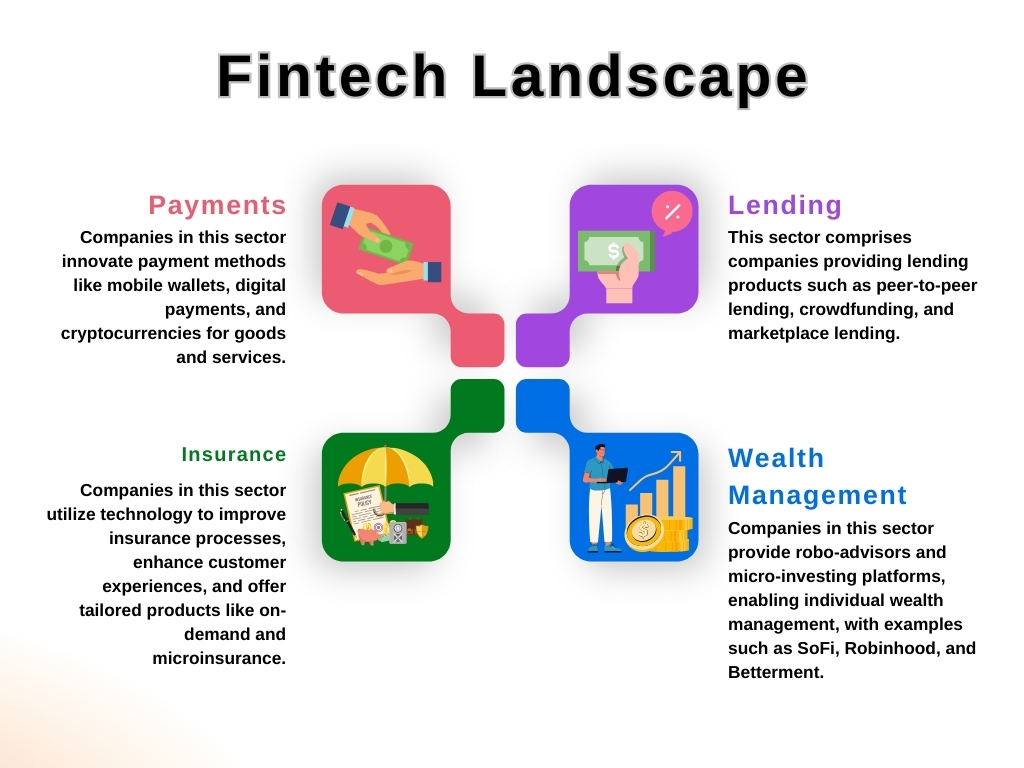
Payments: Companies in this sector focus on developing and offering innovative payment methods for goods and services, including mobile wallets, digital payments, and cryptocurrency transactions.
Lending: This sector comprises companies providing lending products such as peer-to-peer lending, crowdfunding, and marketplace lending.
Insurance: Companies in this sector leverage digital platforms, artificial intelligence, data analytics, and other technologies to enhance the insurance process, improve customer experience, and offer tailored insurance products, including on-demand insurance and microinsurance.
Wealth Management: Companies in this sector offer robo-advisors and micro-investing platforms, facilitating wealth management for individuals. Examples include SoFi, Robinhood, and Betterment.
Shares of Each Sector in the Total Fintech Industry
- Payments: 35.2%
- Lending: 22.5%
- Insurance: 11.8%
- Wealth management: 10.5%
- Other: 20.0%
The significant expansion of the fintech industry can be attributed to the rising demand for innovative and secure financial solutions.
Speed up with a little dash of DevOps
To explain in detail, let’s first check what are the four significant pillars of DevOps based on what fintech industries are scaling up their business rapidly.
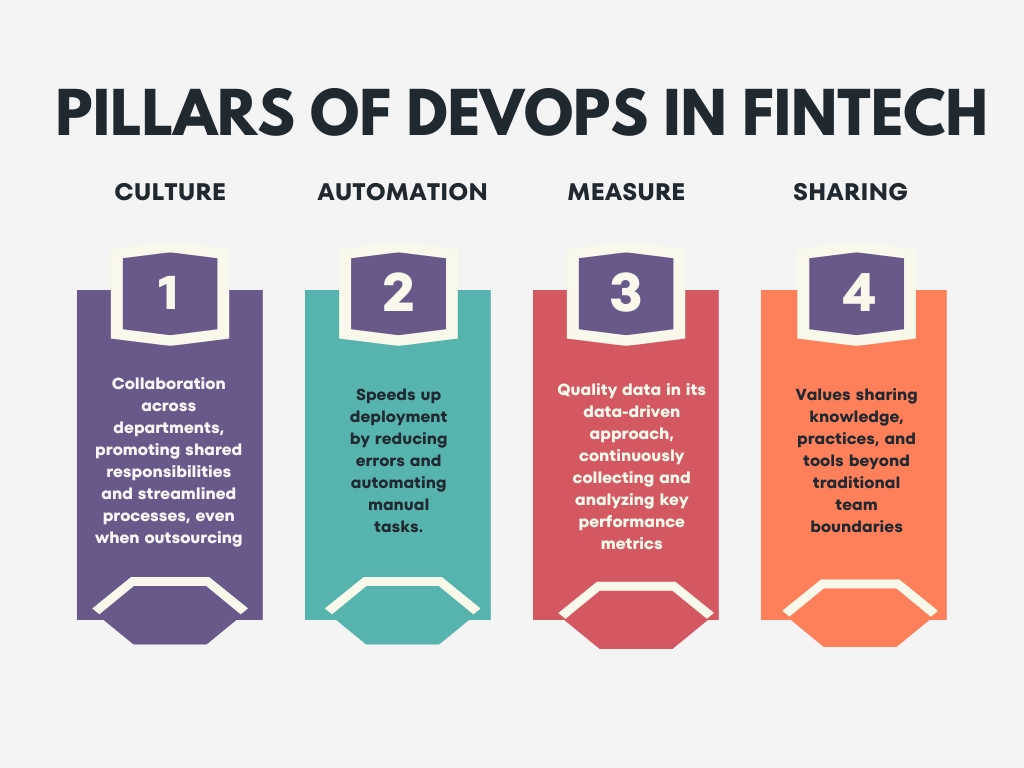
- Collaboration: DevOps promotes teamwork across departments, fostering shared responsibilities and streamlined processes, even when outsourcing DevOps.
- Automation: DevOps mantra is “Automate everything possible.” This speeds up deployment by reducing errors and automating manual tasks.
- Measurement: DevOps prioritizes quality data in its data-driven approach, continuously collecting and analyzing key performance metrics to drive improvement.
- Sharing: DevOps values sharing knowledge, practices, and tools beyond traditional team boundaries. Get creative with knowledge-sharing initiatives, like hosting TED-talk-style events during team-building activities.
Based on these four major pillars of DevOps and along with its ability to time-to-market in no time, DevOps is giving ravishing output in the Fintech Industry. By automating tasks such as testing and deployment, companies can swiftly introduce new features and updates. This agility helps them stay at the forefront of innovation in the industry.
Hence, the effectiveness of DevOps in this industry looks something like this:
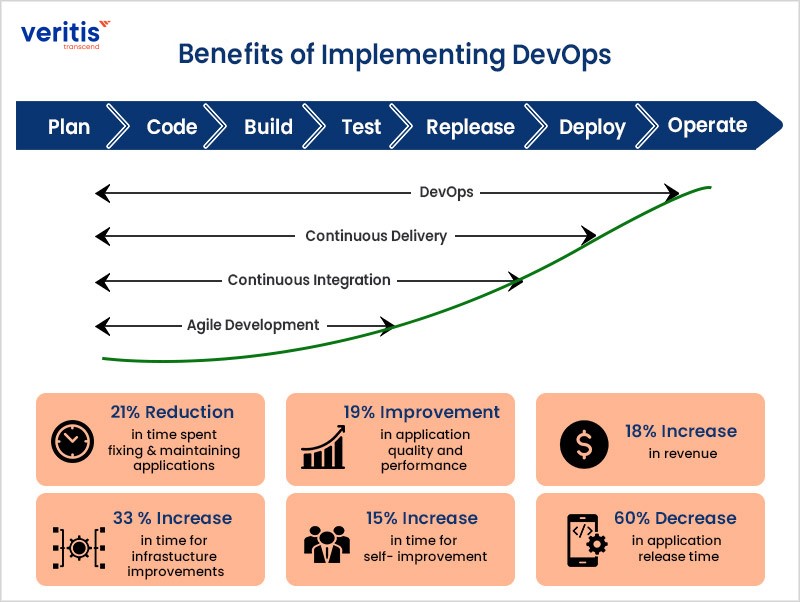
Image source: www.veritis.com
Top Five Benefits of DevOps in the Fintech Industry
Adopting DevOps practices presents numerous advantages to the FinTech sector, encompassing faster time to market, enhanced product quality, increased security, and compliance, reduced downtime, and improved collaboration among teams. Delving deeper into these benefits:
1. Accelerated Time to Market
DevOps enables financial institutions to expedite product and feature delivery, surpassing traditional release cycles. By deploying new functionality swiftly, some firms achieve hundreds of updates daily, ensuring competitiveness and agile response to customer demands.
2. Enhanced Product Quality
Prioritizing automation, continuous integration, and delivery, DevOps practices bolster product quality by minimizing human error and ensuring consistent, reliable software releases. Continuous monitoring and feedback loops facilitate real-time issue identification and resolution, further elevating user experience.
3. Heightened Security and Compliance
In an industry marked by rigorous regulation and security imperatives, DevOps aids financial institutions in effectively addressing compliance requirements. Integrating security measures throughout the software development lifecycle and automating processes ensure proactive risk mitigation and consistent regulatory adherence.
4. Mitigated Downtime
DevOps methodologies significantly diminish downtime risks, safeguarding financial institutions from financial and reputational repercussions. Leveraging a microservices architecture enables seamless, zero-downtime deployments, minimizing disruptions and ensuring uninterrupted customer service.
5. Enhanced Team Collaboration
DevOps fosters a collaborative culture by dismantling traditional departmental silos and promoting transparency. Facilitating seamless cross-functional teamwork throughout the development lifecycle, DevOps enhances communication, alignment, and efficiency, ultimately augmenting product quality and employee satisfaction in the FinTech industry.
How to Implement DevOps in the Fintech Industry?
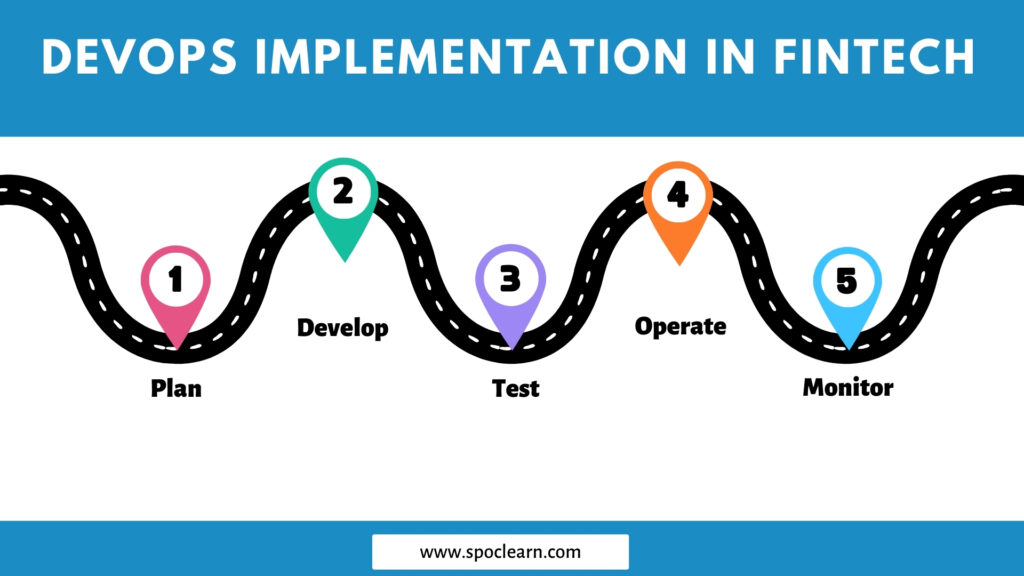
Plan: Team members set their objectives, define project scopes, and map out development routes. If you’re new to DevOps metrics and KPIs, explore our detailed article for guidance.
Develop: This stage involves the actual creation of software. In the fintech realm, it’s akin to a squad of developers sculpting and engineering components that will culminate in the final product.
Test: Quality assurance is paramount in fintech, mirroring the meticulous scrutiny and validation processes prevalent in the financial sector. Fintech teams rigorously test their code and features to ensure flawless functionality and security.
Deploy: Deployment marks the software’s release into the production environment. In fintech, it’s equivalent to unveiling a new financial product or service to the market, necessitating adherence to compliance and security standards.
Operation: This phase encompasses the software’s day-to-day operations. Just as financial systems require constant oversight, fintech applications demand ongoing management, including troubleshooting and scalability.
Monitor: Monitoring resembles vigilant oversight of financial markets. It entails tracking the software’s performance and ensuring alignment with security, compliance, and user experience benchmarks.
Why DevOps Career in Fintech is Growing?
The increasing integration of DevOps within the FinTech sector has generated a surging requirement for proficient individuals in this domain. Organizations actively pursue candidates capable of spearheading the adoption of DevOps methodologies, streamlining processes through automation, and fostering enhanced collaboration among teams. Within the FinTech landscape, DevOps roles encompass a spectrum of positions, including DevOps engineers, site reliability engineers, release managers, automation specialists, and cloud architects.

As the FinTech sector continues its trajectory of evolution and innovation, individuals adept in DevOps certification or practices will be highly sought after. These professionals assume a pivotal role in empowering financial institutions to expedite the delivery of products and services while upholding stringent standards of quality and security. DevOps careers present compelling avenues for professional advancement, affording opportunities to contribute significantly to the digital metamorphosis of the financial industry and shape the trajectory of financial technology.
Conclusion
DevOps is a transformative force in the fintech industry, revolutionizing how software is developed, deployed, and operated. By fostering collaboration, automation, measurement, sharing, and a structured approach to development and operations, DevOps enables fintech companies to accelerate time-to-market, enhance product quality, ensure security and compliance, and improve overall operational efficiency. As fintech continues to evolve and innovate, DevOps will remain a cornerstone in driving continuous improvement and competitiveness in this dynamic sector. Let us know if you’re looking for an industry-level professional DevOps certification!