
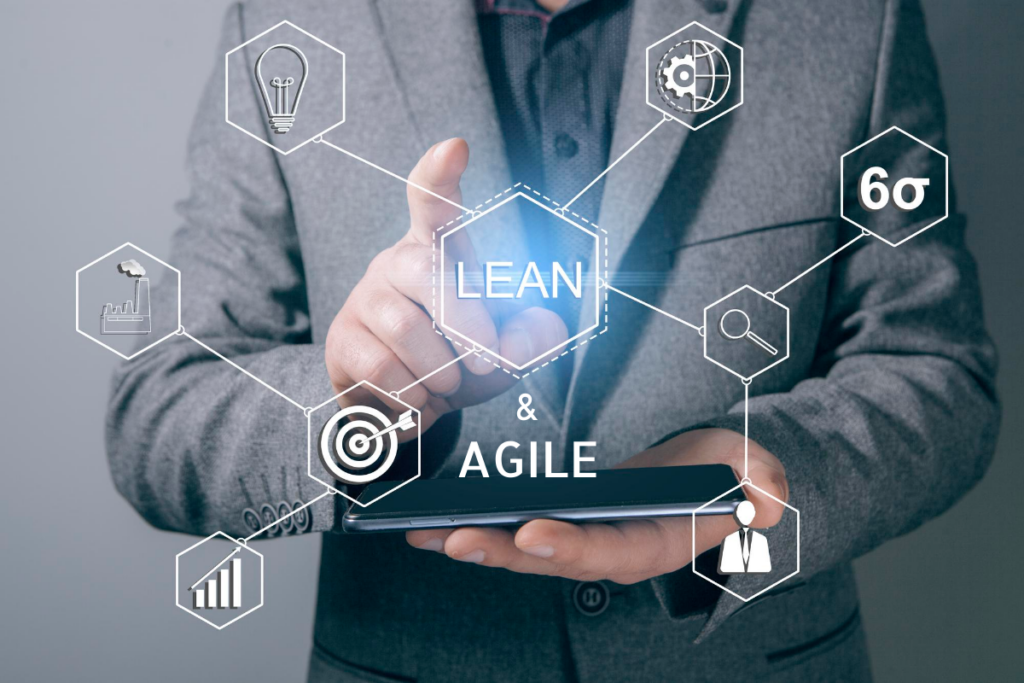

The integration of Lean and Agile methodologies has become a critical strategy in modern project management, offering a powerful combination that enhances efficiency, adaptability, and customer satisfaction. Did you know that organizations combining Lean and Agile methodologies report a 30% increase in project success rates and a 20% improvement in team productivity? This article explores the synergy between Lean and Agile, providing insights into their combined benefits, implementation strategies, and real-world applications.

Introduction to Lean and Agile
Lean Methodology: From Toyota’s manufacturing principles, Lean focuses on minimizing waste and maximizing value. It emphasizes continuous improvement, respect for people, and efficient use of resources.
Agile Methodology: Agile, initially developed for software development, prioritizes flexibility, customer collaboration, and rapid delivery. It employs iterative processes and frequent feedback loops to adapt to changing requirements.
Lean’s focus on eliminating waste and Agile’s emphasis on flexibility and rapid delivery together create a robust approach that meets the demands of today’s fast-paced business environment. Read on to discover how merging Lean and Agile can revolutionize your project management processes in any organization across various industry sectors.
Benefits of Combining Lean and Agile
Combining Lean and Agile methodologies brings together the best of both worlds:
- Enhanced Efficiency: Lean’s waste reduction complements Agile’s iterative processes, leading to more streamlined workflows.
- Increased Flexibility: Agile’s adaptability is reinforced by Lean’s focus on continuous improvement.
- Improved Customer Satisfaction: Both methodologies emphasize delivering high-value products to customers through iterative feedback and value stream mapping.
Table: Key Benefits of Lean and Agile Integration
| Benefit | Lean Principle | Agile Principle |
|---|---|---|
| Waste Reduction | Eliminate Waste | Incremental Delivery |
| Flexibility and Adaptability | Continuous Improvement | Responding to Change |
| Customer Focus | Value Stream Mapping | Customer Collaboration |
| Speed and Efficiency | Just-In-Time | Iterative Processes |
| Team Empowerment | Respect for People | Self-Organizing Teams |
Key Principles and Practices
Lean Principles
- Value: Understanding customer needs and delivering exactly what adds value to them. This principle helps in prioritizing tasks that contribute directly to customer satisfaction.
- Value Stream: Identifying every step in the process and eliminating steps that do not add value. This creates a visual representation of the process flow, making it easier to spot inefficiencies.
- Flow: Creating a consistent flow in the production process to avoid delays and bottlenecks. This involves aligning resources and tasks to ensure a smooth progression from start to finish.
- Pull: Responding to actual demand rather than forecasting. This means producing only when there is a customer need, reducing overproduction and inventory costs.
- Perfection: Striving for continuous improvement by constantly assessing and refining processes. This principle encourages a culture of regular feedback and iteration.
Agile Principles
- Customer Collaboration: Frequent interaction with customers to gather feedback and adjust the product to meet their needs. This ensures that the product is aligned with customer expectations.
- Responding to Change: Flexibility to accommodate changes at any stage of the project. This allows teams to pivot quickly and stay relevant to market demands.
- Frequent Delivery: Regularly delivering functional increments of the product. This helps in the early detection of issues and allows for continuous customer feedback.
- Empowered Teams: Creating an environment where teams are self-managing and have the autonomy to make decisions. This leads to increased innovation and faster problem-solving.
- Simplicity: Focusing on essential tasks and eliminating unnecessary work. This principle promotes efficiency and reduces complexity in the project.
Synergizing Lean and Agile
Combining Lean and Agile involves integrating their principles to create a cohesive project management approach. Key synergistic practices include:
- Continuous Improvement: Lean’s perfection principle aligns with Agile’s iterative processes, fostering a culture of ongoing refinement.
- Customer-Centricity: Both methodologies prioritize customer value, ensuring that products and services meet real needs.
- Efficient Workflows: Lean’s flow and pull principles enhance Agile’s frequent delivery, resulting in efficient and responsive project execution.
- Empowered Teams: Lean’s respect for people complements Agile’s empowered teams, promoting a collaborative and motivated work environment.
Implementation Strategies
Integrating Lean and Agile:
Value Stream Mapping and Iterative Planning
Value Stream Mapping (VSM): Lean’s VSM identifies and eliminates waste, while Agile’s iterative planning ensures continuous delivery and adaptation.
Steps for Integration:
- Map Current Processes: Document all steps in the current workflow to identify inefficiencies.
- Identify Waste: Highlight non-value-adding activities and bottlenecks.
- Redesign Processes: Develop a streamlined process that incorporates iterative planning.
- Implement Iterative Cycles: Use Agile sprints to execute the redesigned process, ensuring frequent reviews and adjustments.
Table: Sample VSM Integration
| Step | Lean Activity | Agile Iteration |
|---|---|---|
| Identify Workflow | Value Stream Mapping | Sprint Planning |
| Eliminate Waste | Remove Non-Value Activities | Daily Stand-ups |
| Streamline Process | Redesign Workflow | Iteration Reviews |
| Continuous Delivery | Just-In-Time Implementation | Incremental Delivery |
Cross-Functional Teams
Formation and Empowerment:
- Team Structure: Create teams with diverse skill sets to handle various aspects of the project.
- Empowerment: Give teams the authority to make decisions, fostering a sense of ownership and responsibility.
Benefits:
- Enhanced Collaboration: Cross-functional teams break down silos and encourage collaboration.
- Faster Problem-Solving: Diverse expertise within teams leads to quicker resolution of issues.
- Improved Innovation: Empowered teams are more likely to experiment and innovate.
Continuous Improvement Cycles
Implementation:
- Regular Retrospectives: Conduct retrospectives at the end of each iteration to identify areas for improvement.
- Feedback Loops: Establish feedback mechanisms with customers and stakeholders to gather input and make necessary adjustments.
Benefits:
- Ongoing Refinement: Continuous improvement cycles ensure that processes and products are always evolving.
- Increased Efficiency: Regular assessment and refinement lead to more efficient workflows and better outcomes.
Table: Continuous Improvement Cycle
| Cycle Stage | Activity | Outcome |
|---|---|---|
| Plan | Identify Improvement Areas | Defined Goals |
| Do | Implement Changes | Adjusted Processes |
| Check | Review Outcomes | Performance Metrics |
| Act | Make Further Adjustments | Enhanced Efficiency |
Customer Feedback Loops
Integration:
- Frequent Engagement: Regularly engage customers through reviews, demos, and feedback sessions.
- Iterative Adjustments: Use customer feedback to make iterative adjustments to the product.
Benefits:
- Alignment with Customer Needs: Continuous feedback ensures that the product meets customer expectations.
- Early Detection of Issues: Frequent feedback helps in identifying and addressing issues early in the development process.
Tools and Techniques
Popular Tools:
- Kanban Boards: Visualize workflow and manage tasks using Lean’s Kanban boards.
- Scrum Framework: Implement Agile’s Scrum framework for iterative planning and execution.
- Value Stream Mapping Software: Use tools like Lucidchart or Microsoft Visio for value stream mapping.
Techniques:
- Daily Stand-Ups: Conduct daily meetings to discuss progress and identify roadblocks.
- Sprint Planning: Plan iterations and set achievable goals for each sprint.
- Retrospectives: Regularly review and refine processes based on team feedback.
Case Study: Real-World Application of Combining Lean and Agile
Company: XYZ Corp Industry: Software Development
Scenario:
XYZ Corp faced challenges with project delays and customer dissatisfaction due to inefficient processes and lack of flexibility. They decided to integrate Lean and Agile methodologies to address these issues.
Approach:
- Value Stream Mapping: Identified and eliminated redundant steps in their development process.
- Agile Iterations: Implemented Agile sprints with regular customer feedback.
- Continuous Improvement: Held weekly retrospectives to continuously refine their processes.
Results:
- Reduction in Cycle Time: 30% decrease in project cycle time.
- Customer Satisfaction: 20% improvement in customer satisfaction scores.
- Waste Reduction: Identified and eliminated 25% of non-value-added activities.
Table: XYZ Corp’s Improvement Metrics
| Metric | Before Integration | After Integration |
|---|---|---|
| Project Cycle Time | 12 weeks | 8 weeks |
| Customer Satisfaction | 70% | 90% |
| Non-Value-Added Activities | 40% | 15% |
Lean and Agile Training and Certification Programs
To successfully integrate Lean and Agile by either individuals or enterprises, proper training is essential. Here are some recommended courses:
Lean Fundamentals:
- Course Content: Introduction to Lean principles, waste identification, value stream mapping, continuous improvement.
- Duration: 1 day (8 Hours)
Lean Six Sigma Green Belt:
- Course Content: Combining Lean principles with Six Sigma for process improvement, statistical analysis, and DMAIC methodology.
- Duration: 4 days (32 Hours)
Agile Scrum Foundation:
- Course Content: Basics of Scrum framework, roles and responsibilities, sprints, product backlog, user stories.
- Duration: 2 days (16 Hours)
Agile Scrum Master:
- Course Content: Advanced Scrum practices, team facilitation, conflict resolution, servant leadership.
- Duration: 2 days (16 Hours)
Conclusion
Combining Lean and Agile methodologies offers a robust framework for modern project management, enhancing efficiency, flexibility, and customer satisfaction. By understanding and applying the principles of both Lean and Agile, businesses can achieve significant improvements in their processes and outcomes. Investing in training and certification programs can further equip teams with the skills needed to implement these methodologies successfully.