
Trending Now

Lean vs Six Sigma vs Lean Six Sigma: What’s the Difference and When to Use Each?
AI and PRINCE2 7th Edition: What PMs Must Know
Performance Max Campaign Performance Dropped? Here’s the Real Reason (And Fix)
ITIL v5 Trends: What IT Leaders Must Know About the Next Phase of ITSM
Why Oracle Primavera P6 Certification Is Becoming Essential for Project Managers in 2026
PRINCE2 7 Roles & Responsibilities: Who Does What (Project Board to Team Manager)
Stakeholder Engagement Strategies That Actually Deliver Results
The Future of Project Management: Trends Reshaping 2025–2030 
Lean Six Sigma Templates Pack: SIPOC, CTQ, Fishbone, Control Plan, A3 (Free Guide)
CAPM Exam Prep Strategy 2026: Practice Questions, Mock Tests, and Time Management
ITIL 4 vs ITIL (Version 5): The Global, No‑Fluff Guide to What’s New, What Stays, and How to Transition
ITIL 5 Certification Demand and Job Market Trends: Complete Career Guide (2026)
ITIL v5 Job Roles Explained: From Service Desk Analyst to IT Service Manager
PL-300 DAX Questions You Must Master in 2026 (With Patterns)
How to Write an RCA Report That Actually Prevents Repeat Incidents (Templates + Examples)
Digital Transformation Projects: Why They Fail & How to Fix Them
Oracle Primavera P6 Training Guide (2026): Skills Every Project Professional Must Master
PMI’s Late-2026 PMP® Policy Update Will Reject Most Live Training Hours — Here’s How to Protect Your 35 Contact Hours  
Why Are My Pages Not Indexed Even After Sitemap Submission? (And How to Fix It)
Minitab for Lean Six Sigma (2026): The Only Functions Most Belts Actually Need
Top 10 Project Scheduling Tools for PMP & PRINCE2 Aspirants (2026 Guide)
SIPOC Made Simple: How to Map a Process in 20 Minutes (with Examples)
PL-300 vs DP-600 vs DP-500 in 2026: Which Certification Should You Take First?
Portfolio Management Mastery: Why PfMP and PgMP Are Rising in Demand (2026)
How to Build a “Closed-Loop” CAPA System Using RCA (So Fixes Don’t Die in Docs)
Yellow Belt vs Green Belt vs Black Belt: Which Lean Six Sigma Level Should You Choose in 2026?
DMAIC Explained (2026): The Step-by-Step Method to Fix Any Process
PRINCE2 7 Tailoring Guide (2026): How to Adapt the Method for Any Project Size
Google Ads vs SEO in 2026: Which Should You Invest In First?
Process Mining + Lean Six Sigma: The 2026 Playbook for Faster, Data-Driven DMAIC
CAPM vs PMP in 2026: Which Certification Should You Choose (and When)?
PRINCE2 7 Certification Path: Foundation → Practitioner → Next Steps (2026 Roadmap)
Oracle Primavera P6 Training Roadmap (2026): From Beginner to Project Controls Expert
AI Overviews & AI Mode SEO: How to Win Visibility When Google Answers First
RCA vs 5 Whys vs Fishbone vs 8D vs A3: When to Use Which (Decision Framework)
PL-300 Case Study Walkthrough: From Raw Data to Executive Dashboard (End-to-End)
PRINCE2 7 Foundation: Complete Exam Guide, Format, Pass Mark, and Study Plan (2026)
Lean Six Sigma Yellow Belt: The 2026 Beginner Guide (Tools, Examples, Real Workplace Use)
Technical SEO Audit 2026: The Only Checklist That Still Matters
Content Refresh Strategy 2026: How to Update Old Pages for New Traffic
CAPM Exam Content Outline Explained: Domains, Weightage, and What to Study First
GA4 Setup Guide 2026: Step-by-Step for Accurate Tracking
From Keywords to Answers: How Search Works in 2026 
CAPM Certification 2026: The Complete Exam + Training Guide (PMI-Updated)
Traditional SEO vs Answer-First SEO: What Actually Ranks in 2026
ITSM Evolution: From Monolithic Systems to Cloud‑Centric Architectures (2026)
How to Run High-Performance Retargeting Campaigns Using AI
Project Leadership in 2026: Skills Every Successful Project Manager Needs
Technical SEO for 2026: Crawl Optimization, Log Analysis & AI Indexing Signals
Top 12 Project Management Mistakes and How to Avoid Them
PRINCE2® 7 (2026 Guide): What’s New, What Changed, and Why It Matters
Lean Six Sigma in 2026: What’s Changed (AI, Automation, Process Intelligence) & What Still Works
Root Cause Analysis in 2026: The Modern RCA Playbook for Faster, Repeatable Fixes
ITIL Is for Everyone and for Every Organization: A Deep‑Dive Playbook (2026)
Social Media Algorithms Explained (2026 Edition): What Actually Drives Reach Today
Power Query Best Practices 2026: Faster Refresh, Cleaner Models, Fewer Errors
PL-300 Exam Guide 2026: Skills Measured, Study Plan, and What’s Changed
LLMS.txt vs Robots.txt in 2026: What to Implement (and What to Avoid)
SEO in 2026: The Complete Playbook for AI Search, AEO & GEO
Google Ads Audits in 2026: A Step-by-Step Checklist to Fix Wasted Spend and Unlock Growth
AI-Driven Risk Management: Predict Risks Before They Happen
On-Page SEO 2026: New Techniques for Topical Relevance & AI Search
Hybrid Project Management: Why Organizations Are Transitioning in 2026 and Beyond
AI-Powered Project Planning: Faster, Smarter, and More Accurate Strategies 
Industry Predictions for 2026: From GenAI to Value Streams and Total Experience
PMP vs CAPM vs PRINCE2: Which Certification Offers the Best ROI in 2026?
AI in Project Management: How Intelligent Tools Are Transforming PM Workflows 
Performance Max Mastery: How to Scale ROI with Smart Automation 
What is SAFe RTE? (Release Train Engineer)
SAFe RTE: The Complete Guide to Becoming a High-Impact Release Train Engineer (2025–2026)
Time Management: How to Turn Hours into Impact
Lean Six Sigma Green Belt: Skills, Value, Demand & Global Trends 2026
PL-300: Microsoft Power BI Data Analyst Certification for Career Growth Globally 2026
Strong & Sustained Demand for PMP Certification in 2026
Why Organizational Agility Matters: The Strategic Imperative for Big Enterprises
Building an Agility Culture Beyond IT Teams
How to Re-Engage Remote Teams: PMP Question on Motivation and Collaboration
Understanding Tuckman’s Team Development Stages - PMP Exam Question Explained
Why do Business Owners assign business value to team PI Objectives?  
Benefits of EXIN Agile Scrum Foundation Certification
Benefits of PMP Certification for Corporate and Individual Professionals in 2025
Streamlining Vaccine Development during a Global Health Crisis – An Imaginary PRINCE2 Case Study
PMBOK Guide Tips for Managing Change and Uncertainty in Projects
How to Apply PRINCE2 Methodologies in Real-World Projects
What is PRINCE2® 7? A Simple Explanation for Beginners
Project Management Certification in the United States of America
The Evolution of Project Management: From Process-Based to Principles-Based Approaches
Mastering ITIL and PRINCE2 for Enhanced Project Outcomes in Indian GCCs
Exploring the Eight Project Performance Domains in the PMBOK® Guide
PMI Best Practices for Project Management Across Different Environments
Your Ultimate Project Management Guide: Explained in Detail
Top Benefits of PRINCE2 for Small and Medium Enterprises
Best Project Management Certifications of 2025
The Importance of Tailoring PRINCE2 to Fit Your Organization's Needs
Resolve Slash URLs & Learn 301 vs. 308 Redirects Effectively
What is a standard change in ITIL 4?
Which practice provides a single point of contact for users?
What is the first step of the guiding principle 'focus on value'?
Which is a benefit of using an IT service management tool to support incident management?
A service provider describes a package that includes a laptop with software, licenses, and support. What is this package an example of?
Benefits of Adopting Agile in Your Organization

Primary Benefits of Adopting Agile Methodology

Picture of Mangesh Shahi
Mangesh Shahi
Mangesh Shahi is an Agile, Scrum, ITSM, & Digital Marketing pro with 15 years' expertise. Driving efficient strategies at the intersection of technology and marketing.

Companies in different industries function differently. They have varying requirements, and the team has to deliver results accordingly. But without a proper work plan and set of principles, achieving the set goals will become a tough nut to crack. Agile methodology is where firms can get the most help. According to the 12th Annual State of Agile Report, 52% of companies were employing Agile methodologies for managing 3/4th of their projects. 

You may face issues with product development and project management. A team needs to follow the right principles to make an impact. But how do you define those principles? Can you get help to make the work more collaborative? Agile is the answer. If you are still confused about this framework, how it works, and what its benefits are, then sit tight, as we have scoured the internet to find all the required information. 

What is Agile?

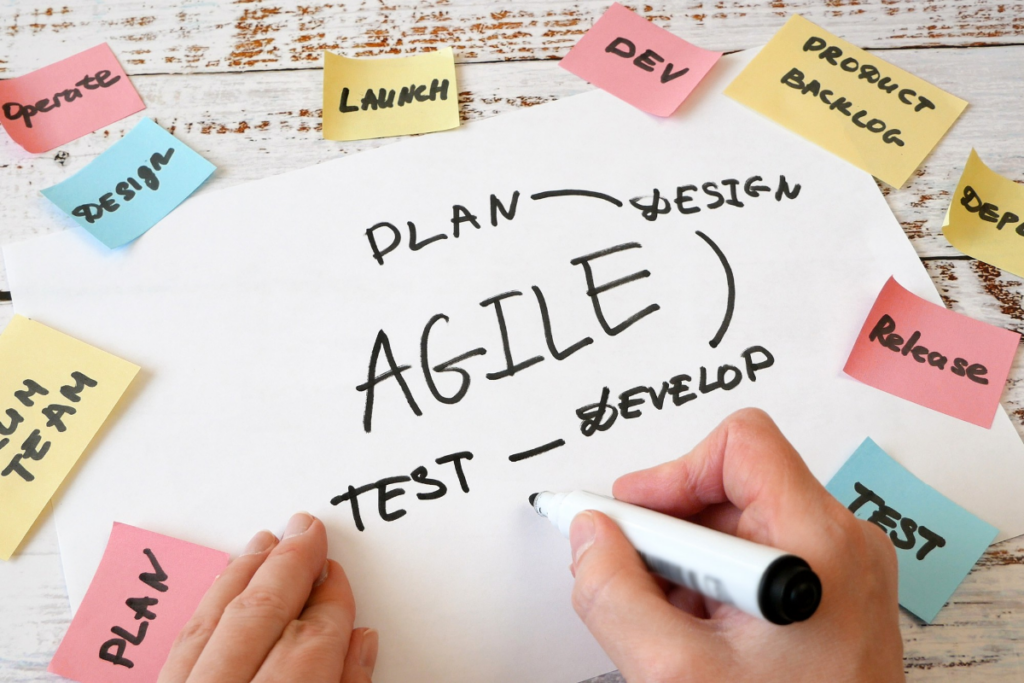
Agile is perceived as a project management or product development principle or set of principles that help streamline the work process. It was initially used in the software development industry but is now employed in other sectors as well. From healthcare to marketing and finance, various industries rely on agile methodologies for better project management. 

Agile processes include breaking down the project into smaller subunits or tasks, which have a typical deadline of 1-4 weeks. These tasks are called sprints and are manageable within the given time. Once the sprints are completed, the team reviews the work and suggests changes accordingly. 

Different Agile Frameworks

There are several Agile-based frameworks you can try based on your project type and requirements. They provide specific guidelines that can help you better manage and complete the project. 

  • Scrum
  • Lean
  • Kanban
  • Extreme Programming (XP)
  • Dynamic Systems Development Method (DSDM)

Benefits of Adopting Agile in Organization

No matter what industry you cater to, managing and completing projects can be challenging if you don’t streamline the work. Agile can assist you in clearly defining your goals and achieving them in a more flexible and scalable manner. Here are the major benefits of employing agile methodologies in your business:

1. Ease in flexibility and adaptability

Agile ensures your team can easily adapt to change and complete the assigned project on time. This becomes even more useful for markets where customer preferences and requirements constantly change. An agile methodology trains your team to be flexible in the ever-changing world of technology and evolution. If you are looking for courses on agile to add value to your team’s project management skills, then we can help. 

2. Customer Retention

When you launch products and shape your project as per your customers and potential customer’s needs, you increase your chances of retaining them. Agile frameworks allow you to conduct customer interaction sessions, and feedback sessions, which gives you a new approach towards customer satisfaction, hooking them to your brand longer and converting them into loyal customers. In short, agile methodologies can help you achieve happier customers. 

3. Constant Improvisation

As a company, you should always focus on improvising and evolving. Agile frameworks help you identify your pain points so you can work on them. They let you identify the areas in need of improvement. As a result, you can plan your work accordingly. For example, customer reviews can give you information on which products or services can be improved. You can then launch your upcoming projects accordingly. Our carefully designed Agile training courses have insightful modules that help you learn more about constant improvisation. 

4. Better Communication

Agile methodologies promote cross-functional teams and emphasize collaboration and communication among team members. By working closely together, sharing knowledge, and engaging in regular feedback loops, teams can overcome silos and improve efficiency. Transparent communication channels, such as daily stand-up meetings and frequent demonstrations of work progress, ensure that everyone is aligned, informed, and able to address any challenges or impediments quickly.

Higher Productivity

When your team completes a project in a minimum amount of time, you can take on more projects. This leads to better revenue and ROI. Agile is all about enhancing your team’s productivity by ensuring the work is bifurcated into achievable goals. By focusing on high-priority tasks and features, teams can avoid unnecessary work and concentrate their efforts on delivering value. You can explore our Agile Training Courses for a better overview of how the course can add value to your team’s productivity. 

Conclusion

Agile methodologies involve dividing the project into smaller, manageable goals. This helps you set defined workable components that can be completed within a particular interval of time. Introducing Agile frameworks to your company’s working mechanisms has several benefits. If you want to elevate your company’s productivity and wish to introduce Agile to your workflow, then Spoclearn provides some of the most sought-after Agile and Scrum Training Courses for professionals and enterprise teams to help implement Agile practices to achieve enterprise-level transformation.

Leave a Reply

Your email address will not be published. Required fields are marked *

Subscribe us