Trending Now

Workplace Conflict in 2027: How AI, Hybrid Work and Changing Employee Expectations Are Creating New Challenges
AI Is Saving Time at Work, So Why Are Employees Busier Than Ever?
Scrum Master Skills in 2027: How AI Is Changing the Scrum Master Role
From AI Agents to Production Systems: The Skills Agentic AI Engineers Need in 2026
How to Prepare for the Updated PMP Exam in 60 Days
AI in Pharmaceutical Development: Where Does Quality by Design Fit?
AI-Generated Code Security: 7 DevSecOps Skills Teams Need in 2027
From Paper Waste to Digital Waste: The New Inefficiencies Businesses Need to Eliminate
PRINCE2 7 in 2026: Where the Framework Fits in Modern Project Delivery
ITIL® AI Governance (Version 5): Why AI Governance Matters for IT Managers
AI Security Professional—Why AI Security Skills Are Becoming Essential for Cybersecurity Professionals in 2026
Root Cause Analysis Checklist: What to Ask Before Closing a Problem
AI in DevSecOps: How AI Is Changing Application Security in 2026
COBIT versus ISO 27001: What's the Difference and When Should You Use Each of Them?
AZ-104 Exam Changes 2026: What's New?
Leading SAFe Is Now AI-Empowered: What's Changed in 2026? 
What Is PMI-CPMAI? Complete 2026 Guide to PMI's AI Project Management Certification
Agile Project Manager vs Scrum Master: What's the Difference
Excel to Power BI: A Step-by-Step Career Roadmap for Data Professionals
ITIL 4 Managing Professional to ITIL Version 5: Upgrade Guide
From Reactive to Proactive: How Modern Organizations Solve Problems Before They Grow
How Fishbone Diagrams Improve Problem Solving
Top Industries Hiring PRINCE2 Certified Professionals with AI Skills in 2026
SAFe vs Scrum: Which Framework Makes More Sense for Large Organizations?
Lean Six Sigma Green Belt vs Black Belt: Which One Fits Your Career?
PRINCE2 7 vs Agile: Which Approach Works Best in 2026? 
Does Every Manager Need PMP Certification? 
What High-Performing Organizations Do Differently to Improve Operational Excellence?
How to Automate Reports Using Advanced Excel Formulas: A Beginner's Guide
What Is Lean Six Sigma Green Belt and How Does It Solve Real Business Problems? A Beginner's Guide (2026)
The Biggest IT Skills Gap in 2026 and How ITIL V5 Can Bridge It
Why Do Projects Fail and How Does PMP Help Prevent Failure?
How Google AI Search Is Changing SEO Strategies in the United States
CRISC Certification Salary Guide by Country in 2026
PRINCE2 7 in Agile/Hybrid Teams: How to Combine PRINCE2 with Scrum, Kanban, SAFe (2026)
PRINCE2 7 Processes Explained (2026): A Step-by-Step Walkthrough from Start to Close
Common Root Cause Analysis Mistakes That Keep Problems Coming Back — And How to Fix Them
Lean Six Sigma Templates Pack: SIPOC, CTQ, Fishbone, Control Plan, A3 (Free Guide)
Power Query in Power BI: Top Real-World Problems, Errors & Solutions for Data Analysts
Power Query Best Practices 2026: Faster Refresh, Cleaner Models, Fewer Errors
Step-by-Step CISA Certification Roadmap for 2026 (Beginner to Expert)
Top ITIL Roles in the USA for 2026 With ITIL v5 Skills
PMP vs Agile vs PRINCE2 in the USA: Which Certification Delivers the Best Career Growth in 2026?
Agile in CAPM: What PMI Expects You to Know (Scrum, Kanban, Hybrid Basics)
Power Query vs Traditional Excel: The Future of Data Cleaning, Reporting & Automation in 2026
ITIL 4 to ITIL 5 Transition Guide: Bridge Certification, Costs, Deadlines & Strategic Upgrade Plan
CAPM Exam Mistakes to Avoid: The Top Reasons Candidates Fail and How to Fix Them
Why Global Construction and Infrastructure Companies Depend on Oracle Primavera P6
Top SRE Challenges in 2026: Toil, Tool Overload & How Organizations Can Fix Reliability Gaps
From Chaos to Control: How PMP Frameworks Help Organizations Deliver Projects On Time and Within Budget
From Beginner to Agile Pro: Step-by-Step Roadmap with Agile Scrum Foundation Certification
What Is CRISC Certification in 2026? Updated ISACA Exam, Domains, Skills & Career Value Explained
Struggling with Process Inefficiencies? How LSSGB Solves Workflow Bottlenecks in 2026
SIAM in 2026: How to Fix Multi-Vendor Chaos and Achieve End-to-End Service Accountability (EXIN SIAM BoK V3 Guide)
CISM Certification 2026 Update: What’s Changing in ISACA’s New Exam Structure (Nov 2026)
Step-by-Step Guide to Master Primavera P6 for Project Managers (2026 Edition)
Oracle Primavera P6 Training Guide (2026): Skills Every Project Professional Must Master
What’s New in PMP 2026? Key PMI Updates, Exam Pattern Changes & What It Means for Your Career
Who Should Take the ITIL V5 Bridge Course? Eligibility, Benefits & ROI Explained
PL-300 Practice Questions 2026: 60 Scenario-Based Questions with Explanations
From Beginner to Expert: The Ultimate Oracle Primavera P6 Learning Path for Project Professionals
ITIL v5 Framework Guide: Core Concepts, Principles, and Real-World Applications
Agile Scrum Foundation vs Scrum Master: Which Certification Should You Choose in 2026?
CRISC® Certification Guide 2026: Syllabus, Exam Pattern, Salary & Career Growth Explained
PMI-PBA® Certification in 2026: Complete Guide, Career Scope, Salary & Industry Demand
CISA Exam Changes & Syllabus Breakdown (2026 Update + Study Strategy)
CISM Certification Roadmap 2026: Step-by-Step Guide to Becoming a Security Manager
Lean vs Six Sigma vs Lean Six Sigma: What’s the Difference and When to Use Each?
AI and PRINCE2 7th Edition: What PMs Must Know
Performance Max Campaign Performance Dropped? Here’s the Real Reason (And Fix)
ITIL v5 Trends: What IT Leaders Must Know About the Next Phase of ITSM
Why Oracle Primavera P6 Certification Is Becoming Essential for Project Managers in 2026
PRINCE2 7 Roles & Responsibilities: Who Does What (Project Board to Team Manager)
Stakeholder Engagement Strategies That Actually Deliver Results
The Future of Project Management: Trends Reshaping 2025–2030 
CAPM Exam Prep Strategy 2026: Practice Questions, Mock Tests, and Time Management
ITIL 4 vs ITIL (Version 5): The Global, No‑Fluff Guide to What’s New, What Stays, and How to Transition
ITIL 5 Certification Demand and Job Market Trends: Complete Career Guide (2026)
ITIL v5 Job Roles Explained: From Service Desk Analyst to IT Service Manager
PL-300 DAX Questions You Must Master in 2026 (With Patterns)
How to Write an RCA Report That Actually Prevents Repeat Incidents (Templates + Examples)
Digital Transformation Projects: Why They Fail & How to Fix Them
PMI’s Late-2026 PMP® Policy Update Will Reject Most Live Training Hours — Here’s How to Protect Your 35 Contact Hours  
Why Are My Pages Not Indexed Even After Sitemap Submission? (And How to Fix It)
Minitab for Lean Six Sigma (2026): The Only Functions Most Belts Actually Need
Top 10 Project Scheduling Tools for PMP & PRINCE2 Aspirants (2026 Guide)
SIPOC Made Simple: How to Map a Process in 20 Minutes (with Examples)
PL-300 vs DP-600 vs DP-500 in 2026: Which Certification Should You Take First?
Portfolio Management Mastery: Why PfMP and PgMP Are Rising in Demand (2026)
How to Build a “Closed-Loop” CAPA System Using RCA (So Fixes Don’t Die in Docs)
Yellow Belt vs Green Belt vs Black Belt: Which Lean Six Sigma Level Should You Choose in 2026?
DMAIC Explained (2026): The Step-by-Step Method to Fix Any Process
PRINCE2 7 Tailoring Guide (2026): How to Adapt the Method for Any Project Size
Google Ads vs SEO in 2026: Which Should You Invest In First?
Process Mining + Lean Six Sigma: The 2026 Playbook for Faster, Data-Driven DMAIC
CAPM vs PMP in 2026: Which Certification Should You Choose (and When)?
PRINCE2 7 Certification Path: Foundation → Practitioner → Next Steps (2026 Roadmap)
Oracle Primavera P6 Training Roadmap (2026): From Beginner to Project Controls Expert
AI Overviews & AI Mode SEO: How to Win Visibility When Google Answers First
RCA vs 5 Whys vs Fishbone vs 8D vs A3: When to Use Which (Decision Framework)
Workplace Conflict in 2027 How AI, Hybrid Work and Changing Employee Expectations Are Creating New Challenges

Workplace Conflict in 2027: How AI, Hybrid Work and Changing Employee Expectations Are Creating New Challenges

Picture of Bharath Kumar
Bharath Kumar
Bharath Kumar is a seasoned professional with 10 years' expertise in Quality Management, Project Management, and DevOps. He has a proven track record of driving excellence and efficiency through integrated strategies.

Disagreements at work are not new, but how they arise has changed over the years. In the year 2027, teams argue over the ownership of machine-created work, whether coming to the office is a requirement, and what workers would like from their employers. Managers using outdated practices are oblivious to how minor matters grow into considerable obstacles resulting in a worker quitting the organization. The piece of writing intends to present new types of disagreements in the workplace and the solutions for them.

Why Workplace Conflicts Are Changing in 2027
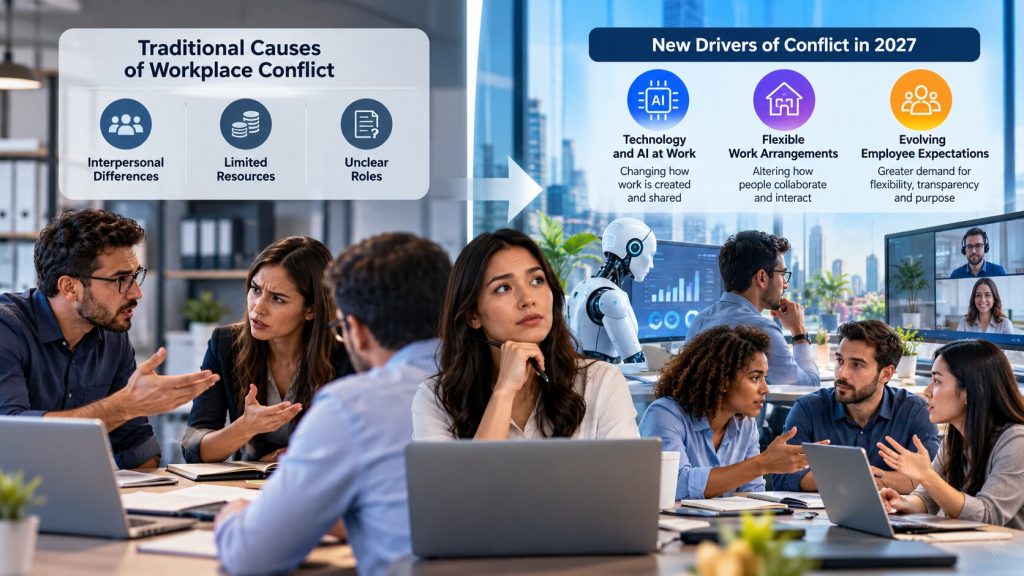
Historically, conflict has arisen due to disputes among the parties involved, limited resources, or non-definition of roles. Each of these causes still persists. In addition, three new factors have recently emerged above the previously listed causes. Today technology has changed the sharing process of work, flexible arrangements have altered the way people interact, and today’s employees are demanding more flexibility, transparency, and commitment to the cause.

Three Major Causes of Workplace Conflict in 2027 

ForceExample ConflictRoot CauseEarly Warning Sign
AI at WorkTwo colleagues disagree on who gets credit for AI-assisted workUnclear rules on AI use and ownershipQuiet resentment over recognition
Hybrid WorkOffice-based staff feel remote staff have it easierUneven access to leaders and flexibilityCliques forming by location
Employee ExpectationsStaff push back on rigid schedules or limited growthGap between promises and daily realityFalling engagement and rising absence

Workplace Conflicts

Identifying conflicts among members of remote and hybrid teams is not easy due to the absence of nonverbal cues. One single message may be considered impolite and offensive. Failure to respond within an appropriate time limit is considered bad manners. Moreover, the hybrid mode makes this process more difficult because remote employees can be ignored by their counterparts.

  • Difficulties in Communication for Virtual Organizations

The main problem with remote communication is the inability to convey messages in the necessary context.

  • How Proximity Bias Creates Workplace Conflict 

Employees who are physically present in the workplace have more opportunities for tasks and promotions.

  • Unequal Workloads and Work Pressure 

People working remotely don’t have as much time off because they are trying to prove their efficiency.

  • Managing Time-Zone Conflicts 

Scheduling meetings in a way that one of the participants can feel the advantage over the others.

How AI Is Creating New Workplace Conflicts 
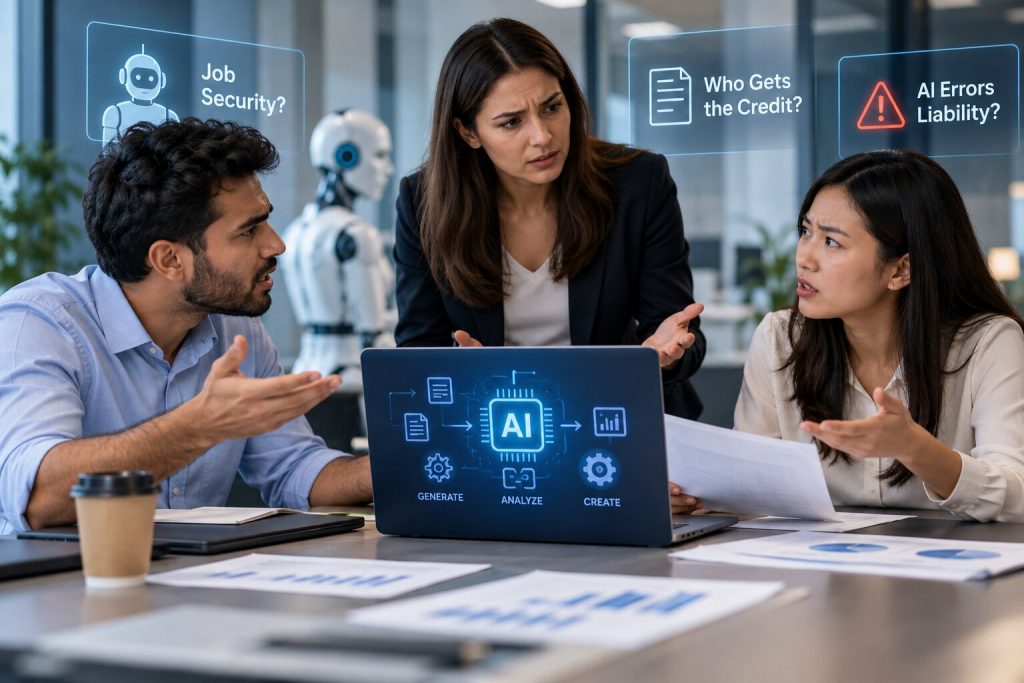
Fear and equity serve as the foundation for the problems arising from the use of technology in the workplace. Some employees fear losing their jobs because of machines. Others feel that their colleagues rely on machines to perform their work more easily than they do. Moreover, disputes may arise regarding liability for mistakes committed due to the report analyzed with the assistance of the machine. These contradictions can easily be solved by establishing the fundamentals of which tools are to be used and how they are to be used, along with determining who is to be held accountable for those results.

Some Practical Solutions for Resolving Workplace Contradictions

These approaches are simple, objective, and easy to replicate.

Here is what the manager must do in order to settle the disagreement.

  1. Act immediately: Act as soon as you see tensions building.
  2. Meet with the parties separately before working out a course of action; this is essential to minimize confusion.
  3. Separate facts from feelings: Ensure the facts are accurate before evaluating the problem’s outcomes.
  4. Concentrate on the goals of the two individuals: Find out what their goals are.
  5. Find out the responsibilities of each: Be sure you know whose responsibility it is to do what.
  6. Follow up on the matter in a few weeks: See how things have developed two weeks after the event.

Essential Conflict Management Skills for Managers 

  • Methods for resolving conflict can be described as simple, objective, and replicable. Quick actions to be taken are:
  • Get to the issue early: Talk to the parties involved when there is any indication of a brewing conflict.
  • Have separate meetings: Meet privately with the two concerned parties to avoid misunderstandings.
  • Separate facts from emotions: Get the facts straight before interpreting the situation’s effect on the two parties.
  • Common objectives must be identified: Focus on what both sides are aiming for.
  • Handle the question of accountability: Actions that are agreed upon and the assignment of responsibilities with time periods indicated.
  • Check if everything is resolved: Inquire about how the case has progressed a week or two later.

How HR Can Help Resolve Employee Conflicts 
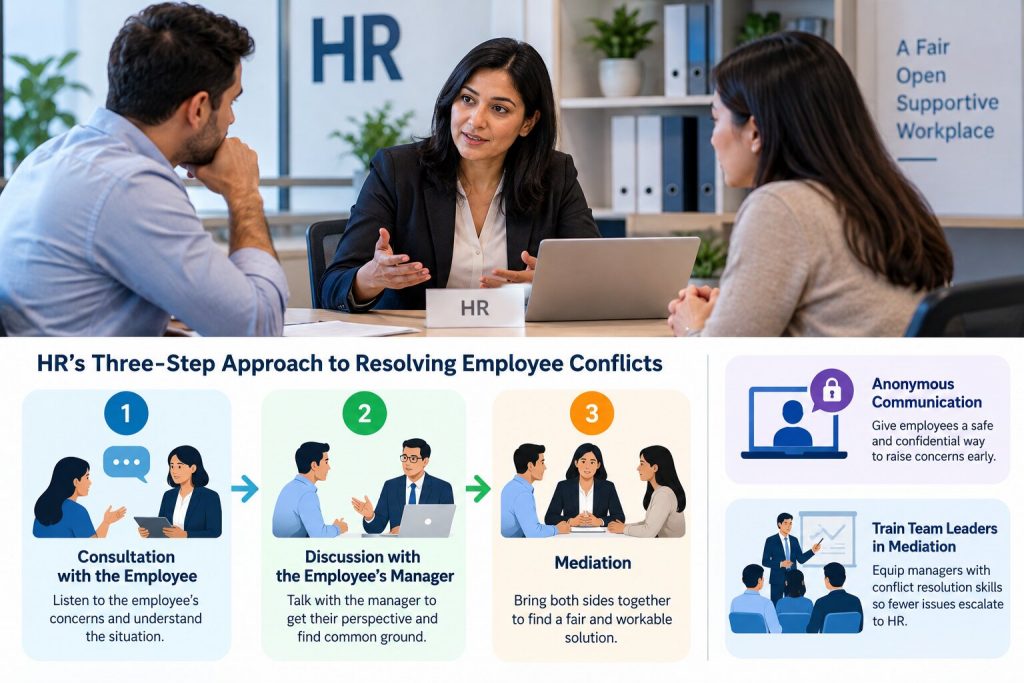
One of the best ways to resolve conflict is to develop a procedure in advance. HR representatives may develop a three-step mechanism consisting of the following stages: consultation with the employee, discussion with the employee’s manager, and mediation. It is also possible for workers to benefit from anonymous communication; in this case, far fewer cases will reach HR if team leaders are trained in mediation.

Methods for Avoiding Conflict at Work Before It Happens

Always be one step ahead in prevention rather than solving problems; therefore, rules must be created regarding time, meetings, and the use of AI.

There should always be one-on-one meetings to resolve any issues. Change the meeting times to allow participation by all employees, regardless of their location.

Why Conflict Resolution Training Matters 

Conflict management resolution training helps managers learn techniques for resolving conflicts over issues such as AI credits and remote employees who do not feel included in the team. Another benefit of conflict resolution training is that the whole team learns the same language, so they can discuss difficult issues in a consistent manner. In addition, focusing on training managers in conflict resolution techniques brings quick results as employees turn to their managers for help.

Improve Workplace Conflict Management With Spoclearn 

If conflicts within the organization go unresolved, they may negatively impact employee engagement. With training for managers in conflict resolution and effective communication, the workplace environment can be improved.

After getting to know Spoclearn and the programs on offer, including those aimed at training managers in conflict resolution, firms will be able to effectively address all work-related problems.

Leave a Reply

Your email address will not be published. Required fields are marked *

Subscribe us