
Trending Now

AI in DevSecOps: How AI Is Changing Application Security in 2026
COBIT versus ISO 27001: What's the Difference and When Should You Use Each of Them?
AZ-104 Exam Changes 2026: What's New?
Leading SAFe Is Now AI-Empowered: What's Changed in 2026? 
What Is PMI-CPMAI? Complete 2026 Guide to PMI's AI Project Management Certification
Agile Project Manager vs Scrum Master: What's the Difference
Excel to Power BI: A Step-by-Step Career Roadmap for Data Professionals
ITIL 4 Managing Professional to ITIL Version 5: Upgrade Guide
From Reactive to Proactive: How Modern Organizations Solve Problems Before They Grow
How Fishbone Diagrams Improve Problem Solving
Top Industries Hiring PRINCE2 Certified Professionals with AI Skills in 2026
SAFe vs Scrum: Which Framework Makes More Sense for Large Organizations?
Lean Six Sigma Green Belt vs Black Belt: Which One Fits Your Career?
PRINCE2 7 in 2026: Where the Framework Fits in Modern Project Delivery
PRINCE2 7 vs Agile: Which Approach Works Best in 2026? 
Does Every Manager Need PMP Certification? 
What High-Performing Organizations Do Differently to Improve Operational Excellence?
How to Automate Reports Using Advanced Excel Formulas: A Beginner's Guide
What Is Lean Six Sigma Green Belt and How Does It Solve Real Business Problems? A Beginner's Guide (2026)
The Biggest IT Skills Gap in 2026 and How ITIL V5 Can Bridge It
Why Do Projects Fail and How Does PMP Help Prevent Failure?
How Google AI Search Is Changing SEO Strategies in the United States
CRISC Certification Salary Guide by Country in 2026
PRINCE2 7 in Agile/Hybrid Teams: How to Combine PRINCE2 with Scrum, Kanban, SAFe (2026)
PRINCE2 7 Processes Explained (2026): A Step-by-Step Walkthrough from Start to Close
Common Root Cause Analysis Mistakes That Keep Problems Coming Back — And How to Fix Them
Lean Six Sigma Templates Pack: SIPOC, CTQ, Fishbone, Control Plan, A3 (Free Guide)
Power Query in Power BI: Top Real-World Problems, Errors & Solutions for Data Analysts
Power Query Best Practices 2026: Faster Refresh, Cleaner Models, Fewer Errors
Step-by-Step CISA Certification Roadmap for 2026 (Beginner to Expert)
Top ITIL Roles in the USA for 2026 With ITIL v5 Skills
PMP vs Agile vs PRINCE2 in the USA: Which Certification Delivers the Best Career Growth in 2026?
Agile in CAPM: What PMI Expects You to Know (Scrum, Kanban, Hybrid Basics)
Power Query vs Traditional Excel: The Future of Data Cleaning, Reporting & Automation in 2026
ITIL 4 to ITIL 5 Transition Guide: Bridge Certification, Costs, Deadlines & Strategic Upgrade Plan
CAPM Exam Mistakes to Avoid: The Top Reasons Candidates Fail and How to Fix Them
Why Global Construction and Infrastructure Companies Depend on Oracle Primavera P6
Top SRE Challenges in 2026: Toil, Tool Overload & How Organizations Can Fix Reliability Gaps
From Chaos to Control: How PMP Frameworks Help Organizations Deliver Projects On Time and Within Budget
From Beginner to Agile Pro: Step-by-Step Roadmap with Agile Scrum Foundation Certification
What Is CRISC Certification in 2026? Updated ISACA Exam, Domains, Skills & Career Value Explained
Struggling with Process Inefficiencies? How LSSGB Solves Workflow Bottlenecks in 2026
SIAM in 2026: How to Fix Multi-Vendor Chaos and Achieve End-to-End Service Accountability (EXIN SIAM BoK V3 Guide)
CISM Certification 2026 Update: What’s Changing in ISACA’s New Exam Structure (Nov 2026)
Step-by-Step Guide to Master Primavera P6 for Project Managers (2026 Edition)
Oracle Primavera P6 Training Guide (2026): Skills Every Project Professional Must Master
What’s New in PMP 2026? Key PMI Updates, Exam Pattern Changes & What It Means for Your Career
Who Should Take the ITIL V5 Bridge Course? Eligibility, Benefits & ROI Explained
PL-300 Practice Questions 2026: 60 Scenario-Based Questions with Explanations
From Beginner to Expert: The Ultimate Oracle Primavera P6 Learning Path for Project Professionals
ITIL v5 Framework Guide: Core Concepts, Principles, and Real-World Applications
Agile Scrum Foundation vs Scrum Master: Which Certification Should You Choose in 2026?
CRISC® Certification Guide 2026: Syllabus, Exam Pattern, Salary & Career Growth Explained
PMI-PBA® Certification in 2026: Complete Guide, Career Scope, Salary & Industry Demand
CISA Exam Changes & Syllabus Breakdown (2026 Update + Study Strategy)
CISM Certification Roadmap 2026: Step-by-Step Guide to Becoming a Security Manager
Lean vs Six Sigma vs Lean Six Sigma: What’s the Difference and When to Use Each?
AI and PRINCE2 7th Edition: What PMs Must Know
Performance Max Campaign Performance Dropped? Here’s the Real Reason (And Fix)
ITIL v5 Trends: What IT Leaders Must Know About the Next Phase of ITSM
Why Oracle Primavera P6 Certification Is Becoming Essential for Project Managers in 2026
PRINCE2 7 Roles & Responsibilities: Who Does What (Project Board to Team Manager)
Stakeholder Engagement Strategies That Actually Deliver Results
The Future of Project Management: Trends Reshaping 2025–2030 
CAPM Exam Prep Strategy 2026: Practice Questions, Mock Tests, and Time Management
ITIL 4 vs ITIL (Version 5): The Global, No‑Fluff Guide to What’s New, What Stays, and How to Transition
ITIL 5 Certification Demand and Job Market Trends: Complete Career Guide (2026)
ITIL v5 Job Roles Explained: From Service Desk Analyst to IT Service Manager
PL-300 DAX Questions You Must Master in 2026 (With Patterns)
How to Write an RCA Report That Actually Prevents Repeat Incidents (Templates + Examples)
Digital Transformation Projects: Why They Fail & How to Fix Them
PMI’s Late-2026 PMP® Policy Update Will Reject Most Live Training Hours — Here’s How to Protect Your 35 Contact Hours  
Why Are My Pages Not Indexed Even After Sitemap Submission? (And How to Fix It)
Minitab for Lean Six Sigma (2026): The Only Functions Most Belts Actually Need
Top 10 Project Scheduling Tools for PMP & PRINCE2 Aspirants (2026 Guide)
SIPOC Made Simple: How to Map a Process in 20 Minutes (with Examples)
PL-300 vs DP-600 vs DP-500 in 2026: Which Certification Should You Take First?
Portfolio Management Mastery: Why PfMP and PgMP Are Rising in Demand (2026)
How to Build a “Closed-Loop” CAPA System Using RCA (So Fixes Don’t Die in Docs)
Yellow Belt vs Green Belt vs Black Belt: Which Lean Six Sigma Level Should You Choose in 2026?
DMAIC Explained (2026): The Step-by-Step Method to Fix Any Process
PRINCE2 7 Tailoring Guide (2026): How to Adapt the Method for Any Project Size
Google Ads vs SEO in 2026: Which Should You Invest In First?
Process Mining + Lean Six Sigma: The 2026 Playbook for Faster, Data-Driven DMAIC
CAPM vs PMP in 2026: Which Certification Should You Choose (and When)?
PRINCE2 7 Certification Path: Foundation → Practitioner → Next Steps (2026 Roadmap)
Oracle Primavera P6 Training Roadmap (2026): From Beginner to Project Controls Expert
AI Overviews & AI Mode SEO: How to Win Visibility When Google Answers First
RCA vs 5 Whys vs Fishbone vs 8D vs A3: When to Use Which (Decision Framework)
PL-300 Case Study Walkthrough: From Raw Data to Executive Dashboard (End-to-End)
PRINCE2 7 Foundation: Complete Exam Guide, Format, Pass Mark, and Study Plan (2026)
Lean Six Sigma Yellow Belt: The 2026 Beginner Guide (Tools, Examples, Real Workplace Use)
Technical SEO Audit 2026: The Only Checklist That Still Matters
Content Refresh Strategy 2026: How to Update Old Pages for New Traffic
CAPM Exam Content Outline Explained: Domains, Weightage, and What to Study First
GA4 Setup Guide 2026: Step-by-Step for Accurate Tracking
From Keywords to Answers: How Search Works in 2026 
CAPM Certification 2026: The Complete Exam + Training Guide (PMI-Updated)
Traditional SEO vs Answer-First SEO: What Actually Ranks in 2026
ITSM Evolution: From Monolithic Systems to Cloud‑Centric Architectures (2026)
AI in DevSecOps: How AI Is Changing Application Security in 2026

AI in DevSecOps: How AI Is Changing Application Security in 2026

Picture of Mangesh Shahi
Mangesh Shahi
Mangesh Shahi is an Agile, Scrum, ITSM, & Digital Marketing pro with 15 years' expertise. Driving efficient strategies at the intersection of technology and marketing.

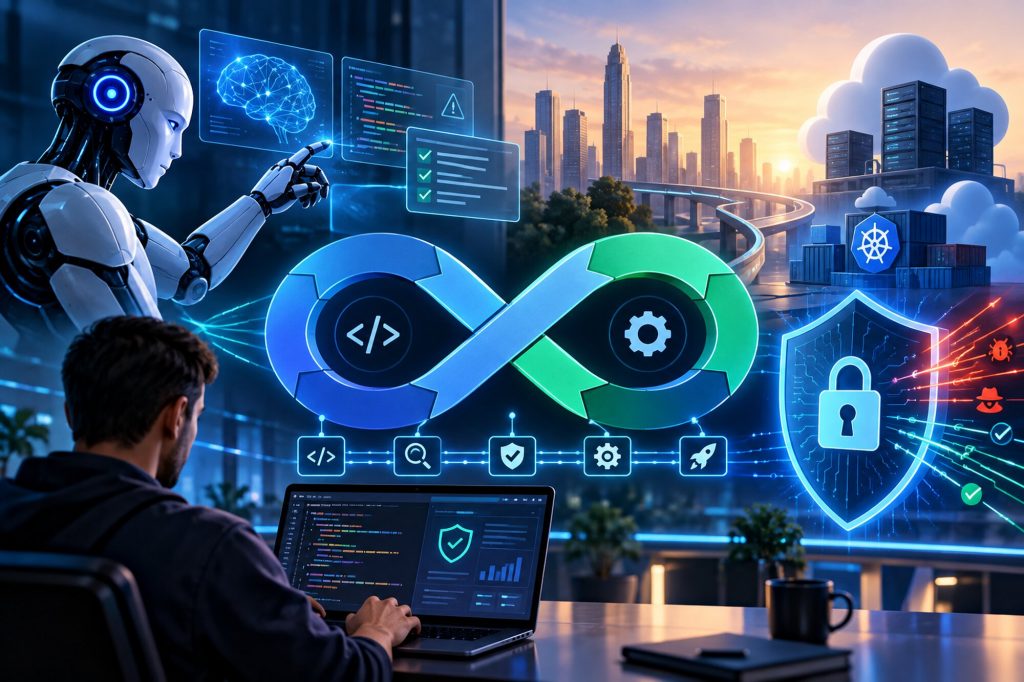
No one intended to assess AI-created code at 3 a.m. But with the growth of AI-assisted software development, DevSecOps teams are managing increasing amounts of code, dependencies, and security requirements. AI makes delivery faster, but that doesn’t make the actual process of application security assessment pointless.

Why Is AI Important to DevSecOps?

At present, AI aids in performing numerous steps of the software development process. Developers utilize coding tools to write functions, interpret code, create tests, and suggest corrections. Security groups use AI to prioritize vulnerabilities, detect threats, analyze code, and respond to incidents.

That said, a quicker development process can lead to governance issues. According to GitLab’s 2026 AI Accountability Report, based on a global survey of 1,528 developers and technology buyers, there is a pressing need for context, traceability, and accountability in AI-driven DevSecOps.

In light of that, generative AI in DevSecOps becomes much more than a discussion regarding productivity. Organizations need to know where the AI-generated code came from, what it is supposed to do, and who is responsible for reviewing the code before it goes live.

What AI security risks look like

The security of AI-generated code is a concern. Veracode’s 2026 report showed that roughly 44% of AI code-generation jobs resulted in code containing a known security vulnerability. The security pass rate averaged 56%, but it varied by vulnerability type and model. 

Thus, AI-generated code should not be considered less scrutinized than human-written code. It has to comply with secure coding standards, testing protocols, and meet the same approval requirements as any other code.

Is AI Causing a Supply Chain Issue?

AI has risks through suggested dependencies. A programming assistant may suggest an incorrect, outdated, vulnerable, or non-existent dependency. Attackers can register plausible package names that AI tools hallucinate or recommend, then publish malicious code under their names. This is called slopsquatting.

To help keep AI software supply chain security, teams need to verify any AI-suggested dependencies before using them. Techniques such as package allowlisting, software composition analysis, and vulnerability monitoring can help secure the software supply chain. 

Classic DevSecOps vs AI-Powered DevSecOps

FieldClassic methodologyAI-augmented methodology
Code verificationHuman-reviewed code supported by automated testing AI-assisted code testing combined with automated AI security testing and human review 
Safety testingSecurity testing performed throughout the CI/CD pipeline Security testing integrated into CI/CD pipelines
DependenciesDependencies scanned for known vulnerabilities Packages verified for vulnerabilities, authenticity, and provenance 
GovernanceDeveloper and security responsibilityAI use, approvals, responsibility, and code origin are recorded 

Conclusion

The DevSecOps best practices 2026 include the use of AI tools for application security together with strict programming practices, automatic systems of control, verification of dependencies, and human checks.

If you want to learn the art of using AI in DevSecOps, you can take advantage of the DevSecOps training courses offered by Spoclearn. They can help you improve existing DevSecOps practices and integrate them into AI-powered software development.

Frequently Asked Questions

1. Is AI-produced code automatically safe?

Veracode research in 2026 found that roughly 44% of the AI code-generation tasks tested produced code containing a known security vulnerability. AI-generated code will need to be tested and analyzed before approval. 

2. What is slopsquatting?

Slopsquatting is an attack where attackers register plausible but non-existent package names which AI tools could mistakenly suggest to users. Teams using these packages may be exposing their applications to malicious code injection. 

3. Will AI security tools replace human reviewers?

Not completely. AI security tools may be able to recognize patterns, rank issues, and perform routine checks automatically. But one still needs a human reviewer to ensure that the business logic, security context, architecture, and code behavior are appropriate.

Leave a Reply

Your email address will not be published. Required fields are marked *

Subscribe us