
Trending Now

PRINCE2 7 in Agile/Hybrid Teams: How to Combine PRINCE2 with Scrum, Kanban, SAFe (2026)
PRINCE2 7 Processes Explained (2026): A Step-by-Step Walkthrough from Start to Close
Common Root Cause Analysis Mistakes That Keep Problems Coming Back — And How to Fix Them
Lean Six Sigma Templates Pack: SIPOC, CTQ, Fishbone, Control Plan, A3 (Free Guide)
Power Query in Power BI: Top Real-World Problems, Errors & Solutions for Data Analysts
Power Query Best Practices 2026: Faster Refresh, Cleaner Models, Fewer Errors
Step-by-Step CISA Certification Roadmap for 2026 (Beginner to Expert)
Top ITIL Roles in the USA for 2026 With ITIL v5 Skills
PMP vs Agile vs PRINCE2 in the USA: Which Certification Delivers the Best Career Growth in 2026?
Agile in CAPM: What PMI Expects You to Know (Scrum, Kanban, Hybrid Basics)
Power Query vs Traditional Excel: The Future of Data Cleaning, Reporting & Automation in 2026
ITIL 4 to ITIL 5 Transition Guide: Bridge Certification, Costs, Deadlines & Strategic Upgrade Plan
CAPM Exam Mistakes to Avoid: The Top Reasons Candidates Fail and How to Fix Them
Why Global Construction and Infrastructure Companies Depend on Oracle Primavera P6
Top SRE Challenges in 2026: Toil, Tool Overload & How Organizations Can Fix Reliability Gaps
From Chaos to Control: How PMP Frameworks Help Organizations Deliver Projects On Time and Within Budget
From Beginner to Agile Pro: Step-by-Step Roadmap with Agile Scrum Foundation Certification
What Is CRISC Certification in 2026? Updated ISACA Exam, Domains, Skills & Career Value Explained
Struggling with Process Inefficiencies? How LSSGB Solves Workflow Bottlenecks in 2026
SIAM in 2026: How to Fix Multi-Vendor Chaos and Achieve End-to-End Service Accountability (EXIN SIAM BoK V3 Guide)
CISM Certification 2026 Update: What’s Changing in ISACA’s New Exam Structure (Nov 2026)
Step-by-Step Guide to Master Primavera P6 for Project Managers (2026 Edition)
Oracle Primavera P6 Training Guide (2026): Skills Every Project Professional Must Master
What’s New in PMP 2026? Key PMI Updates, Exam Pattern Changes & What It Means for Your Career
Who Should Take the ITIL V5 Bridge Course? Eligibility, Benefits & ROI Explained
PL-300 Practice Questions 2026: 60 Scenario-Based Questions with Explanations
From Beginner to Expert: The Ultimate Oracle Primavera P6 Learning Path for Project Professionals
ITIL v5 Framework Guide: Core Concepts, Principles, and Real-World Applications
Agile Scrum Foundation vs Scrum Master: Which Certification Should You Choose in 2026?
CRISC® Certification Guide 2026: Syllabus, Exam Pattern, Salary & Career Growth Explained
PMI-PBA® Certification in 2026: Complete Guide, Career Scope, Salary & Industry Demand
CISA Exam Changes & Syllabus Breakdown (2026 Update + Study Strategy)
CISM Certification Roadmap 2026: Step-by-Step Guide to Becoming a Security Manager
Lean vs Six Sigma vs Lean Six Sigma: What’s the Difference and When to Use Each?
AI and PRINCE2 7th Edition: What PMs Must Know
Performance Max Campaign Performance Dropped? Here’s the Real Reason (And Fix)
ITIL v5 Trends: What IT Leaders Must Know About the Next Phase of ITSM
Why Oracle Primavera P6 Certification Is Becoming Essential for Project Managers in 2026
PRINCE2 7 Roles & Responsibilities: Who Does What (Project Board to Team Manager)
Stakeholder Engagement Strategies That Actually Deliver Results
The Future of Project Management: Trends Reshaping 2025–2030 
CAPM Exam Prep Strategy 2026: Practice Questions, Mock Tests, and Time Management
ITIL 4 vs ITIL (Version 5): The Global, No‑Fluff Guide to What’s New, What Stays, and How to Transition
ITIL 5 Certification Demand and Job Market Trends: Complete Career Guide (2026)
ITIL v5 Job Roles Explained: From Service Desk Analyst to IT Service Manager
PL-300 DAX Questions You Must Master in 2026 (With Patterns)
How to Write an RCA Report That Actually Prevents Repeat Incidents (Templates + Examples)
Digital Transformation Projects: Why They Fail & How to Fix Them
PMI’s Late-2026 PMP® Policy Update Will Reject Most Live Training Hours — Here’s How to Protect Your 35 Contact Hours  
Why Are My Pages Not Indexed Even After Sitemap Submission? (And How to Fix It)
Minitab for Lean Six Sigma (2026): The Only Functions Most Belts Actually Need
Top 10 Project Scheduling Tools for PMP & PRINCE2 Aspirants (2026 Guide)
SIPOC Made Simple: How to Map a Process in 20 Minutes (with Examples)
PL-300 vs DP-600 vs DP-500 in 2026: Which Certification Should You Take First?
Portfolio Management Mastery: Why PfMP and PgMP Are Rising in Demand (2026)
How to Build a “Closed-Loop” CAPA System Using RCA (So Fixes Don’t Die in Docs)
Yellow Belt vs Green Belt vs Black Belt: Which Lean Six Sigma Level Should You Choose in 2026?
DMAIC Explained (2026): The Step-by-Step Method to Fix Any Process
PRINCE2 7 Tailoring Guide (2026): How to Adapt the Method for Any Project Size
Google Ads vs SEO in 2026: Which Should You Invest In First?
Process Mining + Lean Six Sigma: The 2026 Playbook for Faster, Data-Driven DMAIC
CAPM vs PMP in 2026: Which Certification Should You Choose (and When)?
PRINCE2 7 Certification Path: Foundation → Practitioner → Next Steps (2026 Roadmap)
Oracle Primavera P6 Training Roadmap (2026): From Beginner to Project Controls Expert
AI Overviews & AI Mode SEO: How to Win Visibility When Google Answers First
RCA vs 5 Whys vs Fishbone vs 8D vs A3: When to Use Which (Decision Framework)
PL-300 Case Study Walkthrough: From Raw Data to Executive Dashboard (End-to-End)
PRINCE2 7 Foundation: Complete Exam Guide, Format, Pass Mark, and Study Plan (2026)
Lean Six Sigma Yellow Belt: The 2026 Beginner Guide (Tools, Examples, Real Workplace Use)
Technical SEO Audit 2026: The Only Checklist That Still Matters
Content Refresh Strategy 2026: How to Update Old Pages for New Traffic
CAPM Exam Content Outline Explained: Domains, Weightage, and What to Study First
GA4 Setup Guide 2026: Step-by-Step for Accurate Tracking
From Keywords to Answers: How Search Works in 2026 
CAPM Certification 2026: The Complete Exam + Training Guide (PMI-Updated)
Traditional SEO vs Answer-First SEO: What Actually Ranks in 2026
ITSM Evolution: From Monolithic Systems to Cloud‑Centric Architectures (2026)
How to Run High-Performance Retargeting Campaigns Using AI
Project Leadership in 2026: Skills Every Successful Project Manager Needs
Technical SEO for 2026: Crawl Optimization, Log Analysis & AI Indexing Signals
Top 12 Project Management Mistakes and How to Avoid Them
PRINCE2® 7 (2026 Guide): What’s New, What Changed, and Why It Matters
Lean Six Sigma in 2026: What’s Changed (AI, Automation, Process Intelligence) & What Still Works
Root Cause Analysis in 2026: The Modern RCA Playbook for Faster, Repeatable Fixes
ITIL Is for Everyone and for Every Organization: A Deep‑Dive Playbook (2026)
Social Media Algorithms Explained (2026 Edition): What Actually Drives Reach Today
PL-300 Exam Guide 2026: Skills Measured, Study Plan, and What’s Changed
LLMS.txt vs Robots.txt in 2026: What to Implement (and What to Avoid)
SEO in 2026: The Complete Playbook for AI Search, AEO & GEO
Google Ads Audits in 2026: A Step-by-Step Checklist to Fix Wasted Spend and Unlock Growth
AI-Driven Risk Management: Predict Risks Before They Happen
On-Page SEO 2026: New Techniques for Topical Relevance & AI Search
Hybrid Project Management: Why Organizations Are Transitioning in 2026 and Beyond
AI-Powered Project Planning: Faster, Smarter, and More Accurate Strategies 
Industry Predictions for 2026: From GenAI to Value Streams and Total Experience
PMP vs CAPM vs PRINCE2: Which Certification Offers the Best ROI in 2026?
AI in Project Management: How Intelligent Tools Are Transforming PM Workflows 
Performance Max Mastery: How to Scale ROI with Smart Automation 
What is SAFe RTE? (Release Train Engineer)
SAFe RTE: The Complete Guide to Becoming a High-Impact Release Train Engineer (2025–2026)
Role of Observability in Site Reliability Engineering

The Role of Observability in Site Reliability Engineering (SRE)

Picture of Mangesh Shahi
Mangesh Shahi
Mangesh Shahi is an Agile, Scrum, ITSM, & Digital Marketing pro with 15 years' expertise. Driving efficient strategies at the intersection of technology and marketing.

In the ever-evolving landscape of IT, Site Reliability Engineering (SRE) has emerged as a critical discipline for managing large-scale, complex systems. A cornerstone of SRE is observability—a practice that enables engineers to gain deep insights into system behavior, ensuring reliability, scalability, and overall performance. This blog explores the crucial role of observability in SRE, its key components, and how it can be effectively implemented to enhance system operations.

What is Observability?

Observability, in the context of SRE, refers to the ability to understand and measure the internal state of a system based on the outputs it produces. Unlike traditional monitoring, which focuses on predefined metrics, observability provides a more comprehensive view, enabling teams to ask and answer any question about system behavior, especially in the face of the unexpected.

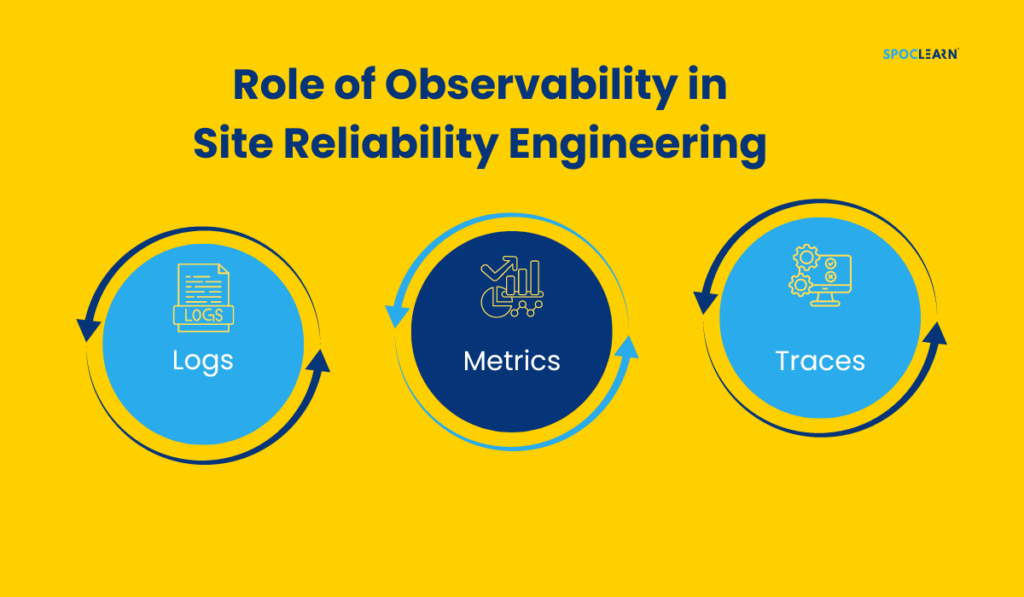
Observability is often described through three pillars: logs, metrics, and traces. Each pillar contributes unique insights, together forming a holistic view of system performance.
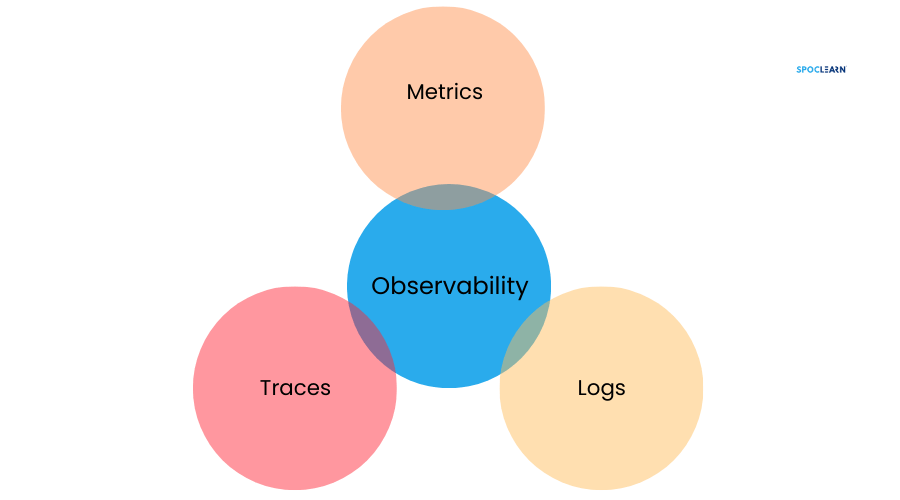
The Role of Observability in Site Reliability Engineering (SRE)

The Three Pillars of Observability

1. Logs

Logs are time-stamped records of discrete events within a system. They provide detailed information about what happened at specific moments, helping SRE teams to diagnose and troubleshoot issues.

Key Benefits:

  • Detailed Insights: Logs offer granular details, making it easier to trace specific events or actions within a system.
  • Root Cause Analysis: By examining logs, SRE teams can identify the root causes of incidents, leading to quicker resolution.

Implementation Tip: Ensure consistent and structured logging across all services to facilitate easier analysis and correlation of events.

2. Metrics

Metrics are numerical values that measure the performance of various system components over time. These can include CPU usage, memory consumption, request latency, and error rates.

Key Benefits:

  • Real-time Monitoring: Metrics provide a real-time snapshot of system health, allowing for immediate detection of anomalies.
  • Trend Analysis: By analyzing metrics over time, SRE teams can identify patterns and predict potential issues before they escalate.

Implementation Tip: Use monitoring tools that support custom metrics, allowing you to tailor metric collection to the specific needs of your system.

3. Traces

Traces represent the journey of a request or transaction as it flows through different components of a system. They provide a detailed map of the system’s behavior, highlighting latencies, bottlenecks, and dependencies.

Key Benefits:

  • End-to-End Visibility: Traces offer a comprehensive view of how requests propagate through the system, making it easier to identify performance bottlenecks.
  • Dependency Mapping: Understanding the dependencies between services helps in diagnosing and mitigating issues that may arise from complex interactions.

Implementation Tip: Leverage distributed tracing tools to capture detailed traces across microservices, ensuring that even the most complex systems are observable.

Why Observability Matters in SRE

Observability is essential in SRE because it empowers teams to maintain the reliability and performance of systems in dynamic and complex environments. Here’s why observability is crucial:

1. Proactive Issue Detection

Observability allows SRE teams to detect and address issues before they impact users. By continuously monitoring logs, metrics, and traces, teams can identify anomalies early and take corrective actions swiftly.

2. Improved Incident Response

When incidents occur, observability tools enable SRE teams to quickly pinpoint the source of the problem. With comprehensive data at their fingertips, teams can reduce mean time to resolution (MTTR) and minimize downtime.

3. Enhanced System Understanding

Observability provides SRE teams with a deep understanding of system behavior under various conditions. This knowledge is invaluable for optimizing system performance, planning capacity, and ensuring scalability.

4. Facilitates Collaboration

Observability fosters better collaboration between development, operations, and SRE teams. By providing a shared source of truth, it enables cross-functional teams to work together more effectively in maintaining system reliability.

Implementing Observability in SRE

To implement observability effectively within an SRE framework, organizations should follow these steps:

1. Define Key Metrics and Logs

Start by identifying the most critical metrics and logs that align with your SLOs (Service Level Objectives). Ensure that these are consistently tracked across all services and environments.

2. Leverage the Right Tools

Choose observability tools that integrate seamlessly with your existing infrastructure. Tools like Prometheus, Grafana, ELK Stack, and Jaeger are popular choices for collecting and analyzing observability data.

3. Establish Alerting Mechanisms

Set up alerts for key metrics and logs that indicate potential issues. Alerts should be fine-tuned to minimize noise and focus on actionable insights.

4. Automate Where Possible

Automation plays a vital role in observability. Automate the collection, aggregation, and analysis of observability data to ensure that your SRE team can focus on higher-level tasks.

5. Conduct Regular Reviews

Regularly review your observability strategy to ensure it continues to meet the evolving needs of your system. This includes updating metrics, refining alert thresholds, and exploring new tools and techniques.

Real-World Examples of Observability in Action

Several organizations have successfully implemented observability to enhance their SRE practices. For example:

  • Netflix uses observability to monitor its massive microservices architecture, ensuring high availability and performance for millions of users worldwide.
  • Etsy has built a robust observability framework that allows its SRE teams to detect and resolve issues quickly, maintaining a seamless shopping experience for customers.

These examples demonstrate how observability can be a game-changer for organizations operating at scale.

The Future of Observability in SRE

As systems continue to grow in complexity, the role of observability in SRE will become even more critical. Emerging trends such as AI-driven observability, where machine learning models analyze observability data to predict and prevent issues, are poised to revolutionize the field.

Moreover, the integration of observability with DevOps practices will further enhance collaboration and streamline the development and operations lifecycle. Organizations that invest in observability today will be better equipped to manage the challenges of tomorrow’s IT landscape.

Conclusion

In the world of Site Reliability Engineering, observability is not just a toolset but a mindset. It enables SRE teams to maintain high levels of reliability and performance in increasingly complex systems. By understanding and implementing the core pillars of observability—logs, metrics, and traces—organizations can gain deep insights into their systems, proactively address issues, and ensure a seamless user experience.

Leave a Reply

Your email address will not be published. Required fields are marked *

Subscribe us