

Trending Now

CISM Certification Roadmap 2026: Step-by-Step Guide to Becoming a Security Manager
Lean vs Six Sigma vs Lean Six Sigma: What’s the Difference and When to Use Each?
AI and PRINCE2 7th Edition: What PMs Must Know
Performance Max Campaign Performance Dropped? Here’s the Real Reason (And Fix)
ITIL v5 Trends: What IT Leaders Must Know About the Next Phase of ITSM
Why Oracle Primavera P6 Certification Is Becoming Essential for Project Managers in 2026
PRINCE2 7 Roles & Responsibilities: Who Does What (Project Board to Team Manager)
Stakeholder Engagement Strategies That Actually Deliver Results
The Future of Project Management: Trends Reshaping 2025–2030 
Lean Six Sigma Templates Pack: SIPOC, CTQ, Fishbone, Control Plan, A3 (Free Guide)
CAPM Exam Prep Strategy 2026: Practice Questions, Mock Tests, and Time Management
ITIL 4 vs ITIL (Version 5): The Global, No‑Fluff Guide to What’s New, What Stays, and How to Transition
ITIL 5 Certification Demand and Job Market Trends: Complete Career Guide (2026)
ITIL v5 Job Roles Explained: From Service Desk Analyst to IT Service Manager
PL-300 DAX Questions You Must Master in 2026 (With Patterns)
How to Write an RCA Report That Actually Prevents Repeat Incidents (Templates + Examples)
Digital Transformation Projects: Why They Fail & How to Fix Them
Oracle Primavera P6 Training Guide (2026): Skills Every Project Professional Must Master
PMI’s Late-2026 PMP® Policy Update Will Reject Most Live Training Hours — Here’s How to Protect Your 35 Contact Hours  
Why Are My Pages Not Indexed Even After Sitemap Submission? (And How to Fix It)
Minitab for Lean Six Sigma (2026): The Only Functions Most Belts Actually Need
Top 10 Project Scheduling Tools for PMP & PRINCE2 Aspirants (2026 Guide)
SIPOC Made Simple: How to Map a Process in 20 Minutes (with Examples)
PL-300 vs DP-600 vs DP-500 in 2026: Which Certification Should You Take First?
Portfolio Management Mastery: Why PfMP and PgMP Are Rising in Demand (2026)
How to Build a “Closed-Loop” CAPA System Using RCA (So Fixes Don’t Die in Docs)
Yellow Belt vs Green Belt vs Black Belt: Which Lean Six Sigma Level Should You Choose in 2026?
DMAIC Explained (2026): The Step-by-Step Method to Fix Any Process
PRINCE2 7 Tailoring Guide (2026): How to Adapt the Method for Any Project Size
Google Ads vs SEO in 2026: Which Should You Invest In First?
Process Mining + Lean Six Sigma: The 2026 Playbook for Faster, Data-Driven DMAIC
CAPM vs PMP in 2026: Which Certification Should You Choose (and When)?
PRINCE2 7 Certification Path: Foundation → Practitioner → Next Steps (2026 Roadmap)
Oracle Primavera P6 Training Roadmap (2026): From Beginner to Project Controls Expert
AI Overviews & AI Mode SEO: How to Win Visibility When Google Answers First
RCA vs 5 Whys vs Fishbone vs 8D vs A3: When to Use Which (Decision Framework)
PL-300 Case Study Walkthrough: From Raw Data to Executive Dashboard (End-to-End)
PRINCE2 7 Foundation: Complete Exam Guide, Format, Pass Mark, and Study Plan (2026)
Lean Six Sigma Yellow Belt: The 2026 Beginner Guide (Tools, Examples, Real Workplace Use)
Technical SEO Audit 2026: The Only Checklist That Still Matters
Content Refresh Strategy 2026: How to Update Old Pages for New Traffic
CAPM Exam Content Outline Explained: Domains, Weightage, and What to Study First
GA4 Setup Guide 2026: Step-by-Step for Accurate Tracking
From Keywords to Answers: How Search Works in 2026 
CAPM Certification 2026: The Complete Exam + Training Guide (PMI-Updated)
Traditional SEO vs Answer-First SEO: What Actually Ranks in 2026
ITSM Evolution: From Monolithic Systems to Cloud‑Centric Architectures (2026)
How to Run High-Performance Retargeting Campaigns Using AI
Project Leadership in 2026: Skills Every Successful Project Manager Needs
Technical SEO for 2026: Crawl Optimization, Log Analysis & AI Indexing Signals
Top 12 Project Management Mistakes and How to Avoid Them
PRINCE2® 7 (2026 Guide): What’s New, What Changed, and Why It Matters
Lean Six Sigma in 2026: What’s Changed (AI, Automation, Process Intelligence) & What Still Works
Root Cause Analysis in 2026: The Modern RCA Playbook for Faster, Repeatable Fixes
ITIL Is for Everyone and for Every Organization: A Deep‑Dive Playbook (2026)
Social Media Algorithms Explained (2026 Edition): What Actually Drives Reach Today
Power Query Best Practices 2026: Faster Refresh, Cleaner Models, Fewer Errors
PL-300 Exam Guide 2026: Skills Measured, Study Plan, and What’s Changed
LLMS.txt vs Robots.txt in 2026: What to Implement (and What to Avoid)
SEO in 2026: The Complete Playbook for AI Search, AEO & GEO
Google Ads Audits in 2026: A Step-by-Step Checklist to Fix Wasted Spend and Unlock Growth
AI-Driven Risk Management: Predict Risks Before They Happen
On-Page SEO 2026: New Techniques for Topical Relevance & AI Search
Hybrid Project Management: Why Organizations Are Transitioning in 2026 and Beyond
AI-Powered Project Planning: Faster, Smarter, and More Accurate Strategies 
Industry Predictions for 2026: From GenAI to Value Streams and Total Experience
PMP vs CAPM vs PRINCE2: Which Certification Offers the Best ROI in 2026?
AI in Project Management: How Intelligent Tools Are Transforming PM Workflows 
Performance Max Mastery: How to Scale ROI with Smart Automation 
What is SAFe RTE? (Release Train Engineer)
SAFe RTE: The Complete Guide to Becoming a High-Impact Release Train Engineer (2025–2026)
Time Management: How to Turn Hours into Impact
Lean Six Sigma Green Belt: Skills, Value, Demand & Global Trends 2026
PL-300: Microsoft Power BI Data Analyst Certification for Career Growth Globally 2026
Strong & Sustained Demand for PMP Certification in 2026
Why Organizational Agility Matters: The Strategic Imperative for Big Enterprises
Building an Agility Culture Beyond IT Teams
How to Re-Engage Remote Teams: PMP Question on Motivation and Collaboration
Understanding Tuckman’s Team Development Stages - PMP Exam Question Explained
Why do Business Owners assign business value to team PI Objectives?  
Benefits of EXIN Agile Scrum Foundation Certification
Benefits of PMP Certification for Corporate and Individual Professionals in 2025
Streamlining Vaccine Development during a Global Health Crisis – An Imaginary PRINCE2 Case Study
PMBOK Guide Tips for Managing Change and Uncertainty in Projects
How to Apply PRINCE2 Methodologies in Real-World Projects
What is PRINCE2® 7? A Simple Explanation for Beginners
Project Management Certification in the United States of America
The Evolution of Project Management: From Process-Based to Principles-Based Approaches
Mastering ITIL and PRINCE2 for Enhanced Project Outcomes in Indian GCCs
Exploring the Eight Project Performance Domains in the PMBOK® Guide
PMI Best Practices for Project Management Across Different Environments
Your Ultimate Project Management Guide: Explained in Detail
Top Benefits of PRINCE2 for Small and Medium Enterprises
Best Project Management Certifications of 2025
The Importance of Tailoring PRINCE2 to Fit Your Organization's Needs
Resolve Slash URLs & Learn 301 vs. 308 Redirects Effectively
What is a standard change in ITIL 4?
Which practice provides a single point of contact for users?
What is the first step of the guiding principle 'focus on value'?
Which is a benefit of using an IT service management tool to support incident management?
Data Science Programming Languages

Top Programming Languages for Data Science Professionals in 2024

Picture of Stefan Joseph
Stefan Joseph
Stefan Joseph is a seasoned Development and Testing and Data & Analytics, expert with 15 years' experience. He is proficient in Development, Testing and Analytical excellence, dedicated to driving data-driven insights and innovation.

The first thing needed to become a Data Science professional is to know multiple programming languages and the faster you learn the better. Every Data Science enthusiast must be passionate about coding and coding experience is a must to become a Data Scientist. But before you jump on to writing piles of code you have to understand the specific domain you’ll be working on. 

Domains of Data Science

Domains of Data Science

Along with coding skills, a Data Scientist should also have analytical and problem-solving skills. A data scientist is a proficient specialist adept at employing mathematical and statistical methodologies to effectively process, scrutinize, and derive insights from data. This field encompasses various domains, including but not limited to machine learning, deep learning, network analysis, natural language processing, and geospatial analysis. The execution of data science tasks predominantly hinges on harnessing the computational capabilities of computers. Programming languages for Data Science stands as the pivotal methodology enabling data scientists to engage with and issue commands to computer systems.

Let’s talk about the most in-demand programming languages a Data Scientist must have in 2023 and beyond.

Data Science Course

Programming Languages for Data Science

These are the coding languages that are required for a Data Science professional:

  • Python
  • R
  • SQL
  • Java
  • Julia
  • Scala
  • C/C++
  • JavaScript
  • Swift
  • Go

1. Python

This is the maestro of all coding languages when it comes to Data Science and any Data Science task you can imagine can be executed using Python. Python possesses the capability to execute a broad spectrum of tasks, ranging from data preprocessing, visualization, and statistical analysis, to the deployment of machine learning and deep learning models. The syntax of Python is quite simple and easy to understand. Consequently, beginners in Data Science always start with learning Python, the best programming language for Data Science.
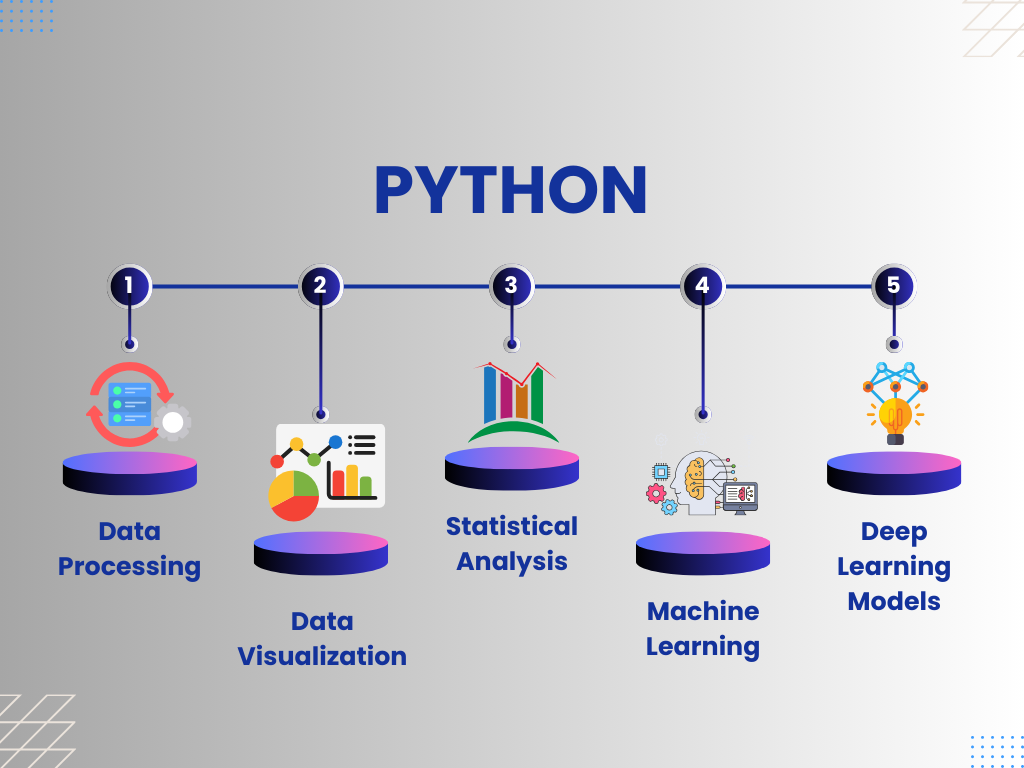
Best programming language for Data Science

2. R

Another programming language that is explicitly designed for Data Science is R. This is an open-source domain-specific language that has gained popularity after Python in the Data Science realm. Therefore, learning Python or R or both is the best scenario in Data Science and is going to be a plus for you. Working directly with R is not a big deal but people commonly use Rstudio, a powerful third-party interface that integrates various capabilities, such as data editor, data viewer, and debugger.
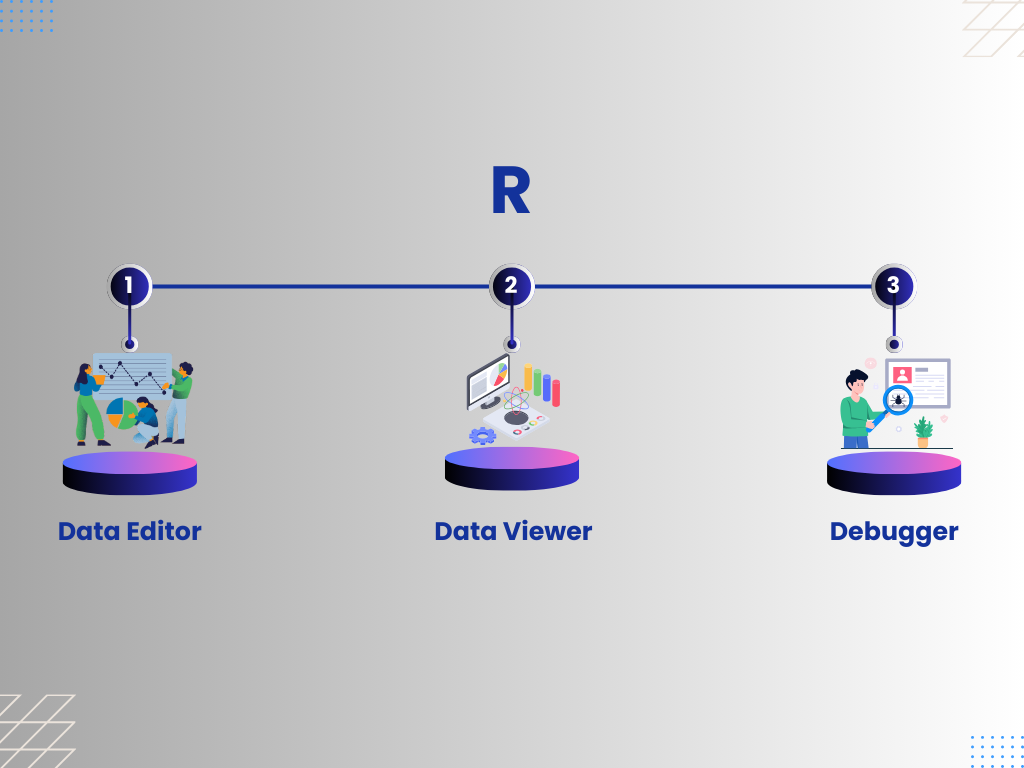
R Programing

3. SQL

Database management is one of the most fundamental jobs of a Data Scientist. SQL or Structured Query Language gives programmers the ability to communicate with, edit, and extract data from the database. The main funda is that by knowing SQL you can work with various databases where SQLite, MySQL, and PostgreSQL are the primarily used systems. SQL is a versatile language and the syntax is very easy to learn.
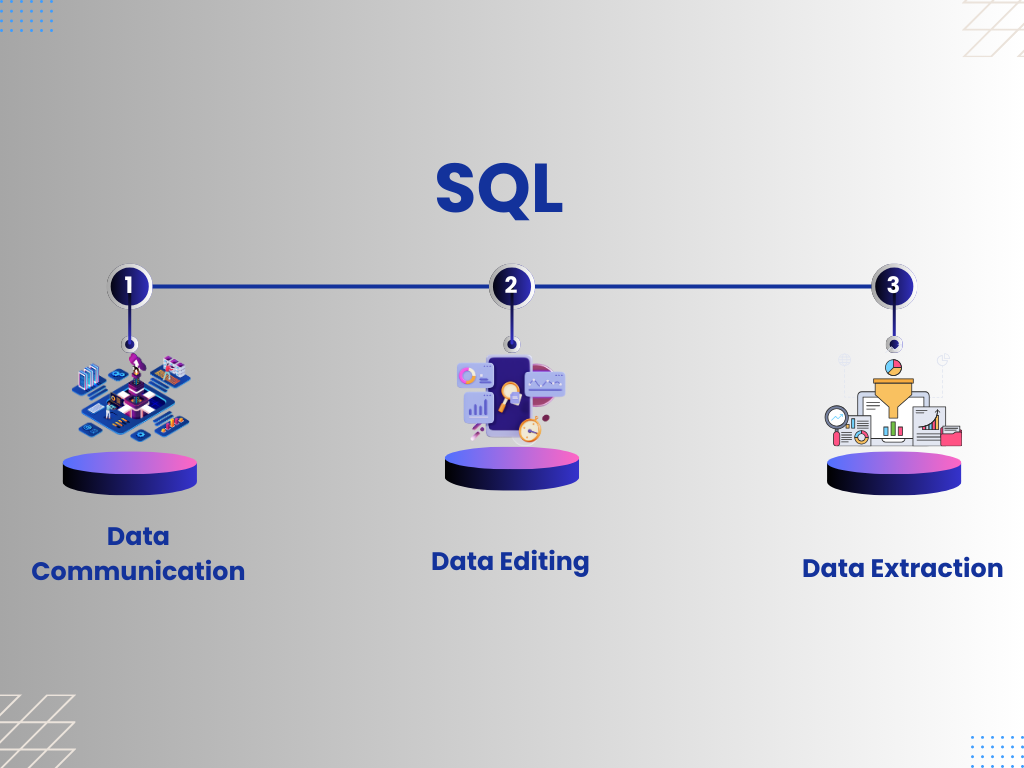
SQL

4. JAVA

In the past decade, JAVA has dropped its rank below Python but has become highly effective when it comes to website development. Java Virtual Machine provides a solid and efficient framework for popular big data tools, such as Hadoop, Spark, and Scala. However, the JAVA ecosystem is quite a reliable platform where endless technologies, software applications, and websites collaborate.
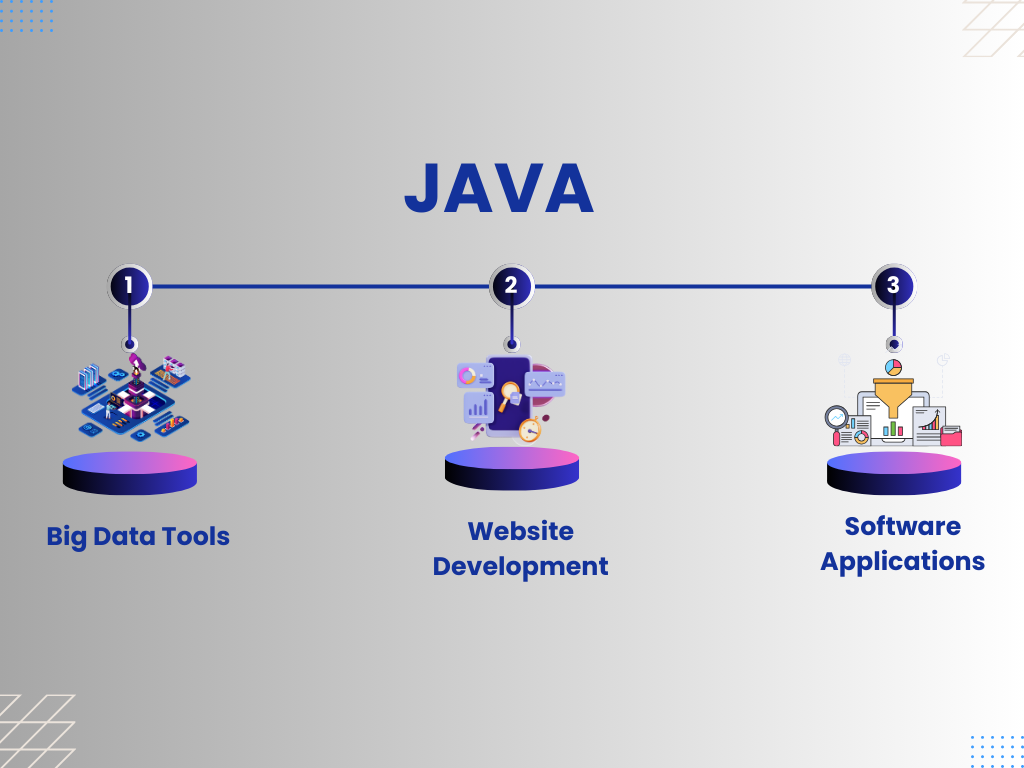
Java

5. Julia

Released in 2011, Julia is a star in the making in the Data Science profession and it has flabbergasted the entire Data Science community through its awesome numerical computing. It has a high speed, clear syntax, and versatility- the main reason behind its popularity. Though it has a smaller community without libraries as its main competitors, several organizations have shown trust in Julia.
Julia

6. Scala

Scala is a multi-paradigmatic language exclusively designed to be a clearer and less wordy alternative to Java. It was released in 2004 and now is one of the most in-demand programming languages for machine learning and big data. Scala, by its compatibility with the Java Virtual Machine, facilitates seamless integration with Java, rendering it an ideal language for complex, distributed big data initiatives. A notable illustration of this synergy is the utilization of Scala as the programming language of choice in the development of the Apache Spark cluster computing framework.
Scala

7. C/C++

C and C++ outpace many programming languages in terms of speed, rendering them highly suitable for the development of big data and machine learning applications. Notably, some pivotal components of widely used machine learning libraries, such as PyTorch and TensorFlow, are coded in C++.
C/C++

However, it’s important to acknowledge that C and C++ are inherently intricate due to their low-level nature. Consequently, while they may not be the initial choices for those venturing into the realm of data science, attaining proficiency in these languages can significantly enhance one’s skill set and career prospects, provided a solid grasp of fundamental programming concepts is established.

8. JavaScript

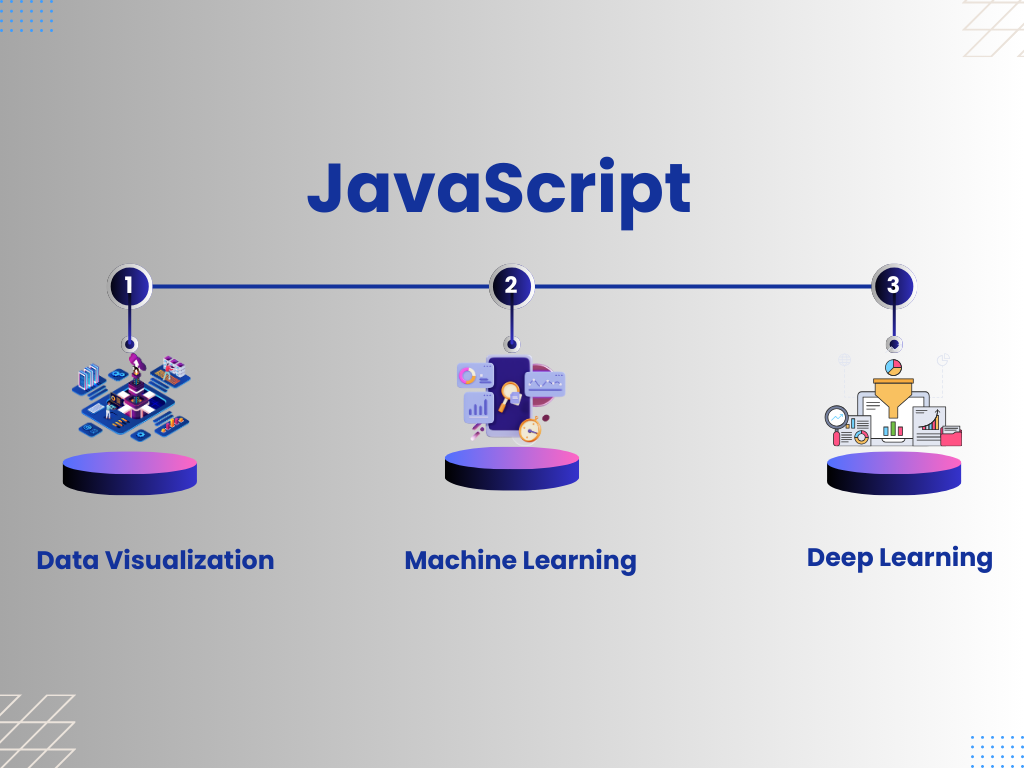
If you want to build rich and interactive web pages, shake hands with JavaScript. Generally, this programming language is mainly used in development sectors but its utility in Data Science is also reaching heights. The contribution of JavaScript in Data Visualization is a fantastic aspect and also supports popular libraries for machine learning and deep learning, such as TensorFlow and Keras. JavaScript is ideal for front-end and back-end developers who want to enter into the Data Science field.
JavaScript

9. Swift

With the advancement of mobile applications and IoT, the need for more mobile-friendly applications has increased over the last decade. Apple conceived Swift as a tool aimed at simplifying app development to expand its app ecosystem and bolster customer engagement. Following its introduction in 2014, a collaborative effort between Apple and Google swiftly ensued, marking the pivotal role of Swift in bridging the realms of mobile technology and machine learning.

The good news is that Swift is no longer restricted to the iOS ecosystem but can operate quite independently on Linux. It is now compatible with TensorFlow and is interoperable with Python. Therefore, a mobile developer who has grown a ferocious interest in Data Science should learn Swift swiftly. 

Data Science Course

10. Go

Google introduced Go in 2009 and ever since it has stolen the spotlight, especially for machine learning projects. Go is known to be the 21st-century C with C-like syntax and layouts. Data Science professionals are becoming fans of Go because it is a flexible and easy-to-understand language. Though the community is small Go is a good ally for machine learning tasks. 

Conclusion

Now that you have a clear understanding of the programming languages a Data Science professional requires, fasten your seatbelt and start learning coding. Each language has its traits and does exceptionally well in different domains. However, many coding languages are versatile and can be used in multiple genres. Therefore, choose your Data Science wisely based on your coding experience plus a new programming language learning capability. 

Leave a Reply

Your email address will not be published. Required fields are marked *

Subscribe us