

Organizations in this competitive era seek self-starters and prioritize candidates with industry-recognized certifications like Scrum Master. Exceptional leadership skills are highly valued for effective project management. To succeed in interviews and secure lucrative positions, focus on developing leadership abilities and understanding Agile principles and the Scrum framework. We’ve compiled essential information to guide you on this journey.
Who is Scrum Master?
One of the major questions that often pop up who is a scrum master? The Scrum Master holds a special place in the Scrum framework and the organization that is implementing it. They are responsible for facilitating the effective adoption of Scrum practices and concepts within a team or organization. To maximize value delivery, Scrum processes must be understood, followed, and optimized. The scrum master fulfills the role of a servant leader in this regard. They ensure that all aspects of the Scrum framework are met for the project to be completed on time and efficiently.
A Scrum Master leads meetings by inquiring about the team’s progress in three key areas:
- Progress since yesterday.
- Planned tasks for today.
- Any obstacles hindering progress.
While not involved in product strategy development, the Scrum Master plays a vital role in fostering coordination and collaboration among team members. This necessitates strong soft skills and up-to-date knowledge of relevant tools and techniques essential for Agile processes.
Qualities of a Scrum Master
A Scrum Master plays a key role in ensuring that the team follows Scrum rules for effective project management and positive results.
1. Leader
A Scrum Master acts as the leader of the team. Their job is not only to lead the members but also to help them whenever they require assistance. In their capacity as facilitators, they aid in the comprehension and adoption of the Scrum framework by the Scrum team and stakeholders. They help team members become more self-organized, collaborative, and committed to continuous development by coaching them on Scrum practices, roles, and rituals.
2. Change facilitator
A team must know how to thrive in a changing and fast-paced environment. It is the responsibility of the scrum master to facilitate the sprints and ensure that goals are met on time. They are responsible for keeping a close eye on the project’s progress and informing the stakeholders about it.
3. Mediator
The ScrumMaster fosters productive teamwork and assists in resolving issues. They encourage a constructive exchange of views and facilitate dialogues to identify common ground. The ScrumMaster aids in the formation of an effective and cohesive team by providing a friendly and courteous atmosphere.
However, efficient Scrum Masters often commit certain mistakes that may create an adverse situation for the team. Be cautious while executing the plan.
Essential Skills to Become a Scrum Master
Becoming a Scrum Master is not a cakewalk; you have to learn various aspects and acquire great skills. If you aim to become a great leader and lead a project in your company, then enrolling in a Scrum Master training course can be beneficial. Our course consists of well-designed modules that can help you acquire the skills essentially required to become a Scrum Master:
Scrum Master Technical Skills
1. Understanding Scrum
Scrum leaders know the main ideas behind this method well, like how to adjust plans, carry them out, and constantly test them in software development. Getting good at handling sprint cycles and using frameworks for planning and starting sprints is crucial for leading a Scrum team. Some leaders even get certifications in Scrum to prove they’re skilled in it.
2. Project Management
Being good at project management means you can handle things like money, figuring out what needs to be done, and checking if it’s doable. You also need to know how to make smart plans, set rules, make schedules, and report to higher-ups. Learning how to manage many projects and Scrum teams in tech settings is also key. Knowing about Agile methods can help you organize tasks better.
3. Design, Development, and Mixing Things
For Scrum leaders, it’s important to have technical skills in areas like designing software, coding, and combining different parts of a process. Some leaders might focus on certain parts of a project. Some might be good with tech stuff, while others might be better at seeing the big picture. Learning about frameworks like Agile, Waterfall, and Kanban can be helpful too. They make planning and doing Scrum projects easier, and they also make managing projects and keeping records smoother.
Scrum Master Soft Skills
1. Organizational Skills
Scrum leaders need top-notch organization and attention to detail to juggle multiple deadlines, sprint cycles, team roles, and project details. Being organized helps in assigning team tasks, scheduling meetings, and keeping track of changes in software during each sprint. Prioritizing tasks and managing time well are also vital skills for a Scrum leader.
2. Communication and Interpersonal Skills
Strong communication skills are crucial for leadership roles like Scrum. Good speaking and listening skills help support your team, foster innovation, and exchange creative ideas. Writing is also important for giving updates to managers and project owners. Scrum leaders collaborate closely with developers and technicians, so building good relationships at work is key. Understanding others’ points of view encourages teamwork and helps everyone reach goals together.
3. Critical Thinking Skills
Scrum leaders must think critically to spot risks and come up with ways to deal with them. Finding solutions that lead to success is another part of critical thinking that employers value in Scrum leaders. Solving technical problems and keeping the team informed about changes are also examples of how critical thinking plays a role in this job.
Scrum Master Responsibilities
1. Meeting Challenges
A Scrum Master’s main job is to find and fix problems that slow down the project. If the issues are too big, they can ask for help from other people involved. When team members can’t solve problems, the Scrum Master steps in to help.
2. Effective Communication
Good speaking and writing skills are important for making sure everyone on the team and the people they work with understand each other. Without good communication, even a well-planned project can fail. The Scrum Master’s job is to make sure everyone talks openly and honestly, which builds trust and makes the work go smoothly.
3. Team Management
The Scrum Master should create a work environment where everyone feels trusted and comfortable. Team members work best when they feel respected and not judged. If there are any problems between team members, the Scrum Master should find and solve them. Making sure everyone on the team works well together is one of their main tasks.
4. Team Lead
A Scrum Master is like the leader of the team. They’re often called “Servant Leaders” because they don’t just give orders; they help the team get things done. A good servant leader listens well, builds trust, understands others’ feelings, and encourages teamwork. These qualities make a Scrum Master effective at their job.
5. Coaching
A Scrum Master helps the Product Owner and the development team understand and follow Agile practices and the Scrum framework. They help the team improve their performance and take steps to do better. When there are big problems, the Scrum Master takes charge and fixes them. It’s not just about coaching the team; it’s also about coaching the whole organization, especially when they’re new to using Scrum.
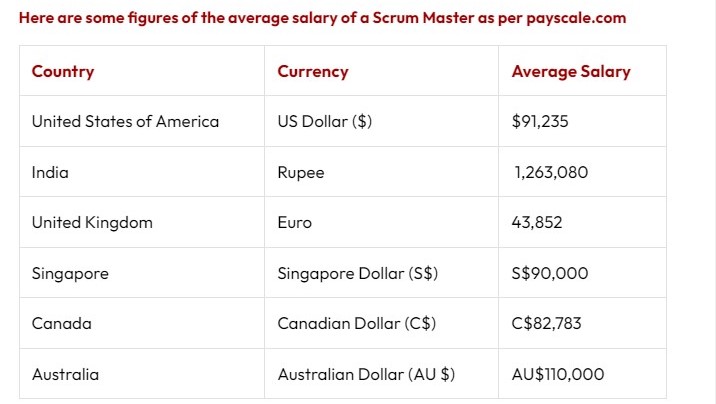
Scrum Master Salary Insights
Source: www.payscale.com
Conclusion
Having leadership skills can take you a long way in the professional world. You can become a scrum master by doing our Agile Scrum Project Management Training Course. We at Spoclearn offer Agile & Scrum courses specifically created to help candidates upskill in this fast-paced world.