

Helping mankind to conquer has been a daily job of Artificial Intelligence, but have you ever wondered how emotional AI is going to enthrall the entire market? Sounds stunning, isn’t it? The stats are even more astonishing. Video has transformed sales communication, as 67% of sellers find it easier to close deals using video. So, this blog will be throwing light on how Emotional AI is bringing revolution to sales figures and, thereby, generating lucrative revenue globally.

Emotion AI: What does that mean?
It is very simple. When a brilliant technology integrates artificial intelligence that processes and decrypts the emotional states of a human being, it is called emotional AI. According to the MIT Sloan School of Management, Emotion AI, a branch of artificial intelligence that encompasses machines replicating human thought processes, focuses on assessing, comprehending, simulating, and responding to human emotions. This field is also referred to as affective computing or artificial emotional intelligence and has roots dating back to at least 1995, with the publication of “Affective Computing” by MIT Media Lab professor Rosalind Picard.

Image source: the-next-tech.com
Researchers are saying that Emotional AI is just like a tool that offers more natural interaction between humans and machines. “Think of the way you interact with other human beings; you look at their faces, you look at their body, and you change your interaction accordingly,” said Javier Hernandez, a research scientist with the Affective Computing Group at the MIT Media Lab. As explained by MIT Sloan professor Erik Brynjolfsson, “While humans might currently have the upper hand on reading emotions, machines are gaining ground using their strengths. Machines are very good at analyzing large amounts of data – they can listen to voice inflections and start to recognize when those inflections correlate with stress or anger. Machines can analyze images and pick up subtleties in micro-expressions on humans’ faces that might happen even too fast for a person to recognize.”

Image source: the-next-tech.com
Zoom Conversational AI boosting Sales IQ: True or False?
Zoom has come up with Zoom Revenue Accelerator, a conversational intelligence add-on for Zoom Meetings and Zoom Phone that provides meaningful data to improve customer experience and seller performance. The Zoom Revenue Accelerator examines customer interactions to identify essential insights, actions, and content arising from sales meetings. Sales leaders can leverage this data to enhance their decision-making in managing sales teams, ultimately enabling more informed managerial choices. The latest version has an additional 12 languages!
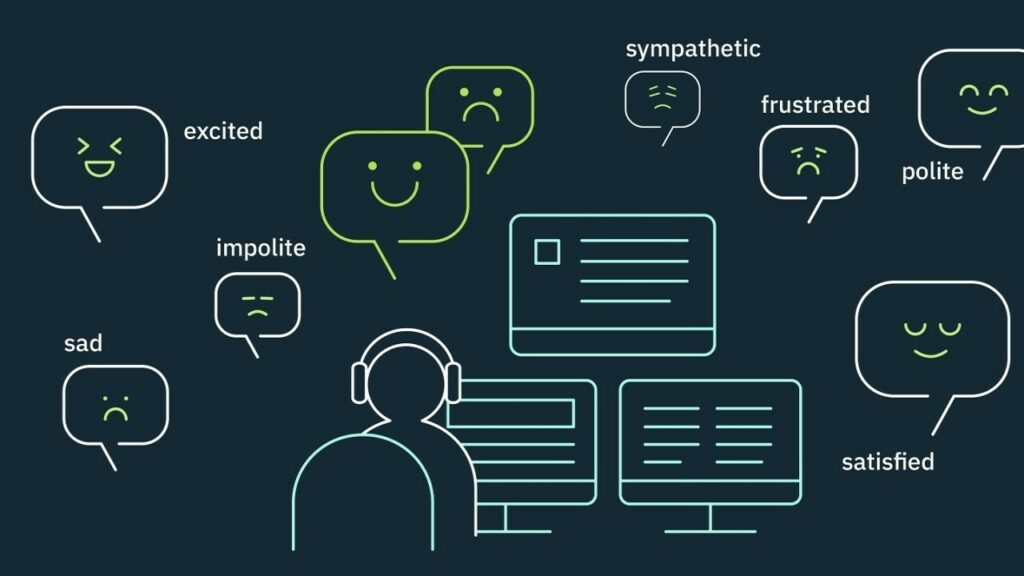
Image source: zoom.com
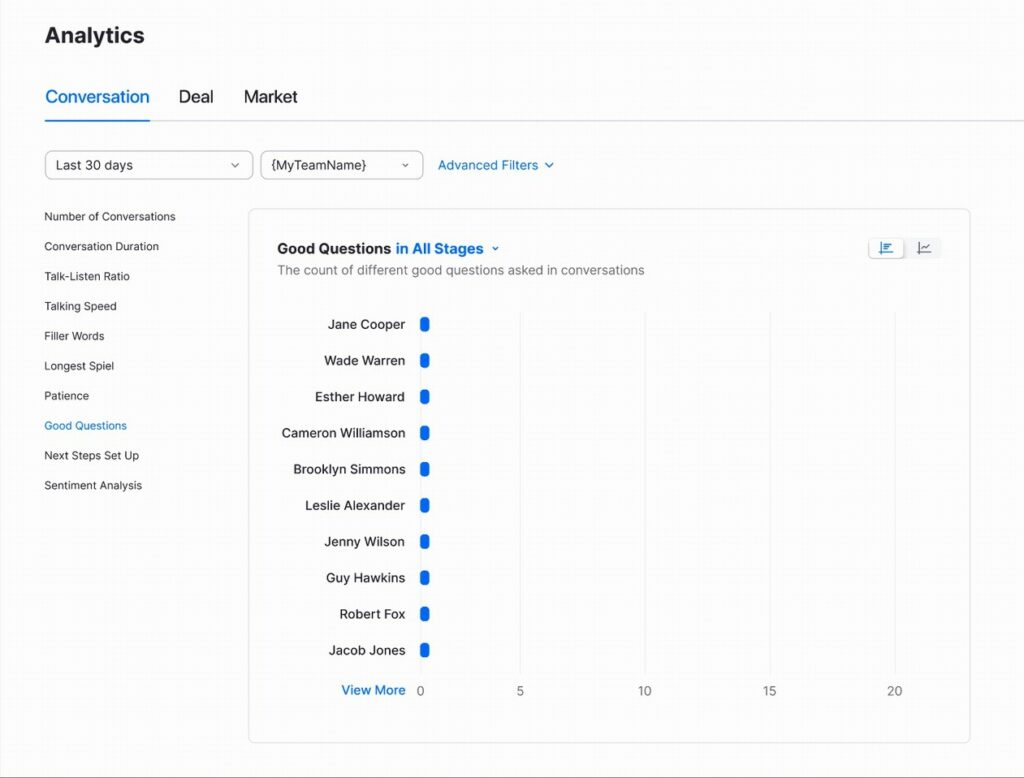
So what does Zoom Revenue Accelerator analyze during conversations to generate insights?
1. Compelling Inquiries – An integral phase in the sales process involves posing engaging questions to customers. The Zoom Revenue Accelerator logs instances when a customer responds to a user’s query, aiding sales professionals in refining both the content and delivery of their questions.
2. Extended Dialogue – Studies indicate that, on average, individuals retain just 10 percent of a presentation. Within the recording overview, users can swiftly assess the duration and pace of their speech, ensuring they maintain concise and impactful conversations.
3. Subsequent Steps – Offering clear guidance on the next steps for customers is a crucial element in influencing their decision-making. The solution documents each instance where a salesperson outlines the subsequent steps in the sales process for prospective customers, providing managers with valuable insights into how their sales team motivates customers to take action. This feature also allows sellers to easily revisit the information, preventing oversight.
Does Zoom Revenue Accelerator enhance individual and team sales performance?
1. Delivering Tailored Feedback – The process of shadowing and reviewing sales calls is often time-consuming and demanding, particularly within expansive sales organizations. Zoom Revenue Accelerator offers managers a visual tool for efficiently pinpointing areas of improvement for both individual sales professionals and entire teams.

Image source: itvoice.in
2. Making Informed Decisions Based on Evidence – Gaining a comprehensive and user-friendly understanding of data related to sales performance can pose challenges, both in terms of complexity and cost. This conversational intelligence solution empowers sales teams to easily explore conversational analytics, facilitating informed decisions on where to focus their efforts and investments.
3. Boosting Seller Productivity – Managing calls and accounts and navigating the intricacies of the sales process can be daunting, especially with an extensive client list. Zoom Revenue Accelerator addresses this challenge by enhancing seller productivity through automation, rapid search functionality, and other features, creating a more streamlined and organized customer experience.
How does AI understand the context?
Human beings tend to respond more to visual stimuli like shapes, colors, and contours. AI can identify figures but without context, it won’t be able to produce results or insights that can help people to come to a decision. Contextual AI comes into the picture now. Contextual AI adopts a human-centric approach to content processing. This empowers AI systems, such as chatbots and virtual assistants, to comprehend language, audio, video, and images in a real-world context. This enables them to exhibit behavior that is less akin to traditional computers and more aligned with human understanding.
There are four pillars of Contextual AI. (Refer to the image below)
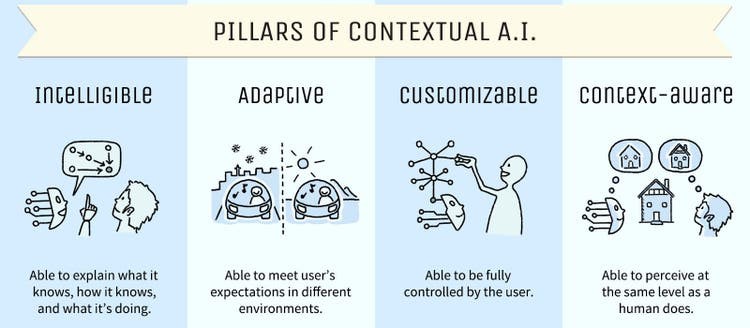
Image source: business.adobe.com
Now to build a human-level AI, you need to have these major ingredients:
Domain Expertise
Contextual AI allows you to enhance the training of your models by incorporating business-specific data, resulting in more detailed, accurate, and valuable outcomes. This represents a notable advancement compared to the generic outputs typically obtained from training models with bulk aggregated data from AI providers like Google Vision.
For instance, in the scenario of automatically meta-tagging images, a generic AI might assign simple tags such as “hobbit” and “ring.” In contrast, contextual AI can provide more insightful tags like “Frodo Baggins,” “The One Ring,” “Inside Mount Doom,” and “Dangerous.” These nuanced tags offer a more precise understanding of the specific scene being referred to.
Moreover, once the AI comprehends what “dangerous” entails, it can intelligently apply that tag to entirely different images that it has never been explicitly trained with. This flexibility allows for training the AI with smaller, more focused datasets, followed by unleashing it to learn dynamically.

Explainability
Explainability in AI denotes the system’s ability to showcase its knowledge, rationale, and actions. Many existing AI systems function as “black boxes,” lacking transparency in their decision-making process. This opacity raises concerns about trustworthiness, especially in safety-critical contexts like cancer detection or criminal facial recognition, where an inaccurate AI prediction could have significant consequences.
Contextual AI introduces explainability across the entire machine-learning pipeline, spanning from data ingestion to inference. This visibility into the inner workings of AI facilitates the construction of better and safer systems that can be easily comprehended, improved, and guided away from potentially misguided decision-making.
Customization
Contextual AI, with its adaptability to untrained scenarios, acknowledges that, like humans, it won’t always excel at every task instantly. To ensure continuous improvement, users should have the capability to fine-tune the AI’s behavior to align better with their expectations. For instance, if a music streaming service suggests questionable songs persistently, users should be empowered to adjust preferences and guide the AI back on a more accurate trajectory.
Reasons Why B2B Sales Need Emotional AI
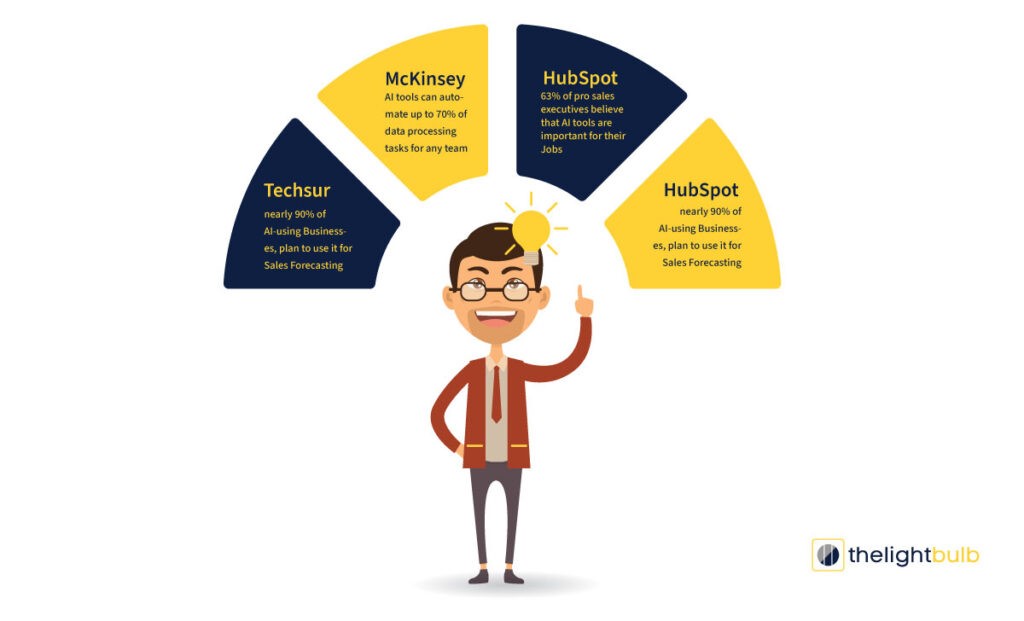
Image source: thelightbulb.ai
Personalized Selling Strategies Leveraging Emotion AI
Integrating emotional AI into digital sales meetings provides sales representatives with a distinct advantage. As the conversation unfolds and the sales rep gauges the prospect’s interest by presenting a solution, emotion AI captures facial and head movements, as well as the prospect’s voice and tone, revealing emotional reactions to the proposition. This recorded data allows the sales rep to review and correlate emotional insights, identifying segments of the conversation that led to positive feedback. Subsequently, the sales approach can be personalized based on these uncovered insights.

Image source: viso.ai
Furthermore, by analyzing customer emotions and sentiments, emotion AI assists sales teams in adapting their communication to align better with the specific desires of each prospect. This, in turn, contributes to a more personalized and satisfying customer experience.
Augmented Sales Team Productivity with Emotion AI
Effectively selling B2B SaaS products requires persuasion and persistence, especially when navigating multiple channels and presenting to C-level executives. Establishing a strong impression at every stage, from initial meetings to final presentations, is crucial for success. Emotion AI enables the identification and addressing of pain points and positive triggers from the outset, utilizing advanced AI techniques such as FACS, eye tracking, and head positioning. This aids the sales rep in addressing pain points across channels, enhancing the chances of success in climbing the sales ladder and closing deals.
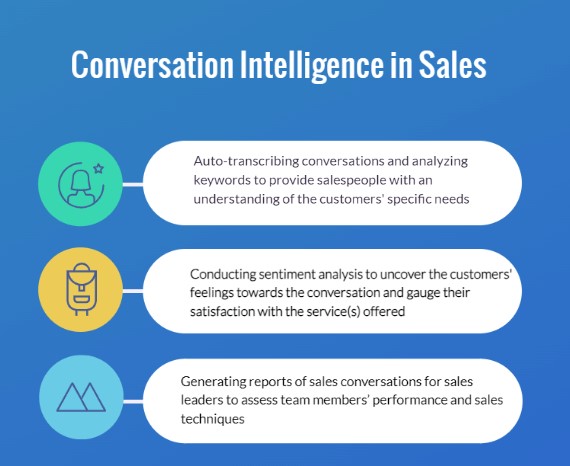
Image source: notta.ai
While B2B SaaS sales necessitate collaboration between sales and marketing teams, the pivotal role in actual sales lies with the sales rep. A detailed emotional profile of the prospect significantly increases the likelihood of a successful sale.
Lead Filtering Optimized with Emotion AI
The shift to remote selling has become prevalent, offering an efficient and cost-effective alternative for both buyers and sellers. Despite the effectiveness of this framework, the average conversion rate in the B2B SaaS market remains modest. Emotion AI can boost conversion rates by filtering leads based on the emotional profile of prospects and their reactions to proposed offers. This allows the sales team to prioritize efforts toward more promising prospects, maximizing output per unit effort and ultimately leading to higher conversion rates.
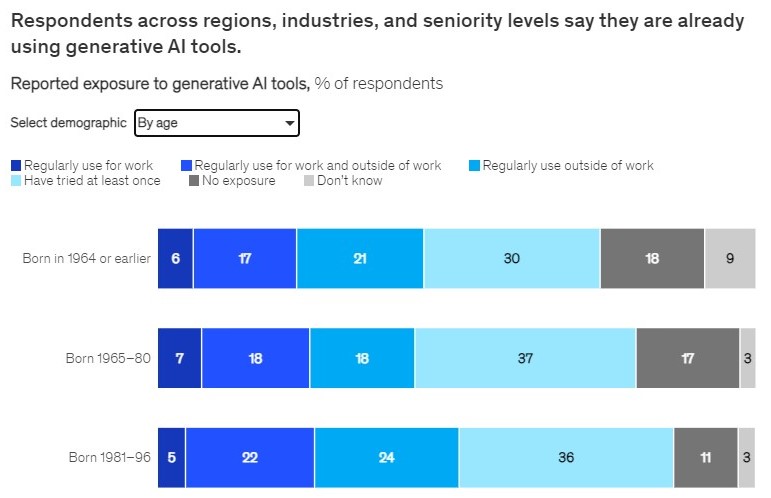
Image source: mckinsey.com
Cultivating Relationships with Emotion AI
Establishing meaningful relationships with clients is pivotal for transforming them into repeat customers, and fostering profitability with minimal additional effort. Emotion AI assists sales reps in understanding the emotional state of prospects, offering opportunities for personalized recommendations or suggestions. For example, if a prospect is feeling anxious, emotion AI can recommend a product designed to address those emotions. This builds trust, and credibility, and enhances the likelihood of successful sales.

Image source: cogitocorp.com
Simplifying Sales Forecasting with Emotion AI
Successful sales forecasting requires a deep understanding of the factors, including sentiments and emotions, influencing customer behavior. Emotion AI provides access to the emotional heatmap of customers, allowing sales reps to comprehend their needs and tailor sales strategies accordingly.
Consider the following example: If emotion AI detects customer frustration during a sales interaction, the sales team can take steps to address those emotions, potentially improving customer satisfaction and driving higher sales outcomes. Incorporating emotional intelligence in the sales process enhances the efficacy of the sales process, enabling more accurate sales predictions by the sales team.
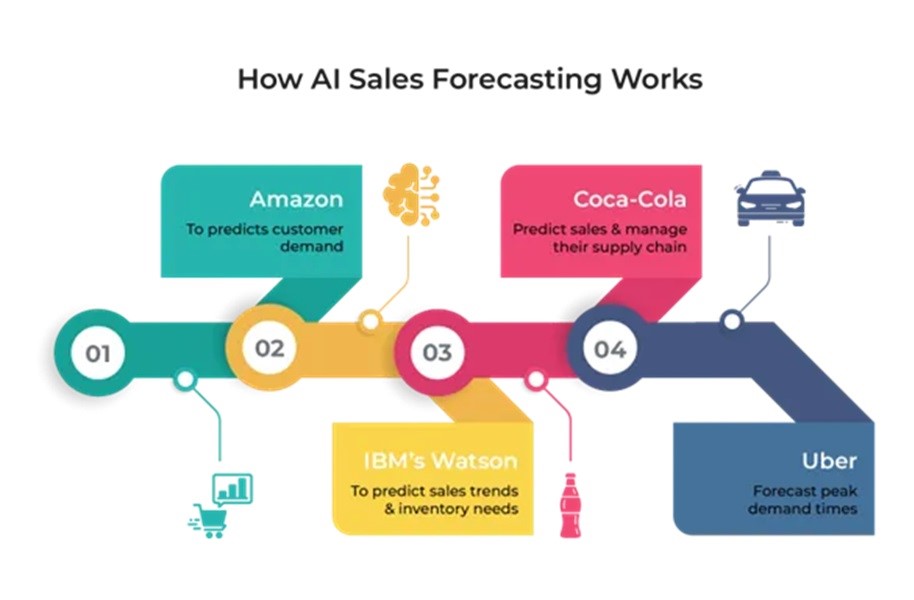
Image source: kennect.io
Conclusion
Emotion AI not only contributes to personalized selling strategies but also enhances the overall productivity of sales teams, particularly in the complex landscape of B2B SaaS sales. The ability to identify pain points and positive triggers from the outset empowers sales representatives to navigate various channels and presentations with greater precision, ultimately improving the chances of closing deals successfully. Emotion AI is poised to play a pivotal role in reshaping the future of B2B sales by fostering meaningful relationships, improving communication, and driving overall success.
So are you looking for an AI/ML job that aligns with the trending job market? Then SPOCLEARN’s AI/ML certification will help to gain proper knowledge on leveraging AI to skyrocket the B2B sales.