
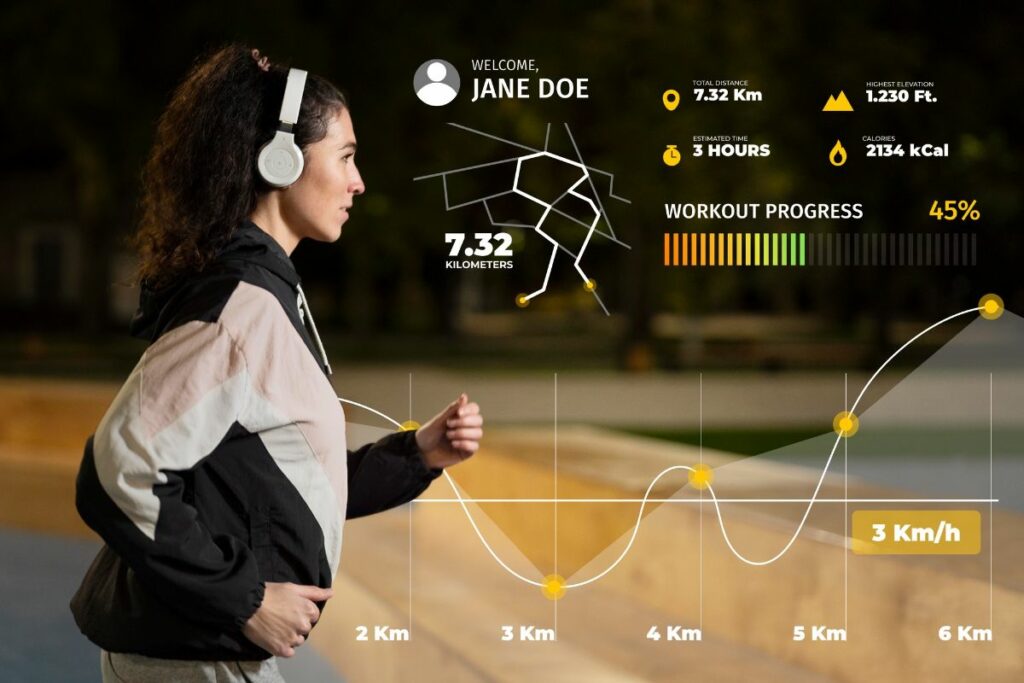

The ICC Men’s Cricket World Cup is here and fans have gathered from every corner of the world to support their favorite cricketer and team. Player Performance Analysis is one of the current trends in the sports industry that is leveling up every match and athletes are blessed to evaluate the athletic performance of opponents and their teams due to sports analytics. Sports management is hiring highly skilled sports Data Analysts who analyze and gauge what could be the possible performance of athletes based on the statistical data collected from previous matches.
Statistical sports analytics are Data Analysts who assess the performances of athletes to figure out their strengths and weaknesses. In fact, according to a study, it’s expected that the Sports Data Analytics market is going to reach upwards of $4.5 billion by 2025. Along with artificial intelligence, exclusive analytical tools, and superior augmented reality, the sports market is seeking statistical sports analytics to enhance sports performance. Fortune Business Insights shares the present status of the Sports Analytics market and its probable future.

Sports Analytics is Revolutionary
Ever since the evolution of technology, increased processing power, Machine Learning principles, and Artificial Intelligence have boosted Data Analytics to influence every sports event. This has allowed sports organizations to enhance how the team performs. Fan engagement has also reached an awesome height after the integration of sports analytics. Another interesting fact is data is now available for both in-game activities as well as previous games through wearable technology and Cloud processing power. Sport Northern Ireland shared this data of a shot analysis using Statistical Data Analytics.
Machine learning is using tracking software that has taken sports analytics to the next level. Sports organizations are collecting statistical breakdowns from multiple video footage that help trainers and coaches refine their play calling during games or leverage post-game data. Besides, ML also uses sensor cameras to track things like ball speeds, spin rates, and player movement, which in turn contribute effectively to both broadcasts and team decisions. For example, in any football, cricket, or baseball game you can see coaches or players assessing the performance of athletes on a tab.
Sports Data Analytics is also using augmented reality and virtual reality to increase fan engagement. As the Barca Innovation Hub says, “Broadcasters can use AR technology to overlay virtual graphics and information on the screen, providing viewers with additional information and context about the game or competition. This can enhance the viewing experience for both casual fans and hardcore fans alike”.

Image source: AR Digital Experiences Sports
Prediction using Sports Data Analytics
Predictive Modelling is a fundamental part of Data Analytics where Data Analysts are assessing tons of data to predict what can be the next event coming up. For example, statistical sports analytics have been working on a set of data regarding an athlete for the past few days.
Based on data collected using ML-based sensor cameras or tracking software, they can gauge what are the spot-on weaknesses and strengths the athlete has. Using such technologies, sports analytics can also figure out any change in the sprint speed of an athlete. Using all these real-time data, sports analysts can predict how athletes are going to perform in the upcoming games. Besides, sports Data Analytics have also been useful in two other genres, business-oriented applications and game performance.
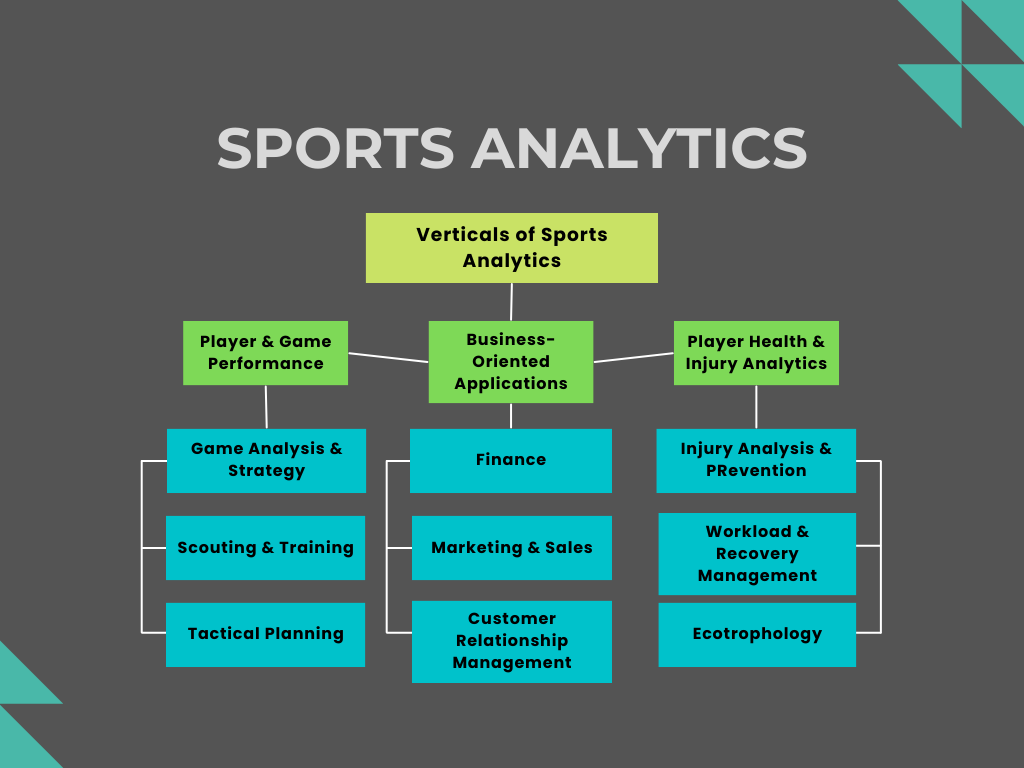
Let’s talk about the various predictions that sports analysts often state using the data:
1. Player and Game Performance
One of the major goals of sports Data Analysts is to enhance the quality of the game by improving athletic performance. In this competitive era, each player always looks forward to knowing their weaknesses during the game and the strengths of their opponents. Sports analytics is used by teams to help them tackle their challenges, from the most basic to complex.
2. Business Applications
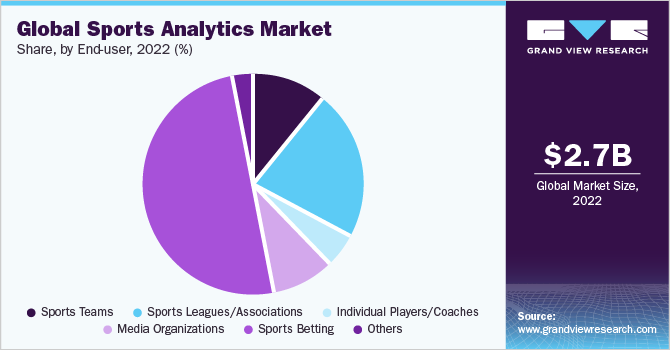
In 2022, the sports betting sector dominated the sports analytics market, accounting for over 49.0% of the total revenue share. This segment is expected to continue growing due to the increased adoption of sports analytics. Sports analytics provides essential information on players, teams, and game-influencing factors, enabling bettors to make informed decisions.
Analytics also identifies performance patterns and trends, allowing bettors to predict future outcomes. The integration of technology, vast data availability, and AI/ML applications in sports analytics will further drive this sector’s growth.
Simultaneously, the media organizations segment is forecasted to achieve a remarkable 24.0%+ CAGR from 2023 to 2030. Sports analytics tools are pivotal for these organizations, aiding in content performance analysis, and understanding audience behavior, and market trends. They also offer insights into viewer preferences, campaign effectiveness, and engagement metrics. This data empowers media companies to optimize content creation, advertising placement, and distribution strategies for enhanced audience retention and revenue generation.
3. Injury Prevention
Players’ injuries are proportional to financial consequences. In case of an on-game injury and sometimes during the practice games as well, the club or the team has to do more than just provide medical care. Besides compensating for the player’s injury, they have to reevaluate their strategy for the next game and often, that is completely unplanned. Data is compiled from different sources, such as training sessions, physical fitness tests, matches, demographics, and location.
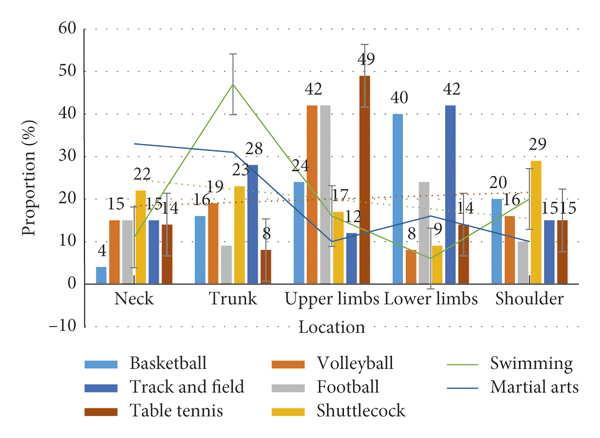
Hindawei published this image that shows various injury spots that athletes go through during various games. Sports Analysts identify injury risks and the team authority provides for customized health and training programs for players. Statistical models extrapolate patterns to predict injuries and prevent them.
4. Biomechanical Analysis
In the realm of biomechanical analysis, extensive athlete data, encompassing variables such as heart rate variability, blood markers, oxygen levels, and genetic information, is harnessed to identify patterns. These patterns empower coaches to fine-tune training programs and enhance overall performance. Additionally, smart wearable technology is increasingly utilized by teams to monitor and assess individual athlete health and performance.
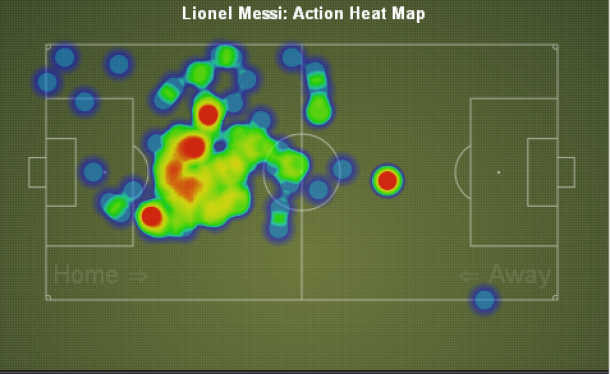
Image source: Heatmap of Messi’s Position During A Game
5. Personalized Training Programs
Artificial intelligence has emerged as a pivotal force in personalized training. Machine learning is employed to create tailored meal and exercise plans for each player, aligning precisely with their unique needs. This approach parallels fitness apps, where users answer a set of questions to receive a detailed plan. Similarly, AI technology curates exercise routines and training programs by discerning the specific requirements of each individual.
6. Augmented Reality in Fan Engagement
One of the prominent applications of AI in the sports industry is the utilization of virtual and augmented reality experiences. These immersive experiences have gained rapid popularity, offering fans worldwide an unprecedented level of engagement. AR and VR not only enable fans to enjoy virtual match scenarios but also facilitate interactions with their favorite teams, a feat previously unattainable without AI. A prime illustration of this is the FIFA World Cup 2022 in Qatar, where the FIFA+ app granted fans access to match days from various camera angles on their smartphones. By simply pointing their cameras at the pitch, fans could observe a specific player’s movements, tap into live statistics for insights, and access heat maps. For football enthusiasts, this development is nothing short of a remarkable enhancement to their experience.
Benefits of Sports Analytics
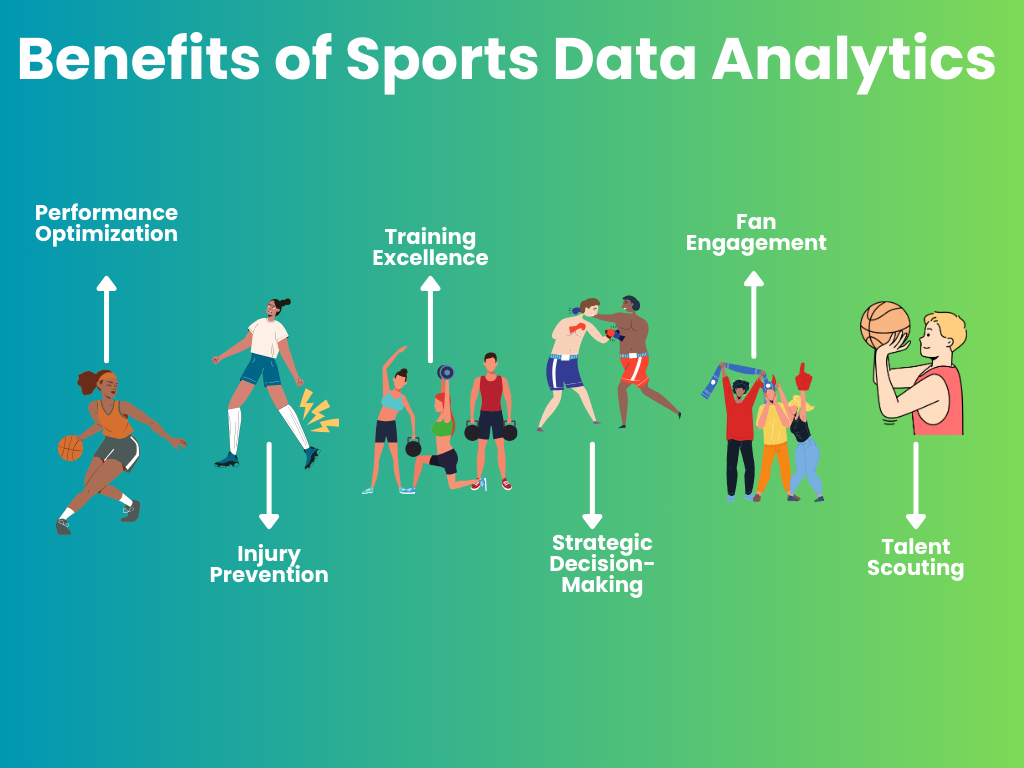
- Performance Optimization: Sports analytics empowers athletes and teams to enhance their performance by leveraging data-driven insights, improving their competitive edge.
- Injury Prevention: It aids in the early detection of fatigue and injury risks, allowing for timely interventions and reduced downtime.
- Training Excellence: Coaches can tailor training programs to individual players, ensuring more effective skill development and performance improvement.
- Strategic Decision-Making: Analytics provide a competitive advantage by offering insights into opponents’ strategies, enabling more effective game planning and real-time adjustments.
- Fan Engagement and Revenue: AI-driven applications enhance fan experiences and engagement, while data analytics optimizes revenue through targeted marketing and pricing strategies.
- Talent Scouting and Recruitment: Data analytics assists in identifying promising talent, supporting informed decisions in player recruitment, and contributing to a team’s long-term success.
Conclusion
Data Analytics in Sports is therefore enhancing the user experience and also contributing massively to the improvement of the overall athlete world. From personalized training to predicting the next game, statistical Sports Data Analytics is a revolutionary marriage of Data Analytics and Artificial Intelligence blended with sublime Augmented Reality. The market of Sports Analytics is booming profusely and down the line, will come up with more advanced techniques to elevate the entire sports experience.