Trending Now

CAPM Certification 2026: The Complete Exam + Training Guide (PMI-Updated)
Traditional SEO vs Answer-First SEO: What Actually Ranks in 2026
ITSM Evolution: From Monolithic Systems to Cloud‑Centric Architectures (2026)
How to Run High-Performance Retargeting Campaigns Using AI
Project Leadership in 2026: Skills Every Successful Project Manager Needs
Technical SEO for 2026: Crawl Optimization, Log Analysis & AI Indexing Signals
Top 12 Project Management Mistakes and How to Avoid Them
PRINCE2® 7 (2026 Guide): What’s New, What Changed, and Why It Matters
Lean Six Sigma in 2026: What’s Changed (AI, Automation, Process Intelligence) & What Still Works
Root Cause Analysis in 2026: The Modern RCA Playbook for Faster, Repeatable Fixes
ITIL Is for Everyone and for Every Organization: A Deep‑Dive Playbook (2026)
Social Media Algorithms Explained (2026 Edition): What Actually Drives Reach Today
Power Query Best Practices 2026: Faster Refresh, Cleaner Models, Fewer Errors
PL-300 Exam Guide 2026: Skills Measured, Study Plan, and What’s Changed
LLMS.txt vs Robots.txt in 2026: What to Implement (and What to Avoid)
SEO in 2026: The Complete Playbook for AI Search, AEO & GEO
Google Ads Audits in 2026: A Step-by-Step Checklist to Fix Wasted Spend and Unlock Growth
AI-Driven Risk Management: Predict Risks Before They Happen
On-Page SEO 2026: New Techniques for Topical Relevance & AI Search
The Future of Project Management: Trends Reshaping 2025–2030 
Hybrid Project Management: Why Organizations Are Transitioning in 2026 and Beyond
AI-Powered Project Planning: Faster, Smarter, and More Accurate Strategies 
Industry Predictions for 2026: From GenAI to Value Streams and Total Experience
PMP vs CAPM vs PRINCE2: Which Certification Offers the Best ROI in 2026?
AI in Project Management: How Intelligent Tools Are Transforming PM Workflows 
Performance Max Mastery: How to Scale ROI with Smart Automation 
What is SAFe RTE? (Release Train Engineer)
SAFe RTE: The Complete Guide to Becoming a High-Impact Release Train Engineer (2025–2026)
Time Management: How to Turn Hours into Impact
Lean Six Sigma Green Belt: Skills, Value, Demand & Global Trends 2026
PL-300: Microsoft Power BI Data Analyst Certification for Career Growth Globally 2026
Strong & Sustained Demand for PMP Certification in 2026
Why Organizational Agility Matters: The Strategic Imperative for Big Enterprises
Building an Agility Culture Beyond IT Teams
How to Re-Engage Remote Teams: PMP Question on Motivation and Collaboration
Understanding Tuckman’s Team Development Stages - PMP Exam Question Explained
Why do Business Owners assign business value to team PI Objectives?  
Benefits of EXIN Agile Scrum Foundation Certification
Benefits of PMP Certification for Corporate and Individual Professionals in 2025
Streamlining Vaccine Development during a Global Health Crisis – An Imaginary PRINCE2 Case Study
PMBOK Guide Tips for Managing Change and Uncertainty in Projects
How to Apply PRINCE2 Methodologies in Real-World Projects
What is PRINCE2® 7? A Simple Explanation for Beginners
Project Management Certification in the United States of America
The Evolution of Project Management: From Process-Based to Principles-Based Approaches
Mastering ITIL and PRINCE2 for Enhanced Project Outcomes in Indian GCCs
Exploring the Eight Project Performance Domains in the PMBOK® Guide
PMI Best Practices for Project Management Across Different Environments
Your Ultimate Project Management Guide: Explained in Detail
Top Benefits of PRINCE2 for Small and Medium Enterprises
Best Project Management Certifications of 2025
The Importance of Tailoring PRINCE2 to Fit Your Organization's Needs
Resolve Slash URLs & Learn 301 vs. 308 Redirects Effectively
What is a standard change in ITIL 4?
Which practice provides a single point of contact for users?
What is the first step of the guiding principle 'focus on value'?
Which is a benefit of using an IT service management tool to support incident management?
A service provider describes a package that includes a laptop with software, licenses, and support. What is this package an example of?
What should be included in every service level agreement?
What are the two types of cost that a service consumer should evaluate?
The Business Case for SAFe®: Solving Modern Challenges Effectively
Which ITIL concept describes governance?
How does ‘service request management’ contribute to the ‘obtain/build’ value chain activity?
Which practice is the responsibility of everyone in the organization?
How Kaizen Can Transform Your Life: Unlock Your Hidden Potential
Unlocking the Power of SAFe®: Achieving Business Agility in the Digital Age
What is DevOps? Breaking Down Its Core Concepts
Which is a purpose of the ‘service desk’ practice?
Identify the missing word(s) in the following sentence.
Which value chain activity includes negotiation of contracts and agreements with suppliers and partners?
How does categorization of incidents assist incident management?
What is the definition of warranty?
Identify the missing word in the following sentence.
Which two needs should ‘change control’ BALANCE?
Which value chain activity creates service components?
Kaizen Costing - Types, Objectives, Process
What Are ITIL Management Practices?
What are the Common Challenges in ITIL Implementation?
How Do You Align ITIL with Agile and DevOps Methodologies?
How Can ITIL Improve IT Service Management?
What is DevSecOps? A Complete Guide 2025
How to do Video Marketing for Audience Engagement?
What is Site Reliability Engineering (SRE)?
The History of DevOps: Tracing Its Origins and Growth
Mastering Business Agility: A Deep Dive into SAFe®
Which statement is true about a Value Stream that successfully uses DevOps?
How Do I Prepare for the ITIL 4 Foundation Exam?
What is the Purpose of the ITIL Foundation Certification?
SIAM Global Survey 2023 Insights: The Future of IT Service Management
Comprehensive Guide to ITIL 4 Key Concepts of Service Management
What is ITIL? Guide to ITIL 4, Certification, and Best Practices
Top 10 Benefits of ITIL v4 Foundation Certification
What is GitOps: The Future of DevOps in 2024
Kaizen Basics: Continuous Improvement Strategies for Your Business
The Role of Observability in Site Reliability Engineering (SRE)
The Role of Monitoring in Site Reliability Engineering (SRE)
ITIL Structure: Key Components and Lifecycle Stages Explained
12 Principles of Project Management - PMBOK® 7th Edition
Four Dimensions of IT Service Management in ITIL4
ITIL Certification Cost - Comprehensive Guide 2024
Navigating the Requirements for PMP Certification

PMP Certification Requirements: Strategies for Success

Picture of Bharath Kumar
Bharath Kumar
Bharath Kumar is a seasoned professional with 10 years' expertise in Quality Management, Project Management, and DevOps. He has a proven track record of driving excellence and efficiency through integrated strategies.

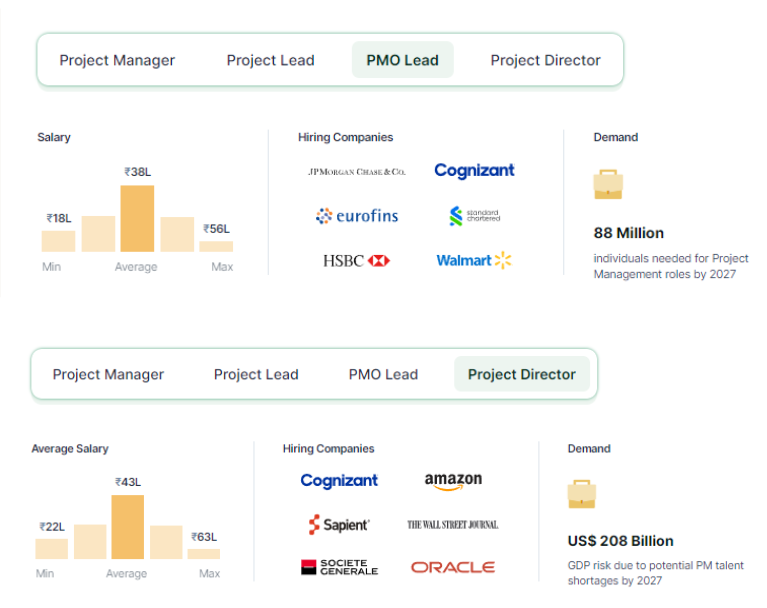
The number of jobs in Project Management is increasing daily, and by 2030, the PMP certification can open doors to lucrative opportunities in dynamic industries such as IT, manufacturing, finance, and healthcare. With over 1.2 million PMP certification holders globally, those certified typically earn median salaries 16% higher (reaching up to 32% in the US) than their non-certified counterparts.
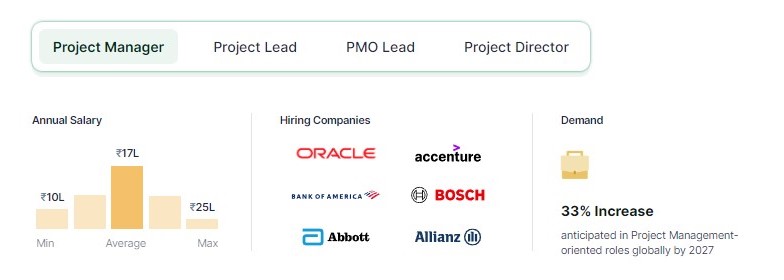
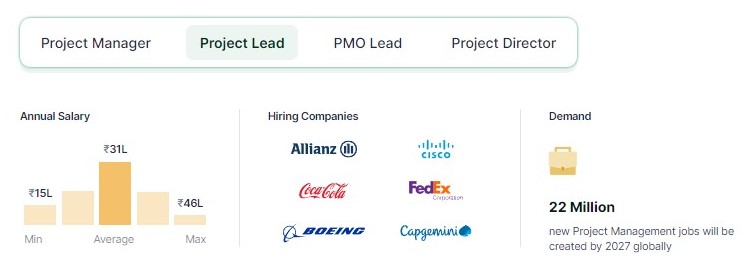
PMP certification holders globally

What is a PMP Certification?

The Project Management Professional (PMP)® certification, widely esteemed worldwide, is conferred by the Project Management Institute (PMI)®. PMI® defines PMP certification as the application of knowledge, skills, and techniques necessary for effective project execution.

Individuals aspiring to roles such as Project Manager, Project Executive, Associate or Assistant PM, or Team Manager often seek certification to validate their abilities. The globally renowned PMP® certification stands as a valuable asset on resumes. Not only does PMP® certification provide professionals with a competitive advantage in the job market, but it also correlates with higher salaries. Furthermore, the certification process equips candidates with proficiency in their core areas, facilitating efficient team management.
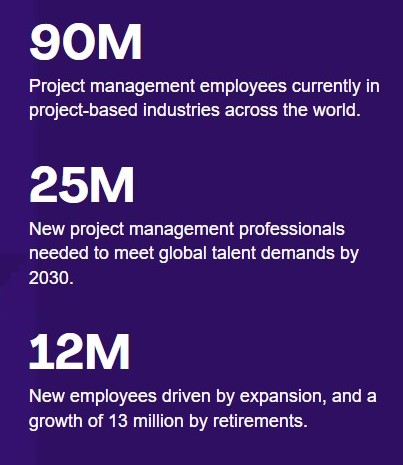
Image source: PMI

PMP Certification Requirements

To obtain a PMP certification, there are three steps that you need to take. First, you need to check if you match all the qualifications. Following this, you must document your experience related to past projects and training. The last step will be to complete the application process register and then appear for the training. 

Check your Eligibility

Getting your PMP certification takes effort, which is why it’s so respected. If you already have experience in managing real projects, you’ve tackled the toughest part. Before you apply, check that you meet one of these sets of PMP Certification requirements.

Set 1: 

  • Four-Year College / University Degree
  • 36 months of experience leading projects within the past eight years
  • 35 hours of project management education/training or CAPM® certification

Set 2:

  • High School or Secondary School Diploma
  • 60 months of experience leading projects within the past eight years
  • 35 hours of project management education/training or CAPM® certification

Relevant Past Experience:

This is quite an essential part as in this step you need to showcase what projects you have worked on and how much relevance they have as project management roles. According to the Project Management Institute (PMI), the following experience you must document.

Projects You’ve Led:

  • Where you’ve worked
  • Your role and responsibilities
  • Duration of projects

Training You’ve Completed:

  • Institutions attended
  • Courses completed
  • Qualifying hours

How to apply for the PMP Certification?

Step 1: Sign Up for PMI Membership and Apply

First, go to the PMI website and create an account. It’s a good idea to become a member of the Project Management Institute (PMI)® because it can save you money in the long run. There’s a one-time fee of $139 to become a member, but it comes with perks like lower application and exam retake fees.

The regular exam fee for non-members is $555, but as a PMI member, you’ll pay only $405.

Step 2: Complete PMP Certification Training

Taking a PMP Certification Training course fulfills the 35-hour education requirement. These courses are taught by experts and often include practice tests to help you get ready. Once you finish, you’ll receive a certificate recognized worldwide, which can help you land a job.

Step 3: Submit Your Application Online

If you meet all the PMI Certification Requirements, you can submit your application online. PMI usually responds within five business days. Once your application is approved, you’ll get an invitation to schedule your exam and pay the required fee.

Step 4: Pass the PMP Certification Exam and Get Your Certificate

To pass the PMP exam, you need to answer 180 questions in 230 minutes. The questions cover three main categories: Business Environment (8%), People (42%), and Process (50%).
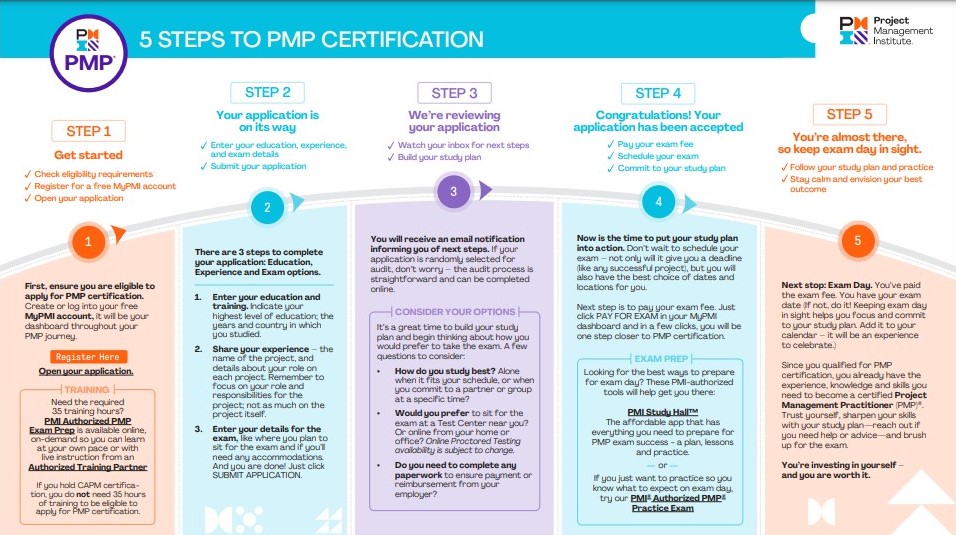
Image source: PMI

Conclusion

Looking for the best PMP certification? Check out our updated and the latest version of PMP Certification now!

The PMP certification requirements serve as essential criteria for individuals looking to progress in their project management careers. By fulfilling these prerequisites, including possessing relevant educational qualifications, accumulating project management experience, and completing mandatory training hours, candidates demonstrate their commitment to professionalism and competence in the field. 

FAQs

What is the eligibility for PMP certification?

Ans: Ensure you fulfill one of the sets of PMP Certification prerequisites before you proceed with your application: Possession of a four-year college or university degree. A minimum of 36 months of project leadership experience within the last eight years. Completion of 35 hours of project management education or training, or holding a CAPM® certification.

Ans: No, having an MBA is not a requirement for obtaining a PMP certification. However, you must have either a high school diploma, graduation certificate, or post-graduation certificate. Additionally, you’ll need relevant professional experience in project management and the completion of 35 hours of mandatory formal training.
Subscribe us