Why Frontline Improvement Capability Matters in Vietnam
Lean Six Sigma is sometimes introduced to employees only after an expensive quality failure. Yellow Belt offers a more practical starting point: teach people who perform repeated work how to notice the early signals. A late dispatch, missing label, incorrect document or unnecessary movement may seem minor on its own. Repeated across shifts and departments, it absorbs time and creates avoidable customer problems. Yellow Belt helps teams turn such observations into simple, consistent measures.
Vietnam’s economic structure gives these skills relevance well beyond quality departments. Manufacturing employers manage supplier specifications, output consistency and traceability; logistics companies coordinate fast-moving shipments; banks and shared services handle large volumes of documents; and hotels or healthcare administrators rely on reliable service workflows. No single course fixes these problems. The business value begins when managers ask staff to identify losses accurately and participate in safe, evidence-based changes.
Vietnam Manufacturing and Investment Context
Vietnam’s National Statistics Office reported US$27.62 billion of disbursed foreign direct investment in 2025. Its sectoral analysis placed registered investment into processing and manufacturing at approximately US$21.01 billion, or 54.7 percent of total registered FDI. These figures document an active industrial environment where quality, supplier coordination and consistent process execution have commercial importance. They do not measure the number of Yellow Belt vacancies or demonstrate that employers require this specific certificate.
Vietnam economic indicator | Published 2025 figure | Interpretation for course relevance |
Disbursed FDI | US$27.62 billion | Context for industrial and service investment |
Registered FDI in processing / manufacturing | US$21.01 billion | Sector where repeatable quality processes matter |
Manufacturing share of registered FDI | 54.7% | Industry weight; not a certification demand statistic |
Manufactured-product exports | US$421.47 billion | Scale of export-related process reliability needs |
Source: National Statistics Office of Vietnam, 2025 annual economic release and manufacturing investment analysis. Registered and disbursed amounts are different measures and should not be combined as though they describe the same investment category.
Why Basic Data Discipline Matters for Vietnamese Enterprises
A factory may count defects differently across shifts; a service business may close requests even when the customer needs to call again. Such problems are difficult to solve until employees agree on what to measure. Yellow Belt training encourages clear definitions, simple check sheets, process maps and visual standards. The methods are inexpensive, but they require discipline and support from supervisors.
Lean Six Sigma Yellow Belt Career Opportunities Across Vietnam
Yellow Belt can help early-career professionals and experienced operational employees explain improvement practices in the language used by quality, operations and customer-service teams. It is not a substitute for a professional degree, technical apprenticeship, supervisory experience or sector-specific safety training. Its strongest career benefit is the ability to support improvements and discuss actual process problems with greater clarity.
Relevant Career Opportunities
Yellow Belt Career Pathways Across Vietnam
Role / pathway | Typical improvement contribution | Relevant city examples |
Manufacturing technician | Record defects and standard-work gaps | Hai Phong, Ho Chi Minh City |
Quality assistant | Maintain check sheets and visual controls | Hanoi, Hai Phong |
Customer operations associate | Track missing information and repeat contacts | Hanoi, Ho Chi Minh City |
Hospitality coordinator | Observe service wait and handoff times | Da Nang |
Warehouse coordinator | Improve accuracy and inventory flow | Can Tho, Ho Chi Minh City |
Improvement team member | Support a supervised DMAIC or Kaizen effort | All five locations |
2026 Salary Benchmarks for Related Industrial Roles
Salary data specific to Yellow Belt holders is not available from a robust public national source. For context only, Adecco’s Vietnam Salary Guide 2026 provides gross monthly pay ranges for related engineering occupations. These figures are not expected entry-level Yellow Belt salaries and should not be used to suggest an automatic earnings premium. They reflect occupational duties and experience categories in the guide.
Occupation (Adecco 2026) | HCMC: 1–5 years | Hanoi: 1–5 years |
Equipment / Production / Manufacturing Engineer | VND 15–35 million | VND 15–30 million |
IE / Process Improvement Engineer / Product / Failure Analysis Engineer | VND 15–35 million | VND 23–30 million |
A recent graduate, quality assistant or support representative may be paid on an entirely different scale. Candidates should compare current advertised positions by job title, location, employment type and experience, then assess which skills the role actually requires. The above benchmark comes from Adecco Vietnam Salary Guide 2026, Engineering/Technical occupations, page 18.
Career Progression Beyond Yellow Belt
Someone who participates reliably in process improvement can develop toward quality technician, shift supervisor, process coordinator or continuous-improvement roles. Green Belt becomes relevant when the person owns a defined improvement project and needs stronger analytical tools. The most credible portfolio records the original problem, the information collected, the contribution made and the outcome verified by the team. Avoid claiming responsibility for savings or technical decisions made by others.
Industries Requiring Quality and Process Improvement Capabilities in Vietnam
Yellow Belt principles are useful where business outcomes depend on repeated actions rather than one-off projects. The emphasis is on accurate observations, teamwork, basic standards and improvements that employees can maintain. Industry requirements still determine what is safe and appropriate to change.
Yellow Belt Applications Across Vietnamese Industries
Industry | Typical workplace example | Yellow Belt application |
Electronics and components | Incorrect labels or assembly errors | Check sheets and visual inspection |
Textiles and footwear | Rework or material searching | 5S and defect categorization |
Food processing | Packaging rejects and handoff delays | Simple Pareto and process mapping |
Logistics and warehousing | Picking mistakes and queue time | Flow mapping and standardized handoffs |
Banking and financial operations | Incomplete applications | Measure rework by type |
Healthcare administration | Registration delays | Map patient administrative flow |
Tourism and hospitality | Check-in queues | Observe steps and waiting time |
Technology support | Repeated ticket reopenings | Error classification and work standards |
Retail and e-commerce | Returns caused by wrong orders | Count and prioritize order errors |
Education and public services | Repeated form corrections | Clarify process steps and instructions |
Choosing the Right Improvement Approach
Not every problem needs an extensive DMAIC project. A visible, well-understood workplace issue may benefit from a small 5S or Kaizen action, monitored with a simple measure. More persistent defects may require Green Belt leadership and deeper analysis. Yellow Belt staff should learn when to stop guessing and raise an issue for formal investigation. A good course teaches this judgment rather than urging employees to use every tool in every situation.
Lean Six Sigma Yellow Belt Certification Opportunities Across Vietnam’s Major Cities
Lean Six Sigma Yellow Belt Training and Frontline Quality Skills in Ho Chi Minh City
Ho Chi Minh City combines commercial activity, logistics, financial services, retail and a substantial industrial region. Following Vietnam’s 2025 administrative restructuring, the city also encompasses the former Binh Duong and Ba Ria–Vung Tau jurisdictions. That expanded geography includes factories, ports, warehouses and service operations where employees handle repeated processes with measurable customer outcomes.
Yellow Belt training suits operators, junior quality staff, dispatch coordinators and support teams who need to describe waste or mistakes clearly. It can help a retail distribution center classify wrong-item deliveries, or an administrative team reduce repeated data entry. The course should connect measures to actual business consequences instead of presenting factory terminology as the only possible application.
Yellow Belt Applications in Ho Chi Minh City
Business setting | Illustrative problem | Practical skill |
E-commerce logistics | Incorrect items in orders | Check sheets and Pareto categories |
Manufacturing | Tools missing during setup | 5S and visual locations |
Financial operations | Returned customer documents | Process map and defect definitions |
Port and warehouse work | Repeated handling of freight | Waste recognition and flow |
Retail service | Customer wait at returns desk | Simple timing and standard work |
A new employee might first observe where work accumulates and agree on a defect definition with the supervisor. That contribution is valuable even when a larger change requires managerial approval, a technical engineer or an experienced Green Belt. The objective is dependable reporting and practical participation.
Career Relevance in Ho Chi Minh City
Yellow Belt knowledge complements job experience in quality inspection, production support, warehouse coordination and service operations. Export-oriented teams may also value accurate documentation and clear English terminology. Salary expectations should be based on the specific job, not a generic Yellow Belt premium.
Lean Six Sigma Yellow Belt Training and Service Improvement in Hanoi
Hanoi’s banking, telecommunications, technology, professional services and administrative sectors involve substantial document flows, approvals and customer interactions. Quality problems here are not always physical defects. A request may move between teams repeatedly because information was missing, an escalation rule was unclear or a system displayed the wrong status.
Yellow Belt participants can help create checklists, map handoffs and record common causes of repeated requests. Northern manufacturing and engineering operations also provide practical opportunities for consistent measurement and visual controls. Training should emphasize how to maintain compliance and customer confidentiality while improving process flow.
Yellow Belt Applications in Hanoi
Environment | Issue worth observing | Appropriate Yellow Belt tool |
Banking services | Applications returned for missing data | Defect check sheet |
Telecommunications | Repeated installation scheduling | Process map |
Shared services | Invoice corrections | Pareto chart |
Healthcare administration | Registration queues | Simple cycle-time observations |
Manufacturing support | Inconsistent packaging checks | Visual standard |
For example, an operations assistant could monitor the percentage of cases returned for missing fields and identify which fields account for most rework. The team would then test clearer instructions or form design under the relevant approval rules. Yellow Belt encourages this measured approach without expecting the assistant to redesign an entire regulated process independently.
Career Relevance in Hanoi
Foundational process skills support operations associates, junior analysts, quality assistants and customer-service teams. The credential may be particularly useful for staff who regularly participate in corrective-action meetings but have never studied continuous improvement formally. Advancement still depends on demonstrated performance and sector knowledge.
Lean Six Sigma Yellow Belt Training for Technology and Hospitality Teams in Da Nang
Da Nang is associated with tourism, hospitality, digital services, technology and logistics. Since the 2025 restructuring, its administrative territory includes the former Quang Nam area, adding a broader regional industrial and commercial setting. These workplaces need reliable service handoffs, accurate information and clear daily standards, even when they do not employ specialist quality engineers.
Yellow Belt training helps a hotel team measure check-in delays, an IT service desk classify repeated tickets or a logistics staff member document missed handoffs. It gives employees a framework for identifying practical changes and discussing evidence with supervisors. The priority is clear customer outcomes rather than complicated statistical terminology.
Yellow Belt Applications in Da Nang
Service or industry | Potential problem | Foundation technique |
Hotels and resorts | Unpredictable arrival queues | Flow mapping and wait measurement |
Technology support | Tickets reopened by customers | Error classification |
Hospitality purchasing | Supplies not available on shift | 5S and standard work |
Regional manufacturing | Incorrect instructions at stations | Visual management |
Logistics services | Manual re-entry of shipments | Handoff mapping |
A hotel team could identify three steps that routinely delay guest arrivals, then test clearer handoff instructions during a controlled period. Staff should record the before-and-after waiting experience and consider peak-season differences before treating the change as successful.
Career Relevance in Da Nang
Suitable learners include service coordinators, operations assistants, software-support staff, tourism supervisors and manufacturing support personnel. Yellow Belt does not certify advanced IT operations or hospitality management, but it can strengthen the day-to-day problem-solving habits used in these roles.
Lean Six Sigma Yellow Belt Training for Manufacturing and Port Operations in Hai Phong
Hai Phong is a major manufacturing, engineering, warehousing and port-related center in northern Vietnam. Its enlarged administrative area includes the former Hai Duong province following the 2025 restructuring. Industrial workplaces often depend on accurate labels, traceable materials, consistent inspection and predictable movement between production and dispatch.
Yellow Belt supports employees who perform or supervise these steps. A technician can help record defects by shift, while a warehouse worker may map repeated handling and a quality assistant verifies standard checks. These tasks form the evidence base that experienced improvement leaders need before proposing wider changes.
Yellow Belt Applications in Hai Phong
Industrial activity | Everyday process issue | Yellow Belt action |
Electronics assembly | Repeated label errors | Defect check sheet |
Mechanical manufacturing | Searching for tools | 5S and visual locations |
Port logistics | Manual handoff confusion | Process map |
Packaging | Incorrect cartons | Pareto categories |
Production changeovers | Missing work instructions | Standard-work review |
A practical class exercise might follow a component from receiving to final packing and mark every repeated check or rehandling step. Participants can suggest where a visual instruction would help, while respecting customer specifications and safety rules. Yellow Belts should not authorize unvalidated changes to critical manufacturing controls.
Career Relevance in Hai Phong
Quality assistants, production technicians, inspectors, maintenance support employees and warehouse coordinators can apply foundational Lean Six Sigma concepts. Developing further into Green Belt or engineering roles generally requires deeper technical knowledge, project responsibility and experience with process measurement.
Lean Six Sigma Yellow Belt Training for Food Processing and Logistics in Can Tho
Can Tho is a major commercial and service center in the Mekong Delta. Since the 2025 administrative reform, the city also incorporates former Hau Giang and Soc Trang areas, widening its connection to agriculture, food processing, distribution and regional logistics. Employees in these sectors work with variable inputs, time-sensitive shipments and strict handling conditions.
Yellow Belt can help staff record carton damage, packaging losses, picking errors and waiting between processing steps. The methods are approachable for warehouse assistants, line workers and customer operations employees. Improvements must still respect food safety, cold-chain controls, hygiene and traceability requirements; eliminating a check is not an improvement if it introduces a new risk.
Yellow Belt Applications in Can Tho
Local sector | Example measure | Tool to practise |
Food packaging | Damaged cartons per batch | Check sheet |
Cold-chain distribution | Temperature handoff exceptions | Standard-work observation |
Agricultural processing | Material waiting time | Simple process map |
Regional logistics | Wrong-item dispatch rate | Pareto chart |
Retail distribution | Time spent locating stock | 5S and visual management |
A food-processing team may find that a small set of packaging defects accounts for much of its rework. Recording those categories consistently is a useful Yellow Belt contribution. A supervisor or improvement lead can then investigate causes and decide which corrective changes are safe to test.
Career Relevance in Can Tho
The course can support quality inspection assistants, warehouse staff, food-production technicians and supply-chain coordinators who want to participate more effectively in improvement work. It does not replace food-safety certification, technical qualifications or a company’s standard operating procedures.
How Lean Six Sigma Yellow Belt Professionals Support Vietnamese Enterprises
Improvement work is often pictured as a specialist analyzing data at a computer. In reality, useful process evidence begins with the people who perform the work each day. Yellow Belts contribute by making observations understandable, identifying recurring problems and helping teams maintain agreed changes. They can be valuable without holding a manager title or leading complex statistical studies.
Enterprise Challenges and Yellow Belt Capabilities
Operational challenge | Yellow Belt capability | Possible indicator |
Repeated administrative corrections | Check sheets and clearer instructions | Rework rate |
Time lost searching for items | 5S and visual management | Search time |
Unclear handoffs | Basic process mapping | Handoff errors |
Many complaint categories | Pareto prioritization | Frequency by cause category |
Inconsistent daily process | Standard-work participation | Checklist adherence |
Lack of frontline input | Structured team problem discussion | Documented improvement suggestions |
Practical Contributions of Yellow Belt Team Members
The boundary is important: Yellow Belt is a supportive improvement role. Significant process redesign, advanced statistical diagnosis and enterprise-level project ownership belong with qualified process owners, technical specialists and more experienced improvement leaders.
Lean Six Sigma Yellow Belt for Digital Transformation, AI, Sustainability and Modern Operations in Vietnam
Automation changes how quickly processes move and how much data organizations collect, but it does not remove the need for trustworthy definitions. Employees still need to know what a correct transaction looks like, when an exception matters and whether technology creates new rework. Yellow Belt provides a simple language for identifying such issues before proposing a technical fix.
Yellow Belt Applications in Modern Enterprise Operations
Modern operating setting | Possible concern | Yellow Belt contribution |
Barcode scanning | Wrong item linked to correct scan | Check defect definitions and steps |
Customer portals | Requests reopened repeatedly | Count repeat-contact categories |
Automated reports | Misleading completion metric | Clarify measurement logic |
Digital hotel check-in | Unexpected queue at verification | Map actual customer path |
Resource efficiency | Excess materials or transport | Identify avoidable waste |
Yellow Belt Practices and AI-Enabled Process Data
AI and dashboards may highlight unusual activity, but employees need to confirm that the data reflects the real process. An incorrect category or missing exception can produce a convincing but misleading chart. Yellow Belt-trained staff can help validate data definitions, document unusual cases and communicate them to process owners. They should not be expected to build AI models or make automated changes to controlled processes.
Sustainability and Responsible Process Improvement
Less scrap, fewer unnecessary journeys and better material use may support environmental goals, but sustainability claims need measurable evidence. A factory should check whether a packaging change protects the product; a logistics business should consider service reliability as well as kilometers travelled. Yellow Belt emphasizes thoughtful observation and consistent measurement, not blanket claims that every efficiency project produces an environmental benefit.
Selecting 5S, Kaizen or a Structured Improvement Project
A clearly understood local problem may respond to 5S or a short Kaizen improvement, provided the team measures the effect and follows approval requirements. A long-standing problem with unknown causes may need formal DMAIC investigation led by a Green Belt. Yellow Belt training should teach participants to recognize this difference and share evidence without making unsupported claims about causation.
Benefits of Lean Six Sigma Yellow Belt Certification for Professionals in Vietnam
For employees starting their quality journey, the immediate benefits are often clearer thinking, greater confidence in improvement discussions and an ability to report a workplace problem with evidence. The skills are transferable because observation, process mapping and simple measures apply across manufacturing, logistics, healthcare administration and customer service.
Key Professional Benefits
Yellow Belt Skills for Different Professional Groups
Professional group | Likely benefit |
Operators and technicians | Recognize waste, defects and unclear standards |
Quality assistants | Support consistent basic measurement |
Warehouse employees | Improve handling and picking discipline |
Service associates | Map rework and customer handoffs |
Supervisors | Invite frontline evidence into decisions |
Recent graduates | Learn introductory improvement vocabulary |
A certificate demonstrates assessed knowledge against a particular syllabus. Practical skill strengthens when the learner returns to work, applies the methods and receives feedback from experienced colleagues.
Benefits of Corporate Lean Six Sigma Yellow Belt Training for Vietnamese Organizations
Yellow Belt is often the widest layer of an improvement capability program. Organizations use it to help more employees identify waste and contribute evidence, while a smaller number of Green Belts and Black Belts lead technically demanding projects. The corporate objective should be repeatable improvements in quality, delivery and employee participation rather than a high certificate count alone.
Corporate Yellow Belt Training Benefits by Department
Department | Training focus | Useful measure |
Production | Defects and standard-work observations | Rework frequency |
Quality | Consistent inspection categories | Error counts by type |
Warehousing | Picking and movement waste | Picking accuracy |
Customer service | Repeat requests and handoffs | Repeat-contact rate |
Finance operations | Missing documents | Returned-application rate |
Food processing | Packaging handling and visual checks | Damage per batch |
Measuring Corporate Yellow Belt Training Effectiveness
Before training, managers should nominate a small number of visible problems that employees are authorized to observe. Each needs a definition, a baseline and an owner. After training, track whether participants produced useful observations, supported safe trials and maintained approved standards. Cost savings should be validated rather than inferred from a single good week. Process improvement and exam success are related, but they are not the same result.
From Individual Learning to a Continuous Improvement Culture
A sustainable program gives employees regular opportunities to raise issues, learn from data and participate in team problem solving. Supervisors need to act on useful evidence and explain decisions when suggestions cannot be implemented. Yellow Belt is not meant to shift management responsibility onto frontline staff. It is a way to involve those employees more intelligently in improvements that the organization owns.
Build Everyday Quality and Continuous Improvement Skills Across Vietnam
Spoclearn’s Lean Six Sigma Yellow Belt Certification Training in Vietnam helps professionals understand process waste, basic problem solving and practical quality tools. This proposed two-day, 16-hour instructor-led course is suitable for beginners as well as cross-functional corporate teams. The content connects core concepts with manufacturing, logistics, finance, hospitality and service operations relevant to Ho Chi Minh City, Hanoi, Da Nang, Hai Phong and Can Tho.
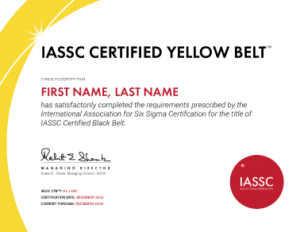
Learners may choose IASSC, TÜV SÜD or EXIN for certification, subject to the selected scheme, voucher terms, language and booking availability. The official credential is issued only after the candidate satisfies that awarding body’s examination and certification requirements. Corporate clients can request a program discussion covering dates, case studies, team size, delivery mode and a clear comparison of exam routes.

 CN
 CN
 CN
 CN